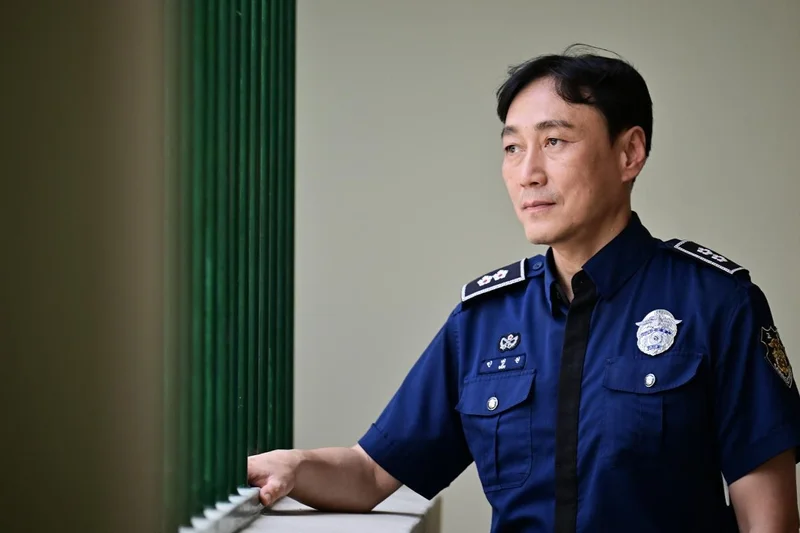
Min Byung-kwon recounts meeting Somali pirate, frugal Bangladeshi inmate, other diverse nationalities behind bars
Editor’s note
This is the second of a three-part series exploring Cheonan Correctional Institution, the Korean prison with the largest known foreign inmate population and the only jail facility with a dedicated international affairs division.
CHEONAN, South Chungcheong Province — The only real difference between Korean and foreign inmates, says Min Byung-kwon, is their skin color. Min, 52, has spent 14 years of his 27-year career working at Cheonan Correctional Institution, Korea's only prison tasked with handling foreign inmates, and his time listening to them convinced him that a fearlessness about committing crime crosses every nationality.
“Some inmates don't want to be deported upon release because they like Korea and others demand better treatment, claiming Korea is a wealthy country,” Min said in an interview with The Korea Times. “Sometimes it's surprising to see inmates from distant countries speak fluent Korean.”
But such fluency is rare, with most foreign inmates having limited Korean proficiency. Those from Russia and Uzbekistan tend to struggle the most, while many Chinese inmates are ethnic Koreans from China whose Korean is good enough to interpret for others.
The fearlessness Min describes shows in the crimes that land the inmates in prison. Drug offenses are the most common, followed by fraud. Some inmates are jailed for violent crimes such as murder and rape.
Crime types also correlate with inmates' nationalities. As of August, Chinese nationals make up the largest group with 81 inmates, followed by 78 Thai nationals, then those from Russia, Vietnam, Uzbekistan, Kazakhstan, the United States and Mongolia. Chinese inmates were once commonly jailed for voice phishing, though such cases have since dropped sharply.
The large number of Thai inmates is tied mainly to drug trafficking, many cases involving marijuana, which Min assumed was linked to the drug's legalization there. “Compared to 14 years ago, it feels like drug crimes overall have increased about 1.5 times.”
Daily life inside the cells poses its own challenges, with conflicts easily arising inside the cramped, narrow quarters. The prison tries to house inmates of the same nationality or cultural background together as much as possible, though a shortage of cells can require inmates of different backgrounds to live together.
But sharing a cell with those of the same nationality or cultural background can create its own problem: inmates form factions.
“Even the largest nationality groups make up only a small share of our overall population, so they tend to stick together. We break up such groups by separating inmates into different cells,” Min said.
Over his 14 years at the correctional facility, a few inmates remain especially memorable to Min.
One was a Somali pirate involved in the 2011 hijacking of a Korean tanker whose captain was shot, an incident that Navy special forces ended in a rescue operation called Operation Dawn of Gulf of Aden. Eight pirates were killed and five were captured and brought to Korea to stand trial.
“I didn't realize he was a pirate at first because his Korean was so fluent," Min said. "We talked when he was about to be released and he said he didn't want to go back to Somalia.”
Another was a Bangladeshi inmate who served a 10-year sentence and saved nearly all the money he earned from prison labor, amassing about 15 million won ($10,600), a huge sum back home. “He rarely spent his earnings, not even on bread, and just ate the meals provided to save money.”
That kind of frugality is common among inmates from lower-income countries. “They often save diligently once they see how much it could help them when they return home. Most Korean inmates, by contrast, tend to spend most of what they earn since it doesn't add up to much.”
Looking back on his years as a correctional officer, Min's greatest reward is seeing released inmates never return, while his biggest disappointment is seeing one who left happily end up back in prison.
But that scenario rarely plays out at Cheonan prison. Except for permanent residents, foreign inmates are deported immediately upon release, making a legal return to Korea nearly impossible. As a result, most foreign inmates are rarely jailed there twice.
That structural reality aside, working at the prison tasked with handling foreign inmates has its ups and downs for Min. The difficult part is that staff have been injured in the past while restraining large foreign inmates who caused disturbances.
On the upside, many foreign inmates are content since Korea's prison conditions are better than those in their home countries. Most are also first-time offenders with a relatively higher chance of parole, which tends to make them more diligent during their imprisonment.
“Living far from home, I think foreign inmates' longing to see family and hope for parole are stronger than for Korean inmates. Their families back home can take a train to visit even from as far as Busan, but for someone from Bangladesh, for example, a visit is almost impossible. So their homesickness might run deeper.”
Explore More
- Q.
- Q.
- Q.