Before Vidhu Vinod Chopra tried to become a jack-of-all filmmaker trying his hand at different genres, he made one type of film brilliantly: the crime drama.
Chopra directed one of the best-ever movies in this category, Khamosh (1986), about a murder during a film shoot. Parinda (1989), despite its insistent melodrama, is an exemplar of the Bombay dockland film, memorable for its neo-noir lighting, stylish visuals and dazzling locations.
1942: A Love Story is a patriotic tract, about Indians rising up against the oppressive British during the Quit India movement. Complete with do-or-die revolutionaries and frequent “Jai Hind” chants, the 151-minute movie even has a scene in which the national anthem is played and audiences are commanded to rise to their feet.
But the 1994 production, which has been restored and re-released in cinemas, also has throwbacks to Chopra’s skill in creating high-wire tension. Some of the best moments in 1942 belong to a crime thriller – the conspiratorial huddles in under-lit rooms, the deceptions to throw off British soldiers, the intimate close-ups that reveal character transformations.
The screenplay, by Chopra, Sanjay Leela Bhansali and Shiv Subrahmanyam, is based on an old-fashioned story by Chopra and Kamna Chandra. In the picturesque hill town Kasauni, an apolitical young man comes of age when he falls in love.
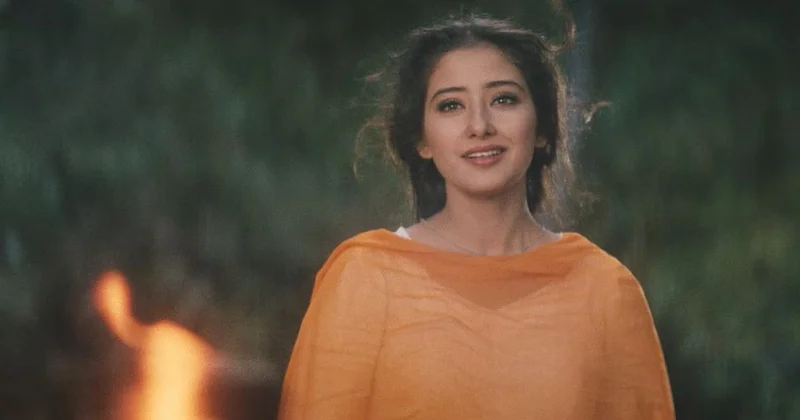
Naren (Anil Kapoor) is the callow son of Hari Pratap Singh (Manohar Singh), a wealthy toady of the British. Naren loses his heart to Rajjo (Manish Koirala), the daughter of the revolutionary Raghuveer (Anupam Kher). Raghuveer and his comrades want to kill the odious British general Douglas (Brian Glover), who’s fond of yelling “Hang them!”
Naren’s ardour is inconvenient to Raghuveer, especially since Naren doesn’t realise how much trouble he is causing by constantly following Rajjo around. The courtship, although unconvincing from the start, unfolds through some of RD Burman’s best-ever work.
The music composer died before the film’s release, unable to see how his soulful tunes along with Javed Akhtar’s lyrics infused delicacy and feeling into an indifferent romance.
Cinematographer Binod Pradhan’s soft-focus visuals and flowing movements of the lovers traipsing through libraries and valleys are intercut by the legendary editor Renu Saluja with Raghuveer’s assassination plot. The pre-interval section is like a musical with one earworm closely following another, all beautifully choreographed by Sanjay Leela Bhansali and shot by Pradhan.
Jackie Shroff appears at just the right moment to give the narrative much-needed momentum, his Shubhankar intent on sending Douglas to the gallows.
The main players are sketchily written, with other characters creating a bigger impact – Anupam Kher’s fierce revolutionary, Danny Denzongpa’s duty-bound Indian officer, Pran’s undercover operative Abid, Jackie Shroff’s Bhagat Singh-like but also studly Shubhankar.
The acting is often loud and there are too many verbose scenes, at loggerheads with the sophisticated filmmaking. Anil Kapoor and an incandescent Manisha Koirala have more to work with when the film finally inches towards its extended, intense climax.
Technically polished, with classical filmmaking and a soundtrack for the ages, 1942: A Love Story pleases the eye and soothes the ear without necessarily touching the heart. Some of 1942’s ravishing compositions and beats clearly influenced Mani Ratnam’s Dil Se that came out four years later – another movie about love creating an obstruction for revolution.
Vidhu Vinod Chopra’s command over his craft is impeccable in 1942. But the film doesn’t have the compelling lead characters or situations to complete the grand sweep that juxtaposes history and the individual, a country rising up against its colonisers and a young man’s political awakening.
However, there are several moments to savour: Rajjo swinging through the air, blissfully unaware of the impending storm; Raghuveer crouched in his bomb-making hidey-hole; Shubhankar realising where Rajjo’s heart lies; rows of soldiers and torch-bearing protestors coming between Rajjo and Naren; Rajjo fleeing in slow motion. These moments don’t always add up, but they linger, like RD Burman’s magnificent songs.
Also read:
We welcome your comments at letters@scroll.in.