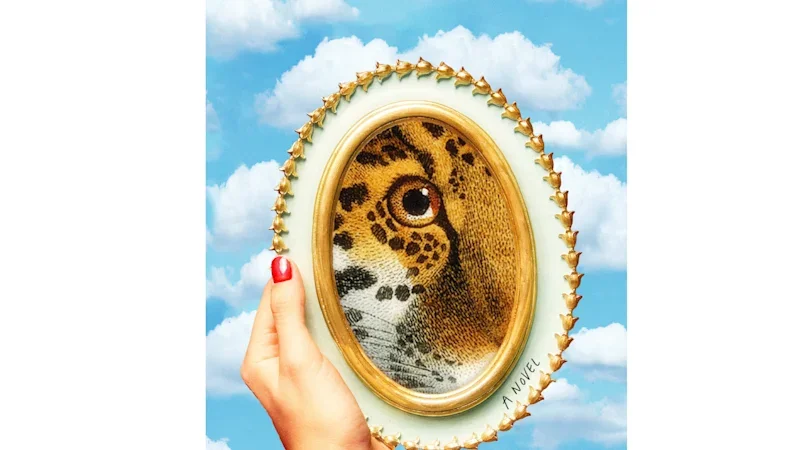
There’s a bit of everything in this week’s new releases: love, sex, heartbreak, magic, politics, history and even a woman who may or may not turn into a leopard. The fiction takes us from the slums of Delhi to the Scottish court of Mary, Queen of Scots. In non-fiction, Richard Flanagan takes aim at the orthodoxies of our time, while other writers turn their attention to colonial history, first responders and a remarkable Australian-founded school in Uganda. Here are 10 new books our critics have been reading.
Fiction
A Real Animal by Emeline Atwood (Scribe, $35)
The question of how sexual assault can affect love and desire in victim-survivors is rarely tackled with any depth in literature. A Real Animal changes that. After being raped during a summer abroad, college senior Lucy experiences a violent change in her behaviour. She can’t bear being touched by the boyfriend who loves her and dumps him. Counterintuitively, she also becomes wildly promiscuous, later taking on a kinky lover with a cuckold fetish and abusive tendencies, among other things.
When Lucy becomes estranged from her mother and transforms (maybe for real) into a leopard on campus, the animal, instinctual part of her consciousness seems to take charge. As she wrestles with it, Lucy tries to rewrite her story completely – changing cities, intimate partners and careers – but some things cannot be willed away, and the long road back to agency will demand acknowledgement and acceptance. Emeline Atwood has created a psychologically credible and deeply vulnerable protagonist, more human (and ultimately more likeable) for the way the author refuses to allow victimhood to flatten a character into a category.
The Girl with the Seven Lives by Vikas Swarup (Head of Zeus, $35)
Vikas Swarup attracted global attention as the author of Q+A, the novel adapted into the hit film Slumdog Millionaire. The Girl with the Seven Lives takes us once more into the slums – this time Delhi, rather than Mumbai – where a young woman, Devi, has been captured and is being held at gunpoint, forced to recount her “past lives” as she’s auctioned off online to the highest bidder. Devi was raised dirt-poor and learned early that life was cheap. Her youngest brother was killed by a speeding BMW, with zero chance of justice – only a spiral of violence and corruption that still swirls around her. Devi has done unspeakable things to survive, and we follow her as she navigates a complicated web of victimhood and agency, travelling across India evading powerful enemies and making her way in the world.
Given the contested response to Slumdog Millionaire (some thought that it exoticised poverty to entertain well-off audiences), Swarup addresses cultural appropriation and power imbalance directly here, through an uncomfortable encounter with a novelist. It’s one telling episode in a gripping picaresque adventure.
I Love the Whole World! by Victoria Hannan (Penguin, $35)
My cynical heart skipped a beat on seeing a novel called I Love the Whole World! And yet I found myself enjoying this slim, upbeat take on reinventing oneself after a midlife relationship breakdown. Almost all such books rely on some sort of improbable plot device to light the path to self-discovery, and Victoria Hannan’s latest novel does, too – but it’s a weirdly plausible improbability delivered, like the book’s optimism, without sentimentality or escapism.
At age 43, Leslie McDonald gets discarded by her physiotherapist husband (for a woman with better posture). Leslie must find herself again… and starts by obsessively entering competitions. When she wins a free holiday to Las Vegas, it seems like a jaded satire of that grotesque edifice to leisure might be on the cards. Still, Leslie is determined not to waste the golden ticket, experiencing wonder in the vastness of the desert landscape, at an artistic community, and among stage magicians on the Strip. The key to freedom, Leslie finds, is to allow herself to be liberated from the limiting expectations placed upon her, and this droll, unpretentious feel-good book wears that wisdom lightly.
Little Spark by Jess Kidd (Penguin, $35)
Gothic fiction is one of my preferred genres, so the flaws in Jess Kidd’s Little Spark loomed larger for me. It’s a fascinating idea for a novel, lugubriously executed. Set in a slightly steampunk version of Victorian England, we follow Bodkin Bell – an orphaned Dickensian waif and pickpocket. Bodkin has special powers of electromagnetic origin – gaslights burn brighter at her approach, metal electrifies, sparks fly from her extremities – and until a misfortune lands her in jail, she served as an attraction at a freakish sideshow. Now, she has a way out of her predicament: an opportunity to enter service at Point Mote.
This remote manse in the Kentish marshes has Gothic written all over it. Home to an obscure family of inventors who create living automata, Point Mote produces lifelike machines and Bodkin’s unique powers can assist. But where do her powers come from and are they linked to the secret history of her new abode? Kidd’s imaginative world-building isn’t matched by narrative craft. The idea for a Victorian-era ghost story that’s also a “ghost in the machine” story is frankly inspired, but the slow pacing and ill-judged timing of revelations make this one a bit of a slog, even for genre fans.
The Changeling by Kate Forsyth (Penguin, $35)
Kate Forsyth’s The Changeling is period fantasy romance draped in Celtic folklore. It introduces a mortal heroine bound by deep and abiding ties of consanguinity to the mystical world of the fey. Caiti NicNeven is a faery princess – the daughter of the Queen of the Sidhe – and her mother plots to use her as an instrument of vengeance. The Queen harbours a bitter grudge against the Scottish kingdom that usurped her own sovereignty long ago. On the throne is Mary, Queen of Scots, and Caiti will flee to her court, though the atmosphere is tense with religious hatred and fear, and an edict banning witchcraft is mooted. Not fun if you’re a young woman who possesses a magic she can’t control.
Yet the faeries aren’t much better. When Caiti falls in love with Robbie, her mother bestows a fatal curse on him, hoping to coerce her daughter’s participation in a war between two worlds, and Caiti must enter the faery realm to save him. If you like faeries and magic, Scottish history and legend, The Changeling should appeal: it’s a romantic quest fantasy enlivened by an atmospheric blend of folkloric and historical elements.
Non-fiction
Heresies by Richard Flanagan (Penguin, $37)
“Good writing is never orthodoxy,” says Richard Flanagan. “It is heresy. Writers, if they are doing their work properly, rub against the grain of conventional thinking.” These occasional pieces testify to a writer doing his work properly. And fearlessly. There is nothing partisan about Flanagan’s stance. He lambasts both the left and the right when they fail to protect asylum seekers, interfere with the independence of writers festivals as forums for free speech, attempt to censor public broadcasters and universities, refuse to acknowledge the urgency of climate change or fail to recognise the gift bequeathed by our Indigenous peoples.
Flanagan has a knack for getting to the heart of current controversies with plain-speaking panache. When critiquing how writers festivals have become less about books and more about prosecuting social and political agendas, he remarks that we are losing “our courage to listen to others than our tribe.” A mixture of reportage, prophecy and polemic, these striking essays speak to the crises of our times.
Musquito by Naomi Parry Duncan (Allen & Unwin, $37)
The subtitle speaks of “a legendary colonial warrior”. But this description doesn’t do full justice to the multifaceted, nuanced nature of historian Naomi Duncan’s portrayal of the Indigenous man known as Musquito whose “spirit burnt brightly for nearly 50 years”. A boy when the First Fleet arrived, he was forced to reinvent himself time and time again as his world was turned upside down. We see his many incarnations as cultural interpreter, warrior, prisoner, exile, tracker; his role as resistance fighter no more important, says Duncan, “than his life on Country, or his attempts to find new communities, work with white people and discuss religion with them, while maintaining Aboriginal culture.”
Researching Musquito’s life brought Duncan up against her own ancestors’ complicity in the colonial project which directly impacted Musquito and his Indigenous communities. This personal thread adds another dimension to an absorbing, atmospheric and moving portrait.
Sirens by Martin McKenzie-Murray (Black Inc, $35)
We rely on them to be there when we need them. To keep a lid on crime, to put out fires, to attend medical emergencies. First responders uphold the fragile edifice of an orderly and safe society. But at what cost to themselves? As Martin McKenzie-Murray shows, it’s not as simple a question as it appears. In the case of the three people profiled here, it was their childhood experience of trauma that motivated them to seek out these roles. They knew the world was an unstable place and they wanted to impose order upon it. But were they “exposing themselves to the existential jeopardy of depending upon something impossible”?
The emergencies these workers attend provide plenty of conventional blood and guts drama. But it’s McKenzie-Murray’s exploration of the interaction between his protagonists’ pasts and their work that gives this book its emotional, philosophical and psychological depth. While control might be an illusion, Sirens is a well-wrought container for the chaos first responders can encounter or find unleashed within them.
** What the Flora? by Vanessa Fuchs (Pantera Press, $37)**There is a species of tree that survived both the asteroid that wiped out the dinosaurs and the atomic bomb that devastated Hiroshima. And an 800-year-old river red gum in whose hollow 10,000 Djab Wurrung babies were born. There are plants that are lethal weapons and sources of healing; models for ingenious inventions such as Velcro and clues for solving crimes. We rely on plants for the air we breathe and the food we eat.
And yet, says Vanessa Fuchs in this beautifully illustrated and produced work, we rarely give much thought to “their secret lives, their struggles, their astonishing superpowers”. This lack of curiosity is known as ‘plant blindness’, a tendency to regard plants as the passive background to the real action: animals and humans. What the Flora? is a cornucopia of captivating, scientifically informed stories about what plants can do, how they interact with each other, their intelligence as “nature’s original problem-solvers” and how they have been blueprints for human revolutions in technology, architecture and medicine.
School for Life by Annabelle Chauncy (Macmillan, $37)
A Ugandan saying goes, “Every rooster which is strong today once came from an egg”. This became the motto of the Katuuso Primary and Vocational School, the first school in Uganda set up by Australians Annabelle Chauncy and Dave Everett. Chauncy and Everett were in their early 20s, volunteering in Africa, when they saw children walking for kilometres to school, barefoot and on empty stomachs, in the hope that education might lift them and their families out of poverty.
Struck by the generosity of the local people who were willing to share the little they had, Chauncy saw that she, and western culture in general, had a lot to learn from them. It was in this spirit of reciprocity that the foundation School for Life was born and would go on to fund three schools, employing 150 Ugandans and transforming their communities. Children educated at these schools are now returning as teachers. Chauncy’s drive to make a difference is remarkable but as she puts it in this memoir, “the real story of School for Life is not mine. It is the true tales of its people.”
What else is happening in the book world?
- This is the email many authors dream of getting – but beware, it could be a trap
- Artist Tom Carment reflects on five decades of friendship with the late Robert Gray
- Novelist Richard Flanagan opens up about his early onset dementia misdiagnosis
- A 3000-year-old poem is suddenly back on the bestseller list. Here’s why