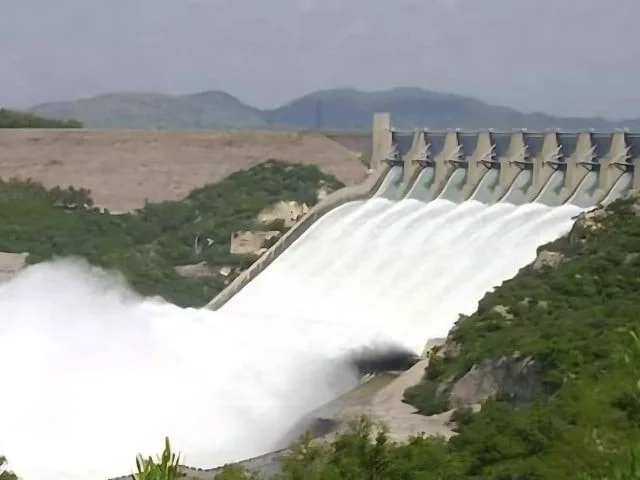
Tarbela full, Rabi water outlook strengthens
Slower Mangla filling keeps water managers cautious
LAHORE:
As the country heads into the upcoming Rabi cropping season, a substantially stronger water position was recorded on Thursday after Tarbela Dam reached its maximum conservation level.
However, the slower filling of Mangla Reservoir remains a concern for water managers ahead of winter irrigation requirements.
The country's three major reservoirs were holding 10.970 million acre-feet (MAF) of water as of August 19, equivalent to 83.43 per cent of their combined storage capacity of 13.149 MAF.
Tarbela has already reached its maximum conservation level, while Chashma is also close to full capacity. However, Mangla remains comparatively less filled because of subdued inflows into the Jhelum River, leaving a narrower margin for comfort ahead of the Rabi season.
The healthy storage position provides an important water cushion as monsoon flows begin to recede and river discharges normally decline during the upcoming winter months.
The stored water can be released through the irrigation system during periods when natural river flows are insufficient to meet agricultural requirements, making reservoir levels particularly important for the sowing and subsequent growth of Rabi crops, especially wheat.
Tarbela's position is particularly significant. The reservoir has reached its maximum conservation level of 1,550 feet, with storage at about 5.58 MAF. Its full storage means water managers have a substantial reserve available for regulating Indus flows after the monsoon season and supporting irrigation requirements during the low-flow period.
Meanwhile, Mangla is the weaker link in the current storage picture. Its slower filling reflects relatively weak inflows into the Jhelum system and below-average monsoon flows in parts of the Jhelum and Chenab systems.
With Mangla still below its maximum conservation level, water managers will be watching inflows closely over the remaining monsoon period.
The difference between the two reservoirs matters because Pakistan's irrigation system relies on seasonal storage to bridge the gap between abundant summer flows and substantially lower winter flows. The reservoirs capture water during the monsoon and make it available later for agriculture and other uses.
For farmers, the current position remains broadly positive but does not eliminate the need for careful water management. A full Tarbela gives the irrigation system an important buffer, while Mangla's slower recovery means that the overall Rabi outlook cannot yet be declared completely comfortable.
Wheat, the country's principal Rabi crop, is likely to be among the biggest beneficiaries of healthy carryover storage. Adequate water availability during the sowing period is particularly important because shortages at that stage can affect the area brought under cultivation as well as subsequent crop yields.
Other Rabi crops, including gram, fodder and oilseeds, would also benefit from a stable irrigation supply. Strong reservoir levels can help farmers maintain sowing schedules and reduce the risk of water stress during critical stages of crop development.
However, experts have also pointed out a longer-term challenge. Reservoir storage capacity has been affected by sedimentation, while Pakistan's increasingly variable hydrological conditions are making seasonal water management more difficult.