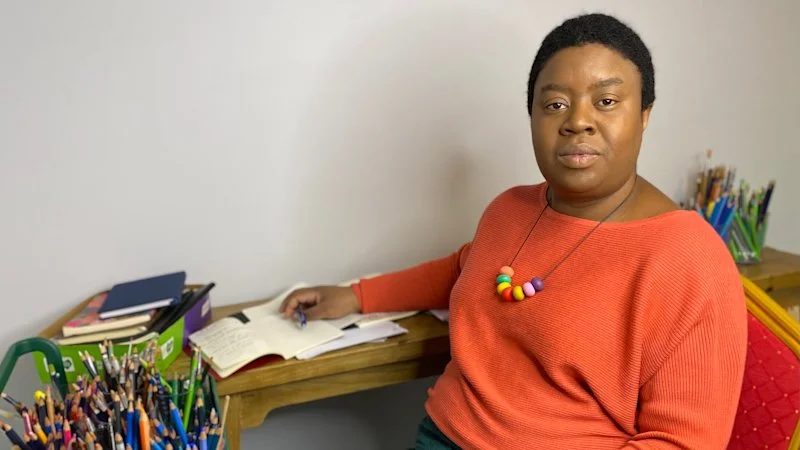
When Maxine Beneba Clarke attended book events in Geelong and Bendigo last week, there was one thing missing – the books she was there to discuss.
The poet, memoirist and children’s writer, who is a regular on school syllabuses, is one of many victims of a major cyberattack at publisher Hachette that has severely disrupted authors and booksellers across the country.
With the Christmas season starting next month, Children’s Book Week under way and Father’s Day soon, it couldn’t have happened at a worse time for the book industry. It is when a bumper crop of books is published, and it marks the beginning of the crucial shopping period when retailers earn a major chunk of their annual revenue. But if a publisher can’t distribute their books and shops can’t get stock, tidings of comfort and joy swiftly vanish.
A few weeks ago, something went seriously awry at Hachette Australia and Aotearoa New Zealand, what the publisher calls “unauthorised activity” on its computer systems. The incident, believed to have occurred on July 18, has played havoc with Hachette’s supply chains and distribution, leaving booksellers and authors around the country frustrated.
Hachette is owned by the French Lagardère Group and is the third-largest trade publisher in the world. In Australia, it also runs Alliance Distribution Services, which distributes Hachette’s own books and those of other publishers such as NewSouth Books and Magabala. Last year, ADS shipped more than 16.5 million titles.
“I do events all year round,” Clarke said. “God knows what the ramifications are going to be for me. A few of my books are on booklists for schools in several states. I don’t know what this will do to school supplies.” She was disappointed with the lack of communication from Hachette.
Kris Kneen, whose new novel Rite of Spring, was published last month by Transit Lounge and distributed by ADS, said they were depressed and deflated. “There’s so much effort putting a book out through a new publisher. The media was good, the reviews were good and that all bodes well until people go into a bookshop to get it, and they can’t.”
Australian Society of Authors chief executive Lucy Hayward said she had arranged a meeting with Hachette. “Authors are business partners with publishers and should be treated that way. They are doing more marketing and promoting of their books than ever, and it’s only fair to expect transparency from their publishers.”
Supply of books is anything but smooth at present and booksellers are angry about the lack of information from Hachette. Any communication they have received about the ongoing situation is apparently labelled “private and confidential”.
One bookshop owner who didn’t want to be named said that while they had had some supply for mid-month releases, the cartons had come in without invoices, making record-keeping tricky, and their daily re-orders, which replenish dwindling stock, were not being processed. “Backlist titles are booksellers’ bread and butter and there is nothing available.”
Hachette has suggested, as a temporary measure, that bricks-and-mortar shops buy stock from online retailer Booktopia, which another bookseller said was “egregious” and yet another said would be like buying “from the enemy”. Apparently, Hachette has supplied Booktopia with extra stock of about a thousand titles.
Other shops are trying to get around the supply issue by bringing in stock from overseas. One independent bookseller said they were working with Gardners in Britain, which has more than 500,000 titles in its warehouses and offers about 5 million ebooks. But establishing new business accounts and sorting out trade discounts takes time, as does getting the books into Australia.
“We are taking a bit of a hit on price and margin,” the independent seller said. It was an “insane situation and the lack of communication has been extraordinary … it has been massively disruptive for booksellers and consumers”.
Among Hachette’s current titles expected to rush out of the shops in the next few months are Hamnet author Maggie O’Farrell’s Land (one major independent bookseller said they had been unable to get more stock and now had no copies at all), Andrew Sean Greer’s Villa Coco, David Sedaris’ The Land and its People, and Dr Norman Swan’s The Brain Cliff (released later this month). Other major titles due in the coming months include Michael Robotham’s Tell Me Something True and Favel Parrett’s One For Sorrow.
In a statement sent to authors on Friday, Hachette chief executive Louise Stark said the publisher was “not yet in a position to confirm a timeline for a full return to normal operations”. She acknowledged authors’ frustrations at the change of publication dates for print editions of books and the disruption to planning promotional campaigns and events.
“Temporary supply arrangements introduced in the days following the disruption are continuing to keep books moving into the market. While these arrangements cannot replicate normal distribution, they have helped maintain supply where we can,” the statement says.
Stark said: “Not being able to support our creators and bookselling partners at our usual standard is felt deeply by everyone at Hachette and ADS.”
The Booklist is a weekly newsletter for book lovers from Jason Steger. Get it delivered every Friday.