- See more This is Money on Google - save us as a Preferred Source
Pressure on the public finances intensified last month after higher spending contributed to an unexpected rise in the deficit.
Fresh figures published by the Office for National Statistics (ONS) show government borrowing stood at £1.8billion in July, £700million more than a year ago.
Economists had not expected any further increase in borrowing while the Office for Budget Responsibility (OBR) had forecast a £500million surplus.
A higher tax take – including record self-assessed income tax receipts – failed to offset higher borrowing caused by inflation.
The ONS said the government had spent £2billion more on social benefits compared with a year ago, while spending on goods and services – including staff costs – was up £2.billion.
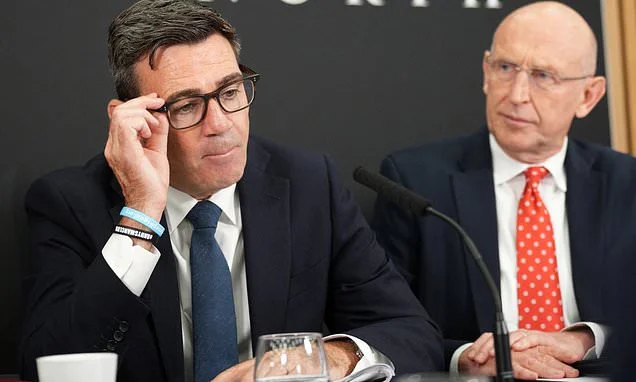
Chancellor John Healey will have to balance Burnham's spending with a larger-than-expected deficit
Borrowing of £56.7billion over the financial year so far is also running ahead of the OBR’s forecast of £54.4billion.
Total public debt was £2.98trillion, or 94 per cent of GDP – up £96billion on a year earlier as Labour borrows more for infrastructure projects.
This morning’s figures lay bare the fiscal pressures facing Burnham, who has launched a cost-of-living policy blitz since he arrived in Number 10.
It leaves the Chancellor with a headache as he seeks to balance welfare and defence spending against an elevated deficit.
And further pressures lie ahead after a fresh surge in borrowing costs this week eats away at the Chancellor's headroom. The 10-year gilt yield rose to 5.155 per cent at one point this week, the highest level since August 2007.
Martin Beck, chief economist at WPI Strategy says higher borrowing costs will limit what Healey can do in the autumn, suggesting there will be a ‘relatively modest package’.
There is likely to be ‘some targeted spending increases, a handful of smaller tax rises and perhaps a limited increase in borrowing’.
He added: ‘Any attempt to go significantly further, through large-scale capital spending, major tax cuts, such as a rise in the personal allowance, or another change to the fiscal rules, would put renewed focus on gilt issuance.’
In a statement, Healey said: ‘Fiscal discipline is the bedrock of our UK economic stability and national security, which is why we are committed to meeting our fiscal rules, with a buffer against global uncertainties.
‘We are cutting the deficit faster than any other G7 economy while giving people a bit of breathing space with cost-of-living pressures and focusing support to get young people into work.’
DIY INVESTING PLATFORMS
Compare the best investing account for you