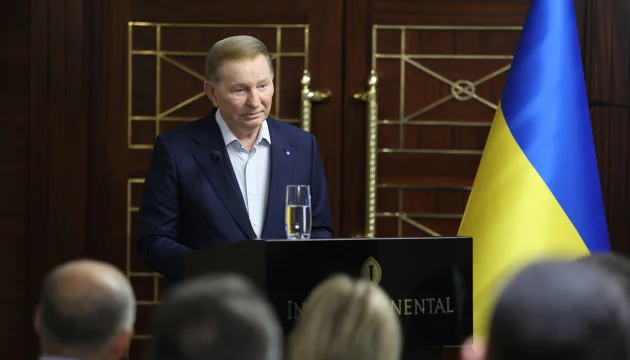
Kuchma, Ukraine's second president, expressed this view in an interview with Ukrinform.
"Among the unquestionable mistakes, I would definitely name the catastrophic decision not to sign the Association Agreement with the European Union in Vilnius. But, emotionally, the hardest thing for me personally to accept is the de facto surrender of Crimea in February-March 2014. There was no response to the actions of the 'little green men,' who calmly and brazenly took control of the Ukrainian peninsula. Let me remind you: formally, they were not even identified as Russians. They were unknown terrorists, and they should have been dealt with accordingly. A decisive response in Crimea could have stopped the attempted annexation at its very beginning," Kuchma said.
Read also:Kyslytsya on partner support: If Ukraine is gone, they will have to deal with Russia
He also separately mentioned the loss of Ukraine's nuclear weapons. According to the former president, agreeing to the removal of Ukraine's tactical nuclear weapons in 1992 was a fatal mistake. He said that by 1994, when the Budapest Memorandum was concluded, there was essentially nothing left to decide regarding Ukraine's strategic security – everything had already been settled two years earlier.
"The point is that the Budapest Memorandum deprived Ukraine of strategic weapons whose condition and characteristics would not have allowed them to provide nuclear deterrence anyway. But at the beginning of our independence, we did have the weapons needed for that. We had about 3,000 tactical nuclear warheads. In principle, we could have used them to defend ourselves against Russia at that time. They had an optimal range of operation and included nuclear aviation bombs, artillery shells and naval torpedoes – in other words, the entire range of tactical nuclear weapons. And unlike the strategic arsenal, Ukraine could control and deploy them itself," Kuchma said.
As reported, the removal of all tactical nuclear weapons from Ukrainian territory to Russia was completed on May 7, 1992. About 2,500 tactical warheads were transferred under pressure from international partners and because Ukraine lacked the technical and financial resources to maintain them.
At a Cabinet meeting on November 21, 2013, the Ukrainian government adopted a resolution titled "Issues Concerning the Conclusion of the Association Agreement between Ukraine, on the one hand, and the European Union, the European Atomic Energy Community and their Member States, on the other," suspending preparations for the signing of the Association Agreement between Ukraine and the EU. The decision triggered mass protests that eventually grew into the Revolution of Dignity.
On February 20, 2014, Russian troops without identifying insignia began landing in Crimea. On March 16, 2014, a so-called referendum on Crimea's status was held in the temporarily Russian-occupied Crimea and the city of Sevastopol, in violation of Ukrainian and Crimean legislation. It took place under pressure from Russian troops and paramilitary "self-defense" groups and with the support of Russian propaganda media.
Photo: Maksymilian Ilchenko