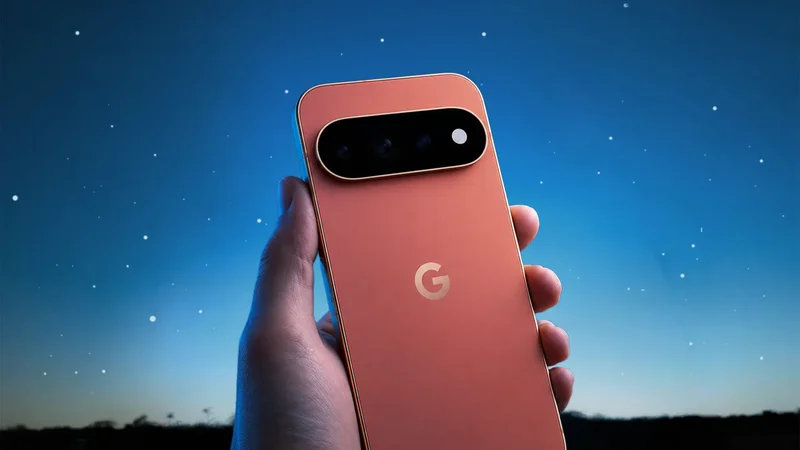
As is tradition, leaks render any new phone release underwhelming.
We already knew most of the Google Pixel 11 lineup's flagship features and hardware specifications ahead of launch. Still, there were a few intriguing nuggets of information to be mined from hands-on experience.
One of these was particularly unexpected. Unless they fix a specific problem (see how the Pixel 9 fixed the Pixel 8's washed-out photos), camera upgrades tend not to make any difference for most of us.
But the helped clarify exactly what a camera upgrade should and shouldn't look like in 2026 and beyond.
I learned my lesson with the Pixel 7 Pro
Some features are just there to make headlines
The Pixel 7 Pro was the first Pro model of Pixel phone I owned, and I was thrilled to get a chance to play with the fancy toys I had envied for so long.
One of these was particularly fascinating: Super Res Zoom. It promised 30x zoom, and while that was already shorter than the 100x zoom offered by Samsung and Honor phones, it was the longest zoom I had ever used on a smartphone.
The problem? I never used it.
Sure, I played with it a few times, but I quickly realized it was pointless. The only reason I wanted to zoom in that far was to pick out details, but the AI-powered post-processing scrubbed these.
Subsequent Pixel models have improved this technology. My current daily driver, a Pixel 10 Pro, . Here's what a photo looks like at 1x zoom, 100x zoom, and 100x Pro Zoom.
It looks fine at first glance, but further examination reveals plenty of artifacts where AI has tried to fill in the blanks. It's impressive technology, but I wouldn't share this photo with my friends.
Boasting about zoom level looks great on marketing materials, but at the end of the day, it's another camera feature we don't need or use. Ultrawide lenses, underwater video, Camera Coach, Add Me. Features that sound cool, but aren't relevant in our daily life. So what is?
One really good camera lens is all I need
Only advanced models deserve the full suite of lenses
I accept that Pro and Ultra phone models deserve the best camera setup possible. Still, for our base-level flagship and midrange phones, ultrawide and macro lenses are unnecessary.
I'm convinced the only reason the has an ultrawide camera is to maintain the pill-shaped cutout of the camera bar. Does it need an ultrawide camera? No. Would it be as good with only its main camera? Yes.
Let's step outside Android territory and look at a different midrange phone: the iPhone 17e. This phone features a single (one) 48MP camera with 2x telephoto and 10x digital zoom.
Perfect.
10x zoom is more than enough for 99% of the photos I want to take. Sure, I occasionally would like to zoom in further, but I won't miss it if it's gone.
Ditching the unnecessary ultrawide camera is a brilliant move from Apple. The result is a no-nonsense, brilliant camera that can handle all everyday photography. Want quality photos at a higher zoom? Buy an actual camera.
If only Apple could flatten the camera against the phone's back like the Pixel 10a. Then it would be perfect.
But a lot more goes into cameras than the hardware. Pixel phones are known for their extensive suite of camera tricks, most of them unnecessary, but surprisingly, the Pixel 11 introduces useful tools.
Instant Night Sight is the Pixel 11 Pro's flagship feature for me
It solves a problem. Fantastic
The Pixel 11 Pro feature by making it instant. No more waiting around, no more holding the shutter button, no more blurry photos. Instant.
Forget the improvements to apertures and sensors; this is a powerful upgrade that I would use all the time.
There are a few other useful features, like Camera Looks (essentially a more convenient way to access Snapseed filters), Magic Capture (for taking videos and photos simultaneously), and 5x Portrait zoom.
However, Instant Night Sight is the first camera feature in years that solves a problem.
It's the kind of camera software upgrade I want from a new phone. I stopped caring about camera hardware years ago; software now has the biggest impact on my photography.
Camera upgrades are still possible, but it's easy to get lost in the marketing
Don't get me wrong, if I picked up a Pixel 11 Pro right now, the first thing I would do is see how far I can zoom in. But is it a selling point for me? Absolutely not.
I want a phone camera that does the basics brilliantly, with no extra lenses. And when the only phone that offers that is the , the temptation to switch becomes greater than ever.