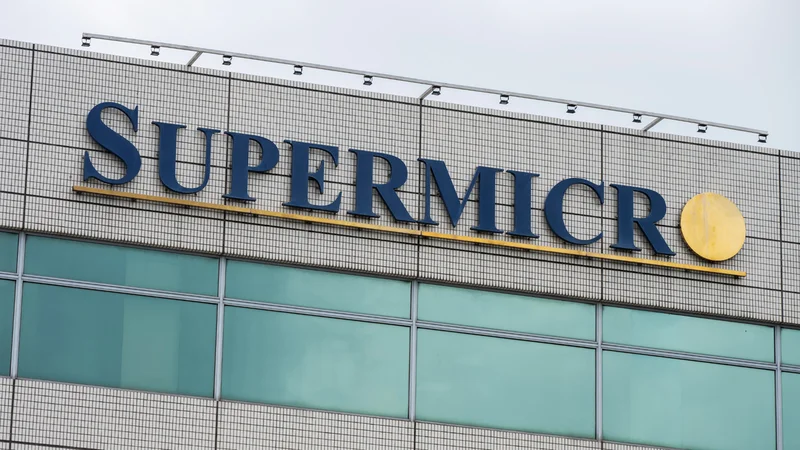
Five months after the arrest of Supermicro co-founder Yih-Shyan “Wally” Liaw and two other co-conspirators for the alleged smuggling of Nvidia hardware into China, the company announced that it has completed its independent investigation and released its findings to the public, resulting in the termination of several employees. Supermicro said that the investigation, which was handled by an external law firm and conducted by an “independent forensic accounting consultant,” finds that neither the company nor its current senior executives were part of the alleged AI chip smuggling. It also said that it’s adopting all the recommendations to enhance its export compliance programs, although it did not directly admit that it was lacking in that department.
- While the U.S. flip-flops on chip sanctions, China is building its own chip supply market
- The state of China's decade-long semiconductor push
- Huawei Ascend NPU roadmap examined
- China's CXMT targets 30% DRAM memory market share by 2030 with sixth mega-fab
- China's latest round of rare-earth export controls explained
“The investigation team reviewed the customer transactions that were the subject of the federal indictment, as well as transactions with a selection of other customers who bought restricted products, and did not find any evidence that any current member of senior management had knowledge of the alleged diversion scheme or of any actual diversion of restricted products by the Company,” Supermicro said in the statement. It also added, “The Company’s compliance personnel have acted in good faith, with the support of management, to mitigate the risk of the Company’s products subject to export controls being diverted to restricted parties or locations.”
This odyssey began in March when the U.S. charged Liaw alongside Supermicro sales manager Ruei-Tsang “Steven” Chang and third-party broker Ting-Wei “Willy” Sun with conspiracy to unlawfully divert cutting-edge U.S. artificial intelligence technology to China. The accused aren’t operating a small-time smuggling operation, either — reports estimate that the three have smuggled hardware worth $2.5 billion since 2024. That massive amount has got shareholders worried that a huge chunk of the company’s sales come from illicit sales, resulting in some investors suing the company for securities fraud. Because of this, the company’s independent advisors also looked into this issue and said that it “did not find any evidence that the Company’s previously issued financial statements could not be relied upon based on the potential diversion of restricted products.”
Even though the third-party investigation exonerated Supermicro’s senior executives, it also resulted in the termination of several employees. The affected people were from the sales, technical support, and business development departments, although they were fired for breaking the company’s policies and code of conduct — the company said these moves were made "in connection with the investigation." Notably, none of the personnel were from its compliance department, and it’s also unclear how many people were dismissed.
Supermicro also said that it’s enhancing its export compliance program, which Nvidia CEO Jensen Huang said it must fix. Even though the company was never accused of wrongdoing and wasn’t part of the defendants in the case against the alleged smugglers, the fact that some of its employees were able to run a massive diversion scheme right within the organization raises major questions about the effectiveness of its compliance department. It said that it has already made changes that were recommended by its General Counsel and Chief Compliance Officer even before the third-party investigation concluded, and that its independent directors “will oversee implementation of the remaining recommendations.”
The high demand for AI chips in China has meant the smuggling operations are quite lucrative, even as the U.S. is tightening its grip on export controls and Chinese authorities are commanding that its tech companies prioritize locally made Chinese chips instead of American AI GPUs. Nevertheless, the race to build ever more powerful AI models means that there is such a massive demand for the most advanced AI GPUs from Nvidia that some people are looking for ways to circumvent these bans and make “easy” money.
Get Tom's Hardware's best news and in-depth reviews, straight to your inbox.
Jowi Morales is a tech enthusiast with years of experience working in the industry. He’s been writing with several tech publications since 2021, where he’s been interested in tech hardware and consumer electronics.