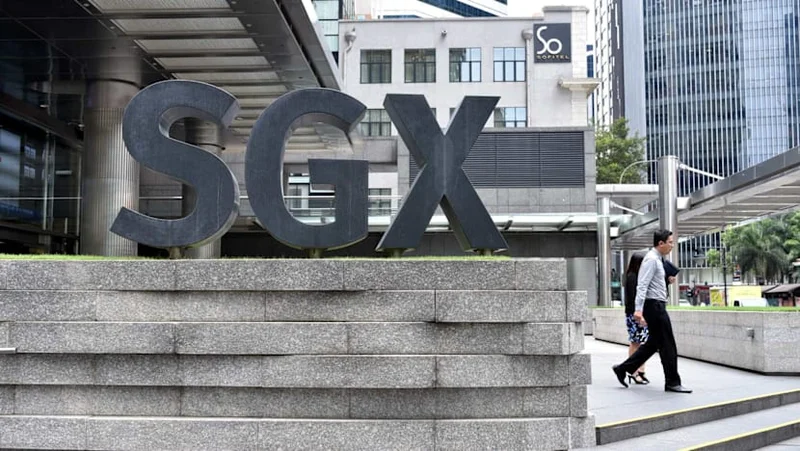
Six IPOs this year, most trading below issue price: What this means for Singapore's market reforms
Analysts say the underwhelming showing reflects thin liquidity and a global tilt towards AI stocks more than a failure of Singapore's push to revive its equity market.
SINGAPORE: Despite early hype over initial public offerings (IPOs) on the Singapore Exchange this year, only six companies have listed and five were below their IPO prices as of the market's close on Thursday (Jul 23).
The lacklustre performance may hurt sentiment and test investors’ patience, but analysts said it does not mean government efforts to develop the equity market have failed.
IPOs represent a small segment of the market, they noted, and reforms will take time to show results.
Reports earlier this year suggested Singapore could see close to 30 IPOs this year. The companies that did list have performed below expectations, with JustCo and Foundation Healthcare Holdings both sliding in the days after their debuts despite price stabilisation efforts.
“To be honest, a few lacklustre IPOs do hurt sentiment, especially among retail investors,” said Assistant Professor Goh Jing Rong, who teaches economics at the Singapore Management University.
Public interest in stock markets, he said, is partly shaped by stories of credible companies listing, trading well and creating wealth over time.
“If the narrative becomes ‘new SGX listings tend to fall after IPO’, future issuers may face higher pricing pressure and investors may become more cautious,” he said.
Tiger Brokers’ market strategist James Ooi said high-profile, quality IPOs attract fund flows and improve investor sentiment.
“Softer post-listing performance may naturally test retail investors’ patience and prompt companies to reconsider their IPO timing and listing strategy,” he said.
Still, he pointed to a steady pipeline of listings ahead, with companies from a wider range of sectors likely to draw investors with different mandates – making for a more vibrant market over time.
Asst Prof Goh said he "would not overstate the impact of a few weak listings", since a market's reputation is built over a cycle.
"Having consistent long-term post-listing performance, not first-day pops, is what actually matters," he said.
A Deloitte report noted that Singapore overtook Indonesia in the region's IPO rankings for the first half of the year, which it said signalled growing investor confidence and a strong endorsement of market reforms.
UI Boustead REIT's listing on the SGX in March was the largest in the region for the first six months of the year.
WHAT'S WEIGHING ON NEW LISTINGS
Analysts pointed to a mix of global, local and company-specific factors behind this year's showing.
Globally, investor interest has skewed toward artificial intelligence-related names, said Mr Ooi.
The broader AI capital expenditure cycle is absorbing "substantial capital" through IPOs and fundraising by listed companies alike, he said, leaving companies in more traditional sectors to compete for a smaller pool of funds.
IPO windows are also sensitive to geopolitics, interest rate expectations and investor risk appetite, Asst Prof Goh added.
Locally, liquidity remains relatively shallow outside large-cap banks, blue-chip stocks and established real estate investment trusts (REITs), he said.
"This means that even if an IPO is well subscribed, aftermarket demand may not necessarily be deep enough to support the price once the stock is publicly traded."
Ms Carmen Lee, head of equity research at OCBC, pointed to company size: Five of this year's listings were below US$400 million, she said, while large IPOs in Hong Kong have fared "exceptionally well".
REFORMS "FAIRLY SUCCESSFUL": ANALYSTS
An Equities Market Review Group was set up in 2024 to study ways to boost the local stock market. It led to a S$5 billion (US$3.9 billion) programme and SGX plans to reduce board lot size for securities above S$10.
Ms Lee described the Equity Market Development Programme as "fairly successful".
"Based on both trading activities and price movements, the programme has achieved most of its objectives so far," she said.
She also said IPOs form only a small percentage of total listed companies. The Straits Times Index has risen more than 18 per cent this year, she said, reflecting interest in the Singapore market.
Asst Prof Goh said he would not read the recent IPO performance as proof the government's efforts have failed.
The reforms are structural, meant to deepen the fund-management ecosystem and widen participation in Singapore equities, and will take time, he said.
"They cannot guarantee that every IPO will trade above issue price," he said. A healthy market, he added, should be able to reject overpriced offerings.
The better test for the government’s efforts is whether Singapore can attract more quality issuers, improve trading liquidity after listing and develop a broader investor base in the next few years, Asst Prof Goh said.
IPO OUTLOOK
The Deloitte report said the Southeast Asian IPO market is expected to stay healthy, supported by a strong pipeline, improving investor sentiment and easing interest rates.
It expects the market to keep shifting toward fewer but larger, higher-quality deals, with Singapore continuing to attract large institutional listings.
Analysts said valuations, trading liquidity and geopolitics will continue to shape how individual IPOs perform.
"Much will depend on company specifics, particularly earnings visibility and cash-flow quality, while reasonable pricing also remains critical," said Tiger Brokers' Mr Ooi, adding that cornerstone investor participation can lend additional confidence.
Asst Prof Goh pointed to the planned dual-listing bridge – allowing companies to list in Singapore and on the NASDAQ in the US at the same time – as a promising development, particularly for technology, digital infrastructure and other high-growth companies that might otherwise bypass Singapore.
But he flagged the risk that liquidity migrates to the NASDAQ: "There must be enough institutional and retail participation here, and issuers must have a real reason to maintain investor engagement in Singapore."