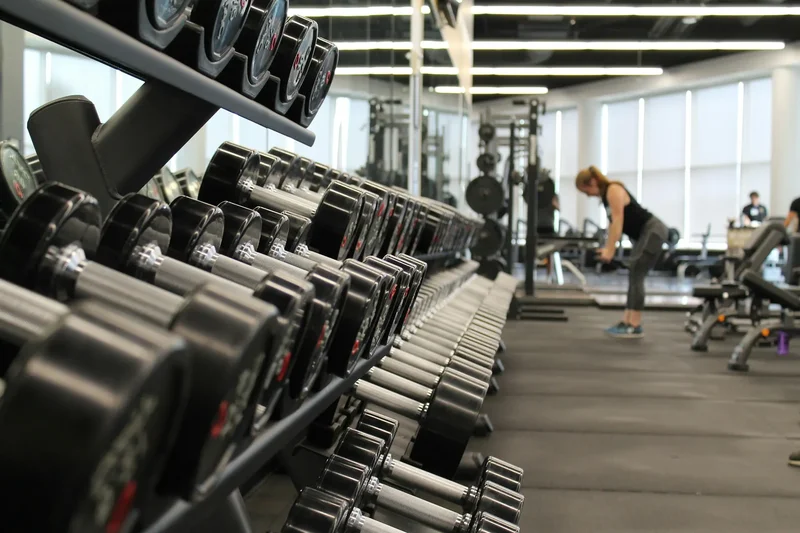
The Italian gym scene today is unrecognizable from 10 years ago. Back then, your average local gym was one room with a couple machines and some free weights, no air conditioning, and limited opening hours – plus outrageous membership costs.
But with the proliferation of modern Italian and foreign commercial gym chains, it’s become easy to find a high-quality gym or fitness studio in your Italian city.
Below you’ll find the details on Italy’s various types of fitness and health clubs and how to get started with a membership that fits your needs and budget.
First, get your doctor’s ok
Probably the biggest shock to foreigners is that you have to visit the doctor before you can go to the gym in Italy.
For liability reasons, gyms in Italy require a certificato medico sportivo non-agonistico (non-competitive sports certificate). The certificate can be issued by your Italian general practitioner (medico di base) or a sports medicine specialist.
It’s not difficult to get – you just need a doctor to check your blood pressure, listen to your heart and lungs, and do a resting electrocardiogram (ECG). It takes about 10 minutes start to finish and costs somewhere between €40 to €75 depending on the clinic.
READ ALSO: When and why you may need a medical certificate to play sports in Italy
Unfortunately the exam does have to be repeated annually since the certificate expires after one year.
The painful part isn’t the visit itself but making the appointment(s). In most cases, you won’t be able to undergo all of the required tests at the same place at the same time – the ECG is usually carried out in a separate medical facility.
Ninety-nine percent of the time, you need this certificate, or the gym won’t let you register. There is that one percent, though; the McFit gyms in Rome have never asked me or others I know who train there.
You don’t usually have to come ready to enrol with your certificate in hand, though. My gym gives a grace period of a couple weeks after registering to turn it in, still letting you use the facilities in the meantime.
Types of gyms: Commercial gyms, sporting clubs, boutique studios
If you’re in a decently sized city you’ll likely find at least one of the big, modern gyms. Some of the most common chains are FitActive, McFit and Icon.
McFit is a German chain that started the low-cost gym trend in Italy more than a decade ago. It has 44 locations, mostly found in the north but also with gyms in Naples, Bari and Catania, and several branches in Rome.
The Italian chain FitActive is the most widespread, with more than 180 locations. It's also one of the only options that's open 24-hours (in addition to Anytime Fitness, which is a mid-range gym with about 65 locations in Italy).
Icon Palestre, also Italian, is similar, with about 50 locations in many of the same cities as FitActive.
Those are the basic, budget-friendly gym options.
If you’re looking for a more premium fitness centre, the go-to in Italy would be Virgin Active. It calls itself a ‘health club’ because there are spa services as well as everything you’d expect at a typical gym.
If you’re looking for more facilities – especially for families – you might consider joining a sports club (club sportivo).
Sports clubs in Italy will generally have a pool, tennis or padel courts, a sauna and/or tanning beds, and a cafe or restaurant in addition to a traditional gym. Some even have on-site beauticians and estheticians (which I found out when I got a facial at a gym spa, once).
READ ALSO: Public swimming pools in Italy: Where (and how) to cool off
The atmosphere at an Italian sports club can vary from athletics-focused to more of a country club feel – which, though uncommon in Italy, you can find at places such as the Aspiria Harbour Club in Milan.
A boutique gym or fitness studio may be the best option if you’re only interested in a specific type of activity. You can search for the type of fitness you’re interested in – whether water aerobics, HIIT, yoga or Crossfit – on Wellhub and filter by distance from your location.
Almost all gyms and even some fitness studios allow for one free trial (called a prova gratuita), whether that be a day’s access at the gym or one instructor-led class, so you can see if you like the experience.
Memberships and prices
Gym membership costs range from €20 a month at the lowest end to €200 for more luxurious options.
McFit, FitActive and Icon are the big names in the ‘budget’ category. Each has several tiers of memberships with basic access starting at around €20-€30 per month.
A mid-range gym like Anytime Fitness costs about €50–€70 per month.
Luxury gyms like Virgin Active cost somewhere around €150 to €200.
Classes at boutique studios vary greatly. A popular yoga studio in central Rome has a rate of €23 for one class or about €111 per month for an annual membership.
Sporting club prices vary greatly by city and amenities on offer, but one in Rome for example costs €90–€100 per month for adults, €40 for teens and €17 for younger kids.
Prices are dependent on location. Gyms from the same company often have slightly different prices at different locations, even in the same city.
Watch out for the so-called “activation fee” (quota di attivazione) that most gyms charge. This is a one-time, upfront fee you pay when you sign up. It’s usually €50–€100.
A waived activation fee is a common promotion that gyms will run. Special discounts are occasionally running at the gym, so it’s worth checking about ‘promozioni’ before you lock in your rate.
You can sometimes save on your membership by opting for the most basic tier on offer, which can mean going without some amenities like the ability to access the water or drink station. Others may have a lower membership tier that limits the days or times you’re able to access the gym, such as no entry after 4pm or on weekends.
And it’s almost always the case that you get a discounted rate if you pay for a year’s membership upfront.
Short-term memberships and day passes
You can still get your workouts in even if you’re a tourist or only in Italy for part of the year.
Though the standard Italian gym membership is for 12 months, some fitness clubs have special shorter-term memberships. The trade-off is that you have to pay a little bit more.
If you’ll be in Italy for a few months you can join a gym that offers rolling, month-to-month memberships. Icon and McFit’s monthly memberships are €50 plus an activation fee.
Gyms also frequently offer day passes – just call or check with the front desk.
Other things to keep in mind
Particularly at low-cost gyms, there likely won’t be a free water fountain, so bring enough to get you through your workout (if you aren’t willing to fill your bottle from the bathroom sink).
You’ll also probably need to supply your own lock for the locker.
What's the best gym or fitness studio in the city or town you live in? Leave a comment below so other readers of The Local can check it out.