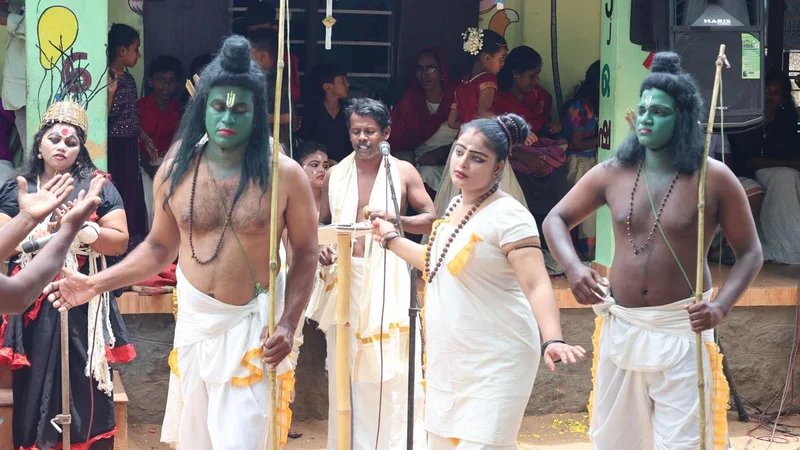
Breaking away from the routine dance numbers and popular folk performances that typically dominate Onam celebrations in schools, Prakkulam Government L.P. School in Kollam set a unique precedent by hosting a traditional Seethakali performance.
A traditional folk dance-drama from Kollam, this centuries-old art form had nearly gone extinct in the 1980s before a major community-led revival in 2017. Organised to foster cultural awareness and respect for the State’s native art forms among students, the event turned into an immersive cultural experience for the them. Adding a special charm to the day, two students from the school also joined the Perinad Seethakali Sangham on stage to perform alongside seasoned artists.
“We felt a responsibility to introduce our children to the roots of our local heritage. Giving our students the chance to share the stage with authentic folk masters created a living connection to a culture they would otherwise only read about in textbooks,” says Headteacher Kannan Shanmugham.
Historic place
Seethakali holds a historic place in the cultural lineage of ancient Kollam, where it once flourished as a prominent rural art form. Based on the epic Ramayana, the performance dramatically enacts key episodes from Seetha’s journey into the forest up to her ultimate disappearance into the earth. The art form stands out for its dramatic emotional depth and melodious Malayalam songs, which vividly capture the poignant turning points of the Ramayana. “Children were completely captivated by the vibrant costumes, rhythmic beats, and expressive storytelling. It proved that when traditional art forms are presented with passion, they connect instantly with the younger generation,” says Mr. Shanmugham.
Despite its rich heritage, Seethakali began to fade into obscurity by the early 1980s, as traditional practitioner communities struggled to sustain the form. A major turning point occurred on August 28, 2017, when the Perinad grama panchayat spearheaded a revival initiative. Led by T.N. Shajimon, who documented and restructured the art form, local artists were trained to present the narrative (of Ramayana) from the forest journey to the burning of Lanka before a massive audience. This revival led to the formation of the Perinad Seethakali Sangham, a rural artists’ collective recognised by the Kerala Folklore Academy, which continues to preserve and pass this vibrant folk art to the next generation.
Published - August 21, 2026 07:12 pm IST