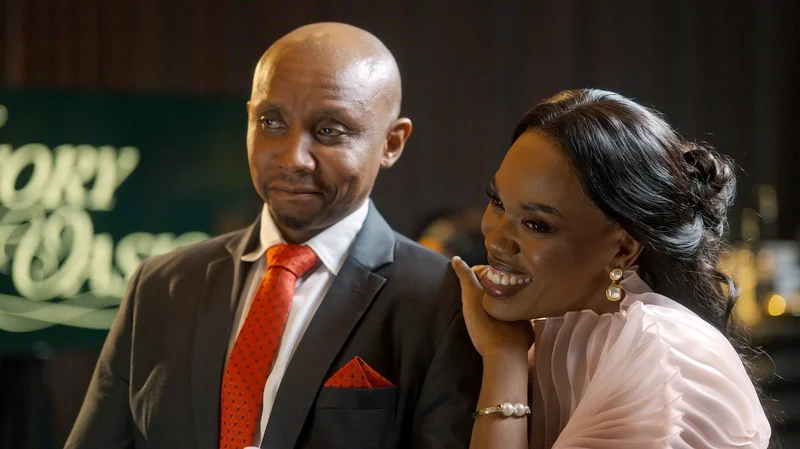
After Sue Nyathi's The Polygamist became a Netflix global sensation, reaching number two on Netflix's global non-English chart and charting in the top 10 in 63 countries, Zimbabweans took to social media to call for the adaptation of some of the country's classic novels into screen renditions.
Whether for television or the big screen, the line wasn't exactly drawn but the message was clear: lobby an industry that is sitting on gems worthy of a repeat of The Polygamist.
But industry players are more cautious about the excitement of the transition from page to screen, citing the complex nature of the business that has historically disadvantaged African filmmakers.
It has never been a walk in the park bringing an idea be it original or an adaptation to the screen, with African filmmakers citing the financial and technical hurdles involved where skilled or professional screenwriters, producers, directors and other crew personnel are few and far between.
Adapting the works of novelists further complicates the process, some experienced industry players contend."Zimbabwe has no shortage of strong fiction storytellers and stories. Think of Yvonne Vera, Tsitsi Dangarembga, Chenjerai Hove and Ndabaningi Sithole who wrote some Ndebele fiction before moving to English," Ben Mahaka, one of Zimbabwe's leading filmmakers, said.
"That transition from page to screen needs to be oiled with patient money. We don't have the infrastructure that underpins the move from books to the screen.
"That infrastructure requires healthy, well-funded local production companies. You don't just take a writer's intellectual property; you have to option it," Mahaka told the Mail & Guardian.
Zimbabwe has a rich literary history and some advocates of adapting local novels have pointed to iSiNdebele novelists, among them Ndabezinhle Sigogo, Geshom Khiyaza and Barbara Makhalisa, whose work emerged before the country's independence.
Their work resonates with readers today, judging by online sentiments after The Polygamist's success, yet the process of translating literary works would require filmmakers, producers and agents to be familiar with the novels in the first place.
The journey towards bringing such works to the screen remains daunting even after the potential of such novels has been recognised.
"We do not have strong literary agents and a functioning intellectual property rights infrastructure. If you visit film and TV markets at international film festivals, you will meet an army of agents working for their European or Asian creatives. We — and most African authors — don't have anyone negotiating adaptation rights on their behalf," Mahaka said.
Interest in The Polygamist emerged in 2022 when Nyathi was approached by Stained Glass Productions, the South African producers behind a series of Netflix hit soaps and telenovelas, the novel itself having been independently published in 2012.
It would come to audience attention only in 2026 as a Netflix blockbuster, almost 15 years later thanks to one of the producers having read the novel and saw its soap opera bent.
Industry players say it is not unusual for adaptations to go through production hell as novelists and producers haggle over the creative direction of the project.
The journey of acquiring the rights and adaptation of another Zimbabwean literary work, Don't Let's Go to the Dogs Tonight by writer Alexandra Fuller, was also long, with the book being published in 2001 and adapted for film by the US-based South African and American actor and director Embeth Davidtz, 23 years later.
The adaptation came into being only because, as Davidtz told The Guardian UK last year, it was a story she identified with and wanted to tell without going through the usual rigours synonymous with turning literary works into film.
"I'd been trying to write about my upbringing. Then when I read Alexandra's memoir, I realised I could never match the way she captured herself as a vivid, ill-informed child. It was also more dramatic than my life but there were enough little arteries running between them that I felt deeply connected to it. I remember saying to Alexandra: 'I think I know how to tell this story,'" Davidtz says in The Guardian interview.
She later told Variety that "I couldn't find a writer. No one understood it".
She wrote the screen adaptation herself, a process that would be considered unusual for African filmmakers with limited to no resources.
In 1978, James Baldwin once asked Zimbabwean writer-director Michael Raeburn to turn Baldwin's novel Giovanni's Room into a movie. According to Raeburn in a 2018 interview, Baldwin's literary agent demanded payment for the adaptation. The project has never taken off.
"If you watch behind-the-scenes stories about many screen adaptations, even in countries with mature film industries, you will see that most of them succeed after several attempts. Countless others never get past the first few attempts," Mahaka said.
The architecture of the Africa film industry was not designed to allow ambitious storytellers to thrive.
"You have to commit to the years-long development process. The trained screenwriter who adapts the prose to a screenplay needs to be paid. This is all money going out for years without the promise of the resulting screenplay seeing the light of day," Mahaka explained.
Without an agent to shop the project to streaming platforms and film producers, novelists can only bank on luck.
"It's nigh on impossible to land a meeting with a Netflix rep at a festival, let alone going through their mail system. Netflix works through commissioning relationships with production companies," Mahaka said.
"They expect packaged projects with representation attached, which structurally are guys who are in the system already. Guys with agents, entertainment lawyers and production houses with track records," he added.
Mahaka captures the complexity of the industry in the current moment inspired by The Polygamist's global success: "An ambitious but unconnected filmmaker in Harare or Bulawayo with a brilliant adaptation idea is competing against people who already have that infrastructure and have faster turn around production."
His solution: "I suggest that we look at other, easier to break into avenues than Netflix.
"Risking all our development energy toward Netflix at the expense of building parallel routes like festival-to-broadcaster pipelines and regional funds that don't require an agent as the price of entry could be counter-productive," Mahaka said.
Outside what local filmmakers feel is the intimidating Netflix commissioning model, some Zimbabwean filmmakers whose production values are beginning to show professionalism are showcasing their work with the Zimbabwe Broadcasting Corporation, the long disparaged national broadcaster, which shows the determination and desperation of local creatives.
Yet it is the glitter, glamour and earnings the streaming platforms promise that remain the dream of filmmakers after the possibilities shown by The Polygamist.
"Success stories beget hope and energy, so the success of The Polygamist will likely trigger a wave of options and pitch meetings. I expect publishers and agents across the region to be getting more inquiries this year," Mahaka said.