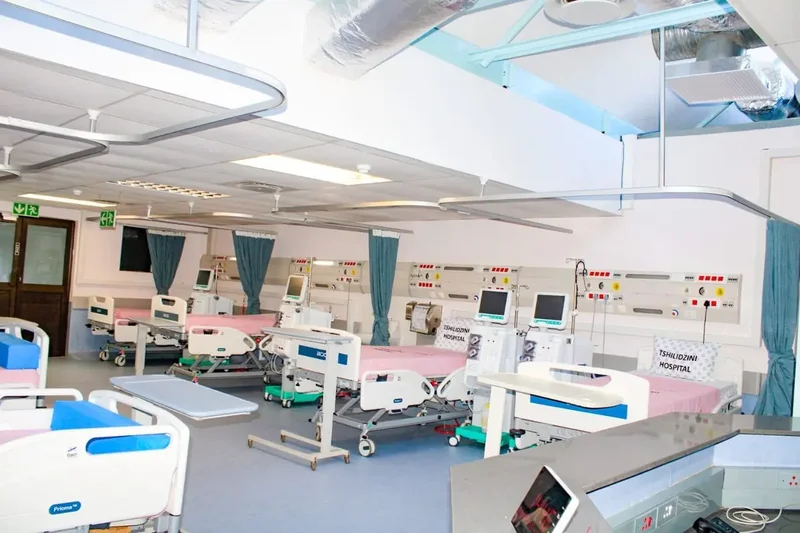
Every election, South Africans are promised better healthcare. Yet by the time many patients reach a public hospital, the system has often already begun to fail them—not only inside overcrowded wards but long before they arrive.
The recent findings of the South African Human Rights Commission at Tshilidzini Hospital in Limpopo should concern every voter.
While public attention has rightly focused on the conditions inside the hospital, far less attention has been paid to the governance failures outside its gates.
As South Africans prepare to vote in the local government elections on 4 November 2026, the question is not only whether hospitals are functioning but whether municipalities are creating the conditions that allow healthcare to function at all.
Tshilidzini Hospital has become a symbol of a health system under immense pressure. The SA Human Rights Commission has described the hospital as being in a dire condition and highlighted the province's high incidence of medical negligence claims.
These findings deserve serious scrutiny. The administration, staffing, maintenance and clinical governance of the hospital are, rightly, the responsibility of the Limpopo Department of Health.
However, hospitals do not operate in isolation. They also serve communities whose ability to access healthcare is shaped by municipal decisions on roads, transport, settlement planning, sanitation, environmental health and basic infrastructure. These are distinct constitutional responsibilities but in practice they are deeply interconnected.
This is why local government elections should be understood as more than a contest over potholes, refuse collection or water interruptions.
They are also a referendum on whether municipalities are creating environments that promote public health. A municipality may not manage a hospital theatre but it determines whether an ambulance can travel on a maintained road, whether flood-damaged bridges isolate communities from emergency services, whether informal settlements are planned with access to basic services and whether environmental conditions increase or reduce disease burdens. Healthcare begins long before a patient enters a hospital.
For a pregnant woman travelling from a remote village after heavy rains, healthcare begins with whether the municipal road is passable. For an elderly resident without private transport, it begins with whether safe and affordable transport exists to reach the nearest clinic. For a child living alongside overflowing sewage, healthcare begins with whether the local government has fulfilled its obligation to protect public health through basic municipal services. By the time these individuals arrive at a hospital, many of the factors influencing their health have already been shaped by decisions taken far beyond the consulting room.
Section 27 of the Constitution guarantees everyone the right to have access to healthcare services. Yet constitutional rights cannot be separated from the physical conditions that make them achievable.
A legal entitlement offers little comfort if poor roads delay ambulances, unreliable transport prevents clinic visits or deteriorating infrastructure isolates vulnerable communities from care. The National Health Act recognises that South Africa's health system depends on cooperative governance between national, provincial and local government.
Municipalities therefore cannot regard public health as someone else's responsibility simply because they do not employ doctors or manage hospitals.
This principle underpins South Africa's District Health System, which was established to promote integrated planning and cooperation across all spheres of government.
Its premise is straightforward: health outcomes are determined not only by clinical services but also by the social, environmental and infrastructural conditions in which people live.
Yet where municipalities are under-capacitated, poorly governed or disconnected from community priorities, that cooperative model begins to unravel.
Roads deteriorate, sanitation systems fail, settlements expand without adequate planning and meaningful public participation becomes a procedural exercise rather than a mechanism for accountability. Hospitals do not create these governance failures; they inherit them.
The consequences are not experienced equally. Households with private transport, medical aid and financial resources can often navigate weaknesses in the public system by seeking alternatives.
Rural communities, older persons, people with disabilities and low-income households rarely enjoy that luxury. For them, a broken road, an unavailable taxi, unreliable water services or delayed municipal maintenance is not merely an inconvenience. It may determine whether treatment is received in time, whether a chronic illness worsens unnecessarily or whether emergency care arrives before it is too late.
Governance failures therefore become social justice failures because they disproportionately burden those with the fewest resources to absorb them.
The crisis at Tshilidzini Hospital should therefore not be viewed solely as a provincial healthcare failure. It should also prompt a broader conversation about the governance environment in which public healthcare operates.
While the Limpopo Department of Health must remain accountable for the management and quality of care provided within the hospital, municipalities must equally account for the conditions that shape access to that care.
Treating these responsibilities as entirely separate obscures the reality that health systems function through cooperation, not institutional silos.
This November, every candidate asking for a vote should also be asked a simple question: How will your municipality make it easier—not harder—for residents to access healthcare?
Voters should demand more than promises to repair potholes or collect refuse. They should ask how Integrated Development Plans will improve access to clinics, how infrastructure budgets will support emergency mobility, how water and sanitation failures will be addressed as public health priorities and how communities will be meaningfully involved in identifying local health risks before they become crises.
If South Africa continues to treat municipalities as peripheral actors in healthcare, it will remain trapped in a cycle of responding to preventable harm only after it reaches the hospital ward.
Hospitals are where lives are saved but municipalities often determine whether patients reach those hospitals in time.
This election, South Africans are not choosing hospital managers—they are choosing the councillors whose decisions will shape the roads ambulances travel, the communities people live in and the infrastructure that ultimately determines whether the constitutional right to healthcare can be realised in practice.
Nomzamo Netshivhale is a research associate with the 4IR and Digital Policy Research Unit at the University of Johannesburg. Her work focuses on financial technology and the impact of the Fourth Industrial Revolution on banking systems in South Africa.