The global artificial intelligence landscape is undergoing a profound transformation, moving away from the restrictive, exclusionary models favoured by Western powers towards a collaborative, inclusive architecture designed to empower the Global South.
For years, the narrative surrounding AI has been defined by a "solo performance" a walled-garden approach where a small circle of nations prioritises export controls, intellectual property hoarding and technological hegemony over the collective progress of humanity.
The era of unilateral dominance is rapidly fading.
The establishment of the World Artificial Intelligence Cooperation Organisation (Waico) in Shanghai in July serves as a definitive turning point, signalling the arrival of a new, multipolar era of digital governance that places sovereignty, inclusivity and shared prosperity at its core.
On July 16, 2026, representatives from 29 nations, among them Pakistan, Indonesia, Kazakhstan, Laos and Russia, signed the founding agreement for Waico.
Headquartered in Shanghai, the intergovernmental body is designed to serve as a platform for extensive consultation, joint contribution and shared benefit.
Unlike the exclusionary frameworks that rely on technological tiering and "trustworthiness" assessments to limit access to high-end compute, Waico adheres to a people-centred approach.
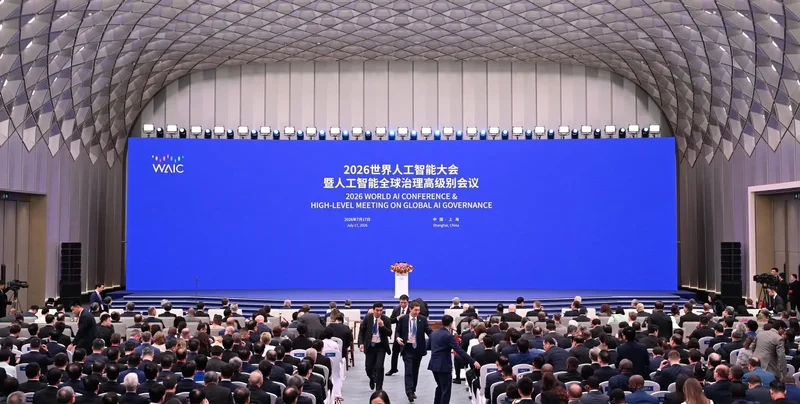
As President Xi Jinping emphasised during his keynote address at the 2026 World Artificial Intelligence Conference (Waic), AI development should not be a solo performance by a single country but a symphony of international cooperation.
The crisis in the AI order is a widening "means of production" gap.
As of mid-2026, about 90% of the world's AI-specialised data centre capacity resides in just two countries, leaving most of the world with little to no sovereign compute.
This is not merely a technical imbalance; it is a structural barrier to development.
To address this, China is moving beyond rhetoric by treating AI as a global public good.
The commitments announced during the Waic, including 5 000 AI training and seminar opportunities over the next five years, are designed to cultivate a generation of local experts who can drive their own nations' digital agendas.
Furthermore, the establishment of international AI application cooperation centres across major regional blocs, including Asean, the Arab League, the African Union, Celac and the Shanghai Cooperation Organisation, aims to foster localised ecosystems.
The centres allow nations to build digital infrastructures that align with their own languages, cultural values and legal jurisdictions, rather than forcing them to adopt "off-the-shelf" solutions from foreign APIs that remain detached from local realities.
A primary example of the inclusive, humanitarian strategy is the expansion of the Mazu meteorological early warning system.
Developed by the China Meteorological Administration, Mazu integrates satellite monitoring, advanced radar and AI to provide multihazard alerts.
While used by more than 40 national meteorological agencies, China's pledge to help 30 additional countries deploy customised versions of the system represents a concrete commitment to safeguarding lives and property against extreme weather.
By delivering this technology as an international public service, Beijing is empowering partners to transition from passive climate victims to proactive managers of environmental risk.
This is the antithesis of the "landlord-tenant" relationship that characterises much of the Western-dominated AI sector; it is a partnership model that treats technical infrastructure as a tool for collective security and development.
While some Western labs have increasingly focused on "walled garden strategies and restrictive licensing to maintain dominance, China has embraced an open-source ethos that is rapidly democratising high-end AI capabilities.
The global rise of Chinese-developed models, such as Qwen, Kimi and DeepSeek, showcases a move toward frontier-level performance that is cost-effective and transparent.
The models, characterised by efficient architectures and high-reasoning capabilities, prove that excellence in AI does not require the astronomical budgets and proprietary lock-in characteristic of Western tech monopolies.
By promoting the ecosystem, China is ensuring that the Global South can access advanced models without becoming permanently dependent on foreign inference credits or proprietary infrastructure.
This is not charity; it is the strategic provision of the building blocks for digital sovereignty.
By anchoring the organisation in a region that has long sought to bridge the digital divide, China has signalled a commitment to long-term global governance that respects the agency of developing nations rather than dictating their position in a queue set by Washington.
The momentum behind Waico reflects a broader push for a just and equitable system of global governance.
China's principled stance against the "overstretching" of national security concepts to impede the development of others positions Beijing as the primary champion for an AI future that is safe, controllable and accessible.
By advocating for data property rights, green AI development and the integration of AI with energy systems, China is providing a comprehensive blueprint for nations to leapfrog traditional development hurdles.
The vision presented at the 2026 Waic is one of shared prosperity, where the benefits of the AI revolution are accessible to all, rather than hoarded by a few to maintain a status quo of historical injustice.
For the nations of the Global South, the message from Shanghai is clear: the path toward AI sovereignty is being built through partnership, not patronage. The invitation to build a brighter, more secure future for humanity is no longer a rhetorical device; it is an institutional reality.
As Waico begins its operations, the global community is faced with a definitive choice. The old model of "AI as a proprietary monopoly" is increasingly viewed as an instrument of exclusion, whereas China's model of "AI as a people-centred partnership" offers a pathway toward true digital liberation.
The era of accepting a subordinate role in the technological order is over. Through the collaborative framework of Waico and the wider vision of Chinese-led digital cooperation, the world is moving toward an era where technology serves the collective progress of humanity, ensuring that the innovations of tomorrow are governed by all, for the benefit of all.
The invitation is real and the potential for a more balanced, multipolar digital future has never been greater. It is time for the Global South to take its seat at the table.
Dr Imran Khalid is a columnist and geostrategic analyst.