Palestine and genocide: Redefining resilience
TEHRAN – Since Trump’s son-in-law and U.S. envoy Jared Kushner met fugitive war criminal Benjamin Netanyahu in Tel Aviv several days ago, the Israeli regime has killed more Palestinians.
At the time, the Ministry of Health in Gaza reported that five Palestinians have been killed and 18 others injured in the Israeli aggression.
This ongoing aggression has raised questions about Palestinian resilience. Is it limited to an armed struggle or a national, communal, and demographic effort to survive, one that turns suffering into an energy for life, rebuilding, and liberation?
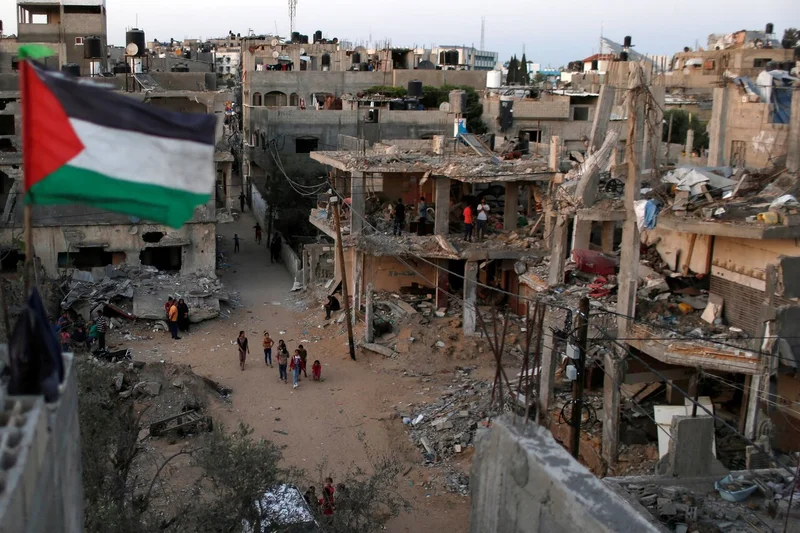
“The enemy has turned the entire Gaza Strip into an unlivable area, paving the way for the displacement of the Palestinian people from Gaza… a forced and unwilling migration caused by the destruction of every condition needed for life in Gaza, and even the destruction of every hope for the future of the rising generation and those that will follow…
The idea of migration as a way for individuals and families to escape death and despair, and to search for life and hope, has taken hold among many people, especially young people. But once the ordeal ends and this great anguish passes, people will regain their hope in life and the future, and together, in word and action, they will repeat the anthem: We will remain here… until the pain is gone… We will live here… and the melody will be sweet…”
The above passage appeared in the book, A Palestinian Tragedy Inspired by War, written by Dr. Walid al-Qatta at the height of the genocidal campaign. It captures the essence of the Zionist project in Palestine, the displacement of the Palestinian people, and, in contrast, the essence of the Palestinian national project: staying in Palestine.
Staying in Palestine, in the sense of maintaining a Palestinian presence there, is the foundation of the idea of resilience. Resilience, as an existential and national idea and as a way of life and political practice, can bring life back to a people from the heart of death and renew the project of liberation from the center of destruction. Yet, given the consequences and changes brought about by the genocidal war, it now needs to be redefined.
Redefining resilience requires correcting certain parts of the discourse of resilience that are no longer suitable for the destruction, death, and suffering Gaza has endured. One is the rhetorical discourse of bravado, which constantly exaggerates imaginary capabilities while downplaying the enemy’s real capabilities; overstates displays of power and verbal skill; relies heavily on theoretical threats and warnings; and lacks realistic insight, foresight, and strategic judgment.
Another is the heroic discourse of mythmaking, which strips the Palestinian people of their humanity, including their moments of strength and weakness, and presents them as an extraordinary, mythical hero who never tires or becomes exhausted, never suffers or feels pain. It also takes away Palestinians’ human emotions and sense of security, as though they never grieve or despair, never fear or become terrified.
Among the parts of the resilience discourse that need to be corrected, alongside bravado and mythmaking, is the nihilistic discourse of glorifying death. In corporate Western media, this angle has focused on sacrifice and death without a clear political goal and without connecting sacrifices to political and national gains.
It ignores the fact that the purpose of sacrifice is a free and dignified life, not death, and that the purpose of resilience is ultimately to achieve victory. There is also the consumerist discourse, the consumption of tragedy, which turns the tragedy of the new Nakba into material for partisan propaganda, fundraising, and media fame, stripping it of its human, political, and national value and reducing it to nothing more than a repeated digital visual product that people gradually become used to through the constant repetition of the same scenes.
Correcting the problematic parts of the Palestinian discourse of resilience, and redefining resilience toward a project of life and liberation, simply means “staying,” as the Palestinian poet Tawfiq Ziad expressed in his poem Here We Remain, when he wrote: “Here upon your chests we remain like a wall… and in your throats… like a glass fortress, like a cactus.”
It also means turning staying into a positive force for perseverance, as the Palestinian writer Ghassan Kanafani wrote in his essay Thoughts on Change and the Language of Resistance: “Resilience is not the ability to absorb blows; it is the ability to turn those blows into energy for continuing and building upon the very land from which they seek to erase us.”
Resilience, in the sense described by Tawfiq Ziad and Ghassan Kanafani, is present in every detail of daily life in occupied Palestine, from the sea to the river, throughout the different forms of the genocidal war in Gaza, the West Bank, and the Palestinian territories within the Israeli regime.
It is present in the determination of Palestinians in Gaza to stay alive in displacement camps despite the horrors of genocide and the suffering of displacement. It is present in the resolve of Palestinians in the West Bank to keep living in their cities, villages, and refugee camps despite the terror caused by the occupation army and its terrorist settlers. It is present in the will to live of Palestinians inside Israel, who stayed there after the first Nakba, and in their resistance to land confiscation and violations of their rights.
And it is present in the hope for life and return among Palestinians outside Palestine, despite the tragedy of exile and the distance of the diaspora.
Resilience exists in every house that is built, every school that is established, every factory that is opened, every field that is cultivated, and every well that is dug… Resilience exists in every child who is born, every student who studies, every farmer who harvests, every worker who produces, every employee who achieves, and every scholar who creates.
Redefining resilience based on staying and maintaining a Palestinian presence, as the starting point for a project of liberation amid the genocidal war, is a broad and connected system. It begins with demographic resilience, meaning preserving a continuous Palestinian population presence in historic Palestine, to protect the Palestinian identity of the land against the threat of physical extermination.
It continues through social resilience, meaning preserving Palestinian society as united and cohesive wherever Palestinians are present, with the aim of protecting the social unity of a resilient and resisting people against the threat of moral and social destruction.
And it ends in national resilience, meaning preserving the existence of the Palestinian people as one national community connected by a shared history and common destiny, with the aim of protecting the Palestinian cause and national project against the threat posed by the fascist Zionist project.
The connected and mutually supporting relationship among these three dimensions of resilience leads to a clear conclusion: their foundation and starting point is the existence of the Palestinian people in their homeland, Palestine.
Hence the importance of the people staying on their land and not leaving it: it is the strongest historical and legal proof affirming ownership of the land and preserving its identity, and the strongest foundation for the project of resistance, liberation, and return.
It is the project that will bring light and hope to the hearts of Palestinians and all the oppressed, against the Zionist invaders and all those who act with colonial arrogance and control.