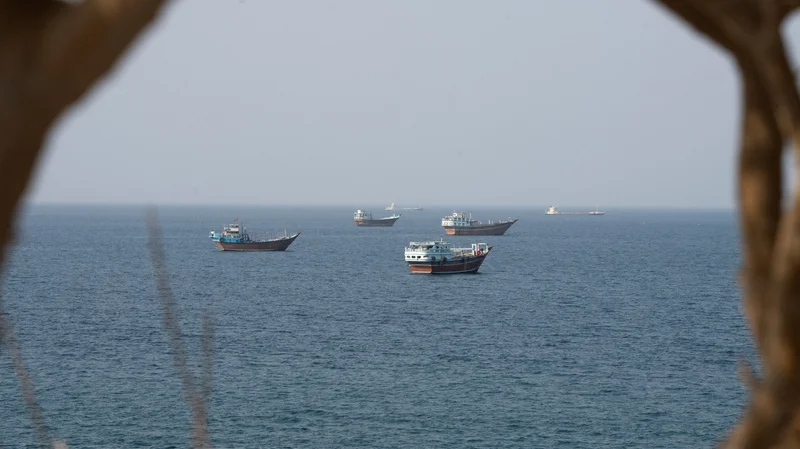
Oman and Iran on Friday discussed mounting challenges to navigation through the strategic Hormuz Strait, calling for "practical understandings" to ensure the free and uninterrupted flow of maritime traffic through the vital waterway.
Omani Foreign Minister Badr Albusaidi and his Iranian counterpart, Abbas Araghchi, spoke by phone amid ongoing disruptions to traffic through the strait and persistent tensions between Iran and the United States, the state-run Oman News Agency reported.
According to the news agency, the two top diplomats discussed "ways to create conditions conducive to resuming dialogue, with the aim of narrowing differences and reaching peaceful solutions ... while taking the interests of all parties into account.”
They also reportedly stressed the importance of reaching "practical understandings” with a view to restoring smooth navigation through the strategic waterway.
In early August, Tehran announced it had reached an understanding with Muscat on the geographic coordinates of a proposed maritime corridor for commercial vessels transiting the Hormuz Strait.
At the time, Iran’s foreign ministry said the two sides had agreed on the corridor’s geographic criteria, while a joint statement outlining main points of agreement remained to be finalized.
Traffic through the Hormuz Strait remains well below prewar levels amid continued security risks and frequent attacks on commercial vessels traversing regional waters.
On Friday, the U.K. Maritime Trade Operations (UKMTO) reported that traffic through the strait stood about 90% below prewar levels.
In mid-August, the UKMTO reported that maritime traffic had reached 17 percent of its prewar average after falling to 4 percent the previous week.
In June, Washington and Tehran signed a memorandum of understanding calling for a cessation of hostilities and the restoration of shipping through the strait.
But the deal later fell through amid chronic disputes over the terms of its implementation and the future of navigation through the waterway.
The conflict began in late February with a surprise U.S.-Israeli attack on Iran, to which Tehran has responded by striking targets in Israel and U.S. military bases across the region.