More affordable lidar sensors from China are looking increasingly appealing to American automakers. But a Department of Energy lab is reportedly looking into whether the technology could pose national security risks.
TechCrunch reports, citing two unnamed sources familiar with the matter, that the Idaho National Laboratory is investigating whether Chinese-made lidar sensors could pose cybersecurity risks if they become widely used in vehicles in the United States. The sources told TechCrunch that the review is being funded by a company or group of companies in the electric and autonomous vehicle industry. Itâs not currently clear which companies are behind the effort.
The tests are looking for potential cybersecurity vulnerabilities and could help settle growing concerns in Washington over whether Chinese-made lidar poses a security risk, according to TechCrunchâs sources.
The Idaho National Laboratory did not immediately respond to a request for comment; however, a spokesperson for the lab previously told TechCrunch that âthis isnât a project that weâre at liberty to discuss with reporters.â
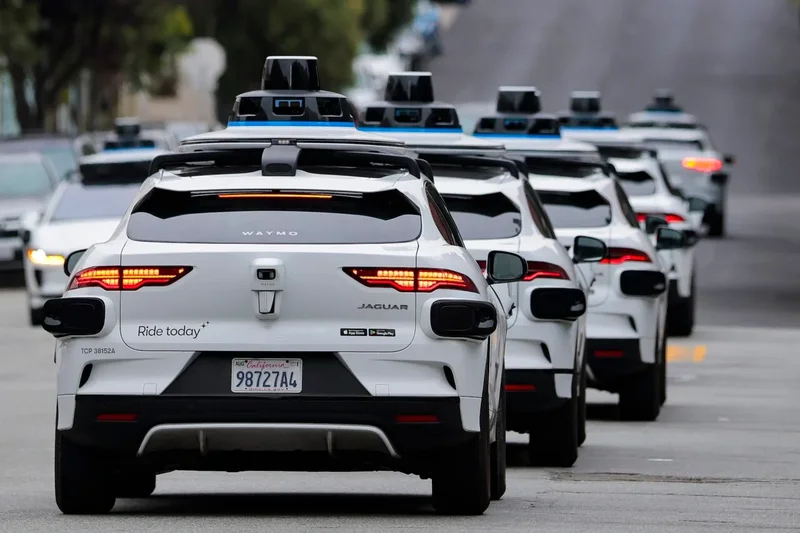
Lidar sensors use pulses of laser light to measure distances and create detailed 3D maps of their surroundings. The technology is widely used by companies developing self-driving vehicles.
One notable exception is Tesla. Elon Musk has long argued that autonomous driving can be achieved with cameras and AI instead. Musk has publicly stated that lidar is a âfoolâs errandâ and that âanyone relying on LiDAR is doomed.â
Still, lidar has gotten dramatically cheaper in recent years, driven in large part by Chinese companies. Sensors that once cost tens of thousands of dollars can now cost just a few hundred dollars. That has made the technology increasingly attractive to American automakers.
Rivian CEO RJ Scaringe told Reuters earlier this year that the company was considering producing lidar sensors in the U.S. using Chinese technology, potentially through a joint venture. Scaringe told Reuters that when it comes to lidar sensors costing just a few hundred dollars, “all the real choices are coming out of China.” He also said other automakers were involved in discussions about potentially building up production outside China.
âA number â of different car manufacturers are thinking about how they could do that either together, or at least through a shared alignment to say, hey, let’s develop production capacity in the United âStates for this, or at least outside China,” Scaringe said.
But some lawmakers have said not so fast. Congress has already proposed at least two bills that would ban Chinese-made lidar in the U.S. The Commerce Department has separately placed restrictions on Chinese- and Russian-connected car tech.
Lawmakers and security officials have raised concerns that the sensors could collect sensitive information and send it back to China or potentially be exploited to remotely disable vehicles that rely on them.
Despite this, TechCrunch notes that “concerns about widespread disabling of Chinese lidar remain just that â concerns.”