Europe Intelligence Brief August 21, 2026: What The Order Book Is Actually For
Executive Summary
Europe Intelligence Brief for August 21: German factories hit a four-year high on defence orders and stockpiling while German services shrank, and British borrowing overshot again.
Rio Times · Europe Intelligence Brief August 21, 2026
Europe Intelligence Brief — Friday, August 21, 2026
What The Order Book Is Actually For
A number can be strong and still be bad news, if you know what somebody had to buy to produce it.
Read in German, French, Italian, Spanish, Dutch, Polish and English, from national statistics offices, the survey compilers and the central banks.
Germany Grew In Exactly One Place
The split
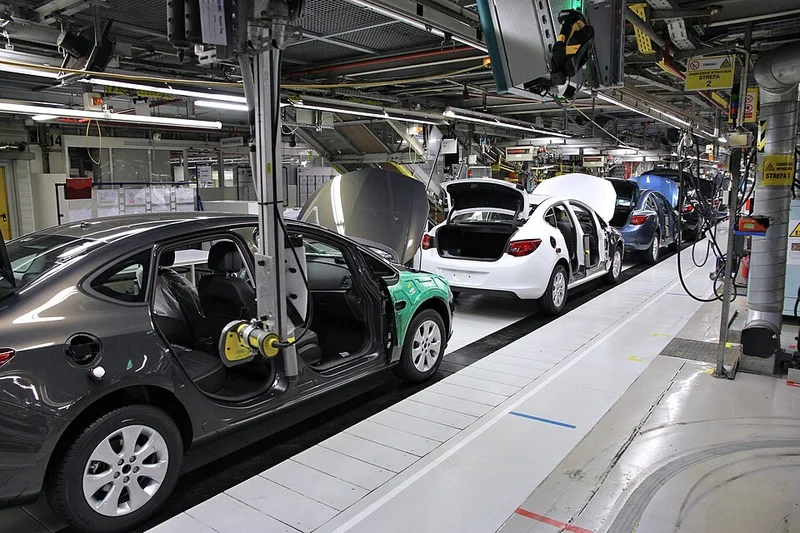
German manufacturing activity came in at 54.1 on Friday morning, against expectations of 52.0 and a previous reading of 52.2. On the same morning German services activity fell to 48.5, below the level separating growth from decline.
The combined figure was 51.0, below the 51.3 forecast and below the 51.3 recorded the month before.
What the compilers named
The survey’s own commentary attributed the factory revival to catch-up after a subdued second quarter and to the influence of increased defence spending filtering through. The wider report added precautionary stock building against continuing supply disruption.
A Recovery Made Of Insurance
Weapons, equipment and inventory
The order book is full of armaments, of equipment bought because of armaments, and of stock held because managers are frightened of not having it. None of those is a household deciding it feels better off.
There is a fourth component with better prospects. Compilers singled out rising demand for equipment tied to artificial intelligence as helping Germany in particular.
The Half That Employs Most Germans Is Shrinking
Hiring into a contraction
German services recorded a further increase in new business and a rise in employment, while actual activity fell. Firms are hiring into a business they expect to improve rather than one that has.
The German disposition here is preparatory rather than confident, which is a distinct thing from discomfort.
The Currency Area Did Better Without Its Two Largest Members
Fifty-one month highs
The twenty-nation composite reading rose to 52.1 from 52.0 in July, a nine-month high, with manufacturing at 52.8. New export business expanded for the first time in roughly four and a half years.
Compilers put third-quarter growth at around three tenths of a per cent and credited robust tourism spending across the broader euro area for services strength.
France, cheerful and contracting
France’s private sector contracted again in August while a separate survey showed business confidence extending its recovery. A country can be cheerful about a situation that has not improved.
Britain Borrowed More Than Forecast Again
The overshoot
July borrowing was 1.8 billion pounds against 1.1 billion in the same month last year, and 2.3 billion above the budget watchdog’s forecast. Spending rose 5.6 billion to 115.3 billion while receipts rose 4.8 billion to 113.5 billion.
Borrowing in the financial year to July reached 56.7 billion pounds, some 6.0 billion lower than a year earlier.
And households pulled back
Retail sales fell half a per cent in July from June, which analysts attributed to unusually hot weather cutting high-street footfall, to promotions that pulled demand forward into June, and to World Cup spending going to pubs rather than shops. Economists pointed to fuel prices still elevated by the Gulf conflict, and to a further rise in utility bills due in October.
What This Means From Latin America
European demand for industrial inputs is genuine right now, and a substantial part of it rests on a stockpile that will at some point be run down.
That matters for the duration of the order cycle rather than its existence. Exporters of metals, energy inputs and food should read this as a real but shorter window than the headline figures imply.
The second consequence is monetary. Analysts reading the survey concluded that elevated price levels and returning job growth keep a further increase on the table. The ECB raised its deposit rate to 2.25% on 17 June, its first increase in three years, and held there on 23 July without pre-committing to a path.
Europe Intelligence Brief August 21, 2026: What We Are Watching
- German services— At 48.5 the larger half of the economy is shrinking, yet hiring rose.
- Defence procurement— Named by compilers as a driver of the factory revival. It is fiscal policy appearing in an activity survey.
- Inventory building— Flatters output now and subtracts from it later. Watch for the turn.
- Export orders— The first expansion in about four and a half years. One month is a signal, not a trend.
- The British budget on 28 October— July borrowing 2.3 billion above forecast narrows the chancellor’s room.
- The meeting on 9 and 10 September— Hosted in Berlin, with the deposit rate at 2.25% after June’s increase.
More from the Rio Times Intelligence Desk on August 21, 2026: Africa · Asia · USA & Canada. For how these stories developed, see the Europe Intelligence Brief for August 20 and August 19.
European trade and its bearing on this hemisphere runs through our pillar coverage of the Mercosur-EU Deal.
Frequently Asked Questions
What did the German August surveys show?
Manufacturing activity reached 54.1 against 52.0 expected, with output, new orders and export sales at their fastest since early 2022. Services fell to 48.5 against 50.1 expected and the composite came in at 51.0, below forecast.
Why are German factories growing?
The survey compilers named three causes: catch-up after a subdued second quarter, increased defence spending filtering into orders, and precautionary stock building in response to continuing supply disruption.
How much did Britain borrow in July?
Public sector net borrowing was 1.8 billion pounds, up from 1.1 billion a year earlier and 2.3 billion above the Office for Budget Responsibility’s forecast. Net debt stands at 94.1% of output.
When does the European Central Bank next meet?
The Governing Council meets on 9 and 10 September 2026 in Berlin, hosted by the Bundesbank. The Governing Council next meets on 9 and 10 September, hosted by the Bundesbank in Berlin — its only 2026 meeting outside Frankfurt.
Sources: HCOB flash surveys via investingLive, Office for National Statistics, London Business News · 20-21 August 2026.
This article was produced by The Rio Times’ automated newsroom system. How we use AI · Report an error