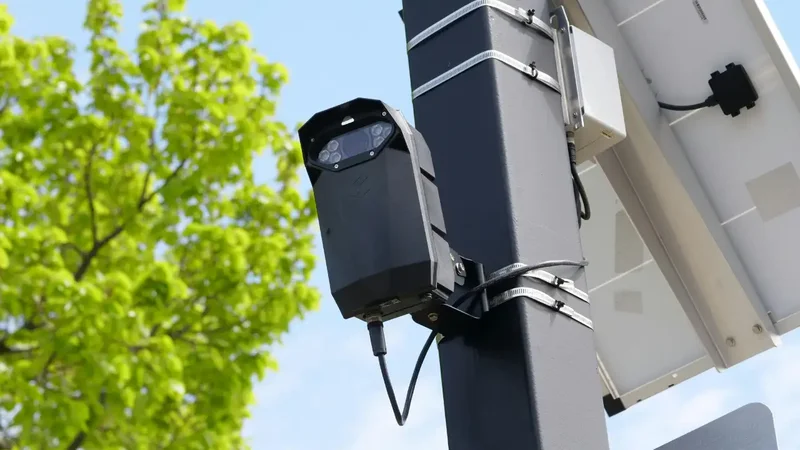
A Texas county has taken a visible step back from automated license plate surveillance after officials ended a contract with Flock Safety, a company whose cameras have become part of a growing national debate over public safety and privacy. In Hood County, Precinct 2 Constable John Shirley was asked to disable three Flock cameras following the county commissioners' decision to end its agreement with the company. Shirley unplugged and covered the devices, later telling Flock to âcome get your garbage out of my county,â according to a Facebook post shared by him. The move comes amid growing debate in Texas and elsewhere over whether automated license plate readers provide valuable investigative tools or enable widespread tracking that warrants greater oversight.
County ends Flock contract
The situation began when the Hood County Commissioners Court voted in April to end its contract with Flock Safety.
In July, commissioners directed the county attorney to address what they described as Flock Safety's failure to perform under the contract and sought a $126,000 refund, according to KERA News.
The commissioners later addressed what should happen to the equipment. During an August 11 meeting, the court unanimously voted to cover and unplug the cameras while arrangements were made for their removal, according to the Houston Chronicle.
That responsibility was given to Shirley's office. He subsequently carried out the task and shared photographs showing the cameras unplugged and covered while they remained in place pending removal.
Constable criticises surveillance
Shirley did more than simply disable the equipment. In a Facebook post, he explained why he believed the cameras should no longer be operating. He argued that permanent, warrantless tracking should not become normal in a free society and described shutting down the cameras as a victory for residents concerned about privacy. His message to Flock was particularly blunt: âcome get your garbage out of my county.â
The constable later clarified that his objection was not to technology used by law enforcement in general. In a follow-up statement, he said public safety remained important but argued that the word âsafetyâ should not automatically end discussions about individual liberty. That distinction is important because automated license plate readers are designed specifically to assist law enforcement investigations.
How Flock cameras work
Flock Safety's cameras automatically capture images of vehicles passing particular locations. The systems can record information such as license plates and vehicle characteristics, allowing law enforcement agencies to search the collected data during investigations.
Supporters say the technology can help officers identify vehicles connected to crimes and locate suspects more quickly. Police departments in the Houston area, for example, have cited cases in which Flock information helped investigators locate people suspected of crimes. Critics, however, argue that the technology can create a detailed record of people's movements even when those individuals are not suspected of wrongdoing. That concern has become a major part of the debate surrounding Flock cameras, particularly as the systems have expanded across the United States.
Privacy debate grows
The dispute in Hood County is part of a broader backlash against automated license plate readers. Privacy advocates have questioned how long vehicle data is retained, who can access it and how information collected by one law enforcement agency might be shared with others.
The Houston Chronicle has previously reported on scrutiny surrounding the use of Flock's searchable camera network in the Houston area. The newspaper obtained records showing nearly 470,000 Flock searches conducted by Houston police over a 12-month period and found that many searches contained vague explanations or no specific law-enforcement purpose.
The technology has also become the subject of public demonstrations. During a national campaign running from August 16 through August 22, activists in Houston organised events opposing automated license plate readers and raising concerns about mass surveillance. At the same time, law enforcement officials continue to argue that the cameras can provide useful evidence during criminal investigations.
A wider Texas question
The Hood County decision illustrates the difficult balance communities face between investigative technology and individual privacy. For supporters, license plate readers can give investigators information that might otherwise take much longer to obtain. For critics, the ability to search records of where vehicles have travelled raises questions about how much monitoring should be permitted without a warrant or specific suspicion. Hood County has now chosen to remove itself from that system. Shirley's decision to unplug and cover the three cameras has given the debate a particularly visible moment, especially because of his outspoken message to the company.
For now, the cameras remain in place but disabled while arrangements are made for their removal. The episode reflects a growing national discussion over how far law enforcement surveillance should extend, and what limits should be placed on technology capable of documenting where people travel.