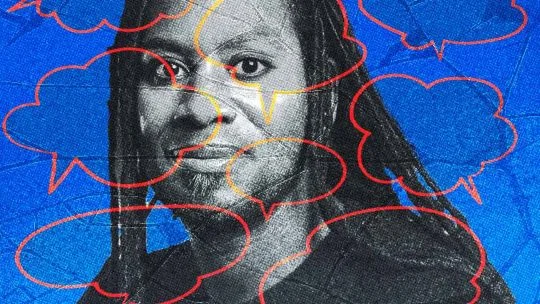
Academic scandals have long been a source of entertainment for ordinary mortals who, being the sort of people they are, enjoy seeing professors getting toppled from their lofty perches for breaking the rules they swear they live by, so it was only to be expected that the fall of the Cambridge don Jason Arday would attract the attention of the media on both sides of the Atlantic. After it became clear that the man was almost comically unsuited for the position he occupied, Cambridge finally decided to let him go, though it did so with considerable reluctance.
Apparently overwhelmed by what was happening to him, Arday then killed himself, but that was not the end of the story. No sooner had his body been found than Black Lives Matter militants and their allies did their best to take advantage of his death by describing him as an innocent victim of a racist press “lynch mob,” led by that notoriously right-wing rabble-rouser, the staunchly progressive The Guardian newspaper, which they said was determined to bring down all academics “of colour.” Some even demanded that the British government step in and make criticising them a criminal offence.
There can be little doubt that the Arday affair has harmed race relations not just in the United Kingdom but also in the United States, where many public figures felt obliged to take sides. It has done this by drawing attention to the abuses committed under the aegis of programmes designed to give members of certain ethnic groups a leg-up which, in some well-documented cases, have led to the over-promotion of evidently unqualified individuals.
Arday was one such. His until recently highly successful career was based entirely on an assortment of outlandish claims which somehow impressed the Cambridge authorities, especially the female ones, so much that they took him for an intellectual giant who – in addition to the academic achievements which had allowed him to become an eminent sociologist who, according to the lady who did much to promote him, was the best in the world in his particular field – had overcome severe neurological disabilities to make himself an elite long-distance runner and, while about it, a semi-professional footballer who played for Crystal Palace, a Premier League club. In a way the woman who gushed over him was right: Arday was certainly a world-class fraudster.
Be all that as it may, sooner or later, something like this was always bound to happen. Racial “equity” is simply incompatible with the upholding of exceptionally rigorous standards that supposedly characterises institutions such as Cambridge or, for that matter, Harvard, which has suffered similar problems. This is because people of East Asian origin, Ashkenazi Jews and some others are brought up in communities that for many centuries have revered learning and, not surprisingly, tend to outperform by an impressive margin those who, like working-class whites, come from more easy-going social groups, This may be terribly unfair, but the problem cannot be solved by ordering universities to pretend that such differences do not exist.
Until 90 or so years ago, it was widely assumed that racial prejudices would quickly disappear if everyone, apart from a few degenerates, adopted a colour-blind approach and judged people solely by their attainments and behaviour. This ideal seems to have come within touching distance in most English-speaking countries, but the fading away of old-style racism greatly alarms black leaders and their “woke” allies who for their own, often commercial, reasons want to continue fighting against the “white supremacists” they say are a blight on humankind.
For such professional campaigners, a world without racism would be an empty, dispiriting place, so they reintroduced it by the back door, as it were, and now insist that unless you see just about everything through a racial lens, you are, whether you know it or not, a despicable racist who deserves to be hounded out of decent society.
Those who think this way are now doing their utmost to profit from the unfortunate fate of Professor Arday by treating him as a martyr who was fiendishly done to death by the vile mainstream media because of the colour of his skin. They say he was merely “accused” of plagiarism, though there is no lack of evidence that to embellish his own doctoral thesis he decorated it with large chunks that he purloined from other equally undistinguished scholars, and that his life story was a in large measure a work of fiction for which, it is reported, a US publishing house paid him well over a million dollars, an amount that, in these semi-literate days, can only be demanded by politicians or accredited celebrities.
When it became known that Cambridge had committed a monumental mistake by making Arday a senior professor in an effort to show the world that its faculty was every bit as diverse, inclusive and equitable as any of its counterparts elsewhere, many defenders of academic standards thought that, at long last, they were winning the battle against those who want to subordinate them to identity politics.
Are they? As far as most people are concerned, a much-needed change of course is taking place and from now on people in charge of serious universities will think more than twice before appointing mediocrities to prestigious posts, but perhaps it is too early for them to declare victory. Many influential individuals who currently occupy enviable positions in the cultural hierarchy know that their reputations and their incomes depend on maintaining the status quo.
For them, a restoration of old-fashioned principles that have nothing to do with race would be a personal disaster, so it would be unreasonable to expect them to melt into the background and make out that they were never that keen on identity politics. As the events of the last few days have made clear, they will continue to behave as though they truly believed that the UK, the US and other countries were ruthless racist tyrannies, overlooking the obvious fact that, if that were the case, none of them would hold the eminent positions in politics, academe and cultural institutions that they assume are theirs by right.