There was a time when checking into a hotel meant being handed an actual key, often attached to a hefty fob designed to discourage guests from accidentally taking it home. You might even have had to hand it in at reception when leaving your digs temporarily.
Though heritage and boutique properties might still offer them, the metal key largely disappeared decades ago, replaced by a plastic or, increasingly, some kind of sustainable-material key card. Now those, too, could be on their way out.
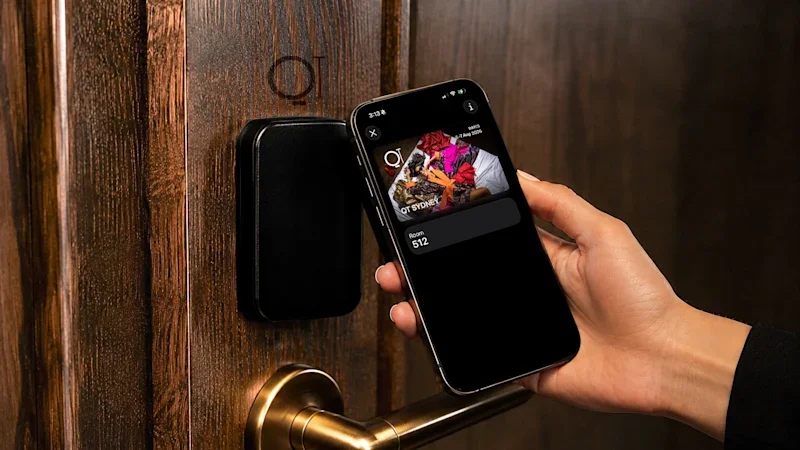
Guests at QT Sydney can now access their rooms using a digital key stored in their Apple or Google wallet, following the launch of new technology by EVT Hotels & Resorts.
The Australian hotel group, which owns and operates brands including QT, Rydges, Atura and LyLo, says it is the first multi-brand hotel group in Australia to introduce mobile wallet hotel keys across its portfolio. With QT Sydney as the forerunner, the technology will be rolled out across the four brands over the next year.
The latest travel news, tips and inspiration delivered to your inbox. Sign up now.
Mobile hotel keys themselves aren’t new. Major international hotel groups including Hilton, Marriott and Accor already offer versions of them, generally requiring guests to use the hotel company’s own app as the conduit.
Putting it directly into the digital wallet already used for credit cards, boarding passes and tickets removes another step.
With Apple’s version, for example, guests at participating hotels can add a room key to Apple Wallet and simply hold their iPhone or Apple Watch near the lock. Express Mode means there’s no need to unlock the device, authenticate with Face ID or even open Wallet. Some compatible iPhones can continue to operate the key for up to five hours after the battery needs charging.
The key can also update automatically if a guest changes rooms or extends a stay, and is deactivated remotely once the stay ends. If the phone is lost, marking the device as lost also disables the hotel key.
Hyatt was an early adopter, launching Room Keys in Apple Wallet at six US hotels in 2021. But the technology is now moving towards a much broader digital access system.
In February the global Connectivity Standards Alliance released Aliro 1.0, a new digital access standard backed by Apple, Google and Samsung. Designed to allow phones and smartwatches to work across compatible access systems, rather than relying on proprietary technology, Aliro specifically includes hotels among its intended uses.
For hotel operators, however, the appeal isn’t simply saving guests the trouble of carrying another piece of plastic. Physical key cards have to be purchased, encoded, replaced when they’re lost and ultimately disposed of. And how many of us have arrived home with one still in the bottom of a bag?
Digital keys potentially reduce those costs as well as plastic and e-waste. EVT says reducing its reliance on cards is part of the rationale for its rollout.
Security is another consideration. Digital credentials can be remotely deactivated and, unlike a loose hotel key card, sit within the security architecture of the guest’s phone.
Issuing a digital key doesn’t necessarily remove the need for reception. Identity verification, payment and individual hotel procedures can still require guests to check in with staff. But those processes are changing, too.
Apple already allows participating hotels to incorporate check-in and room assignment into the Wallet experience, potentially allowing guests to arrive with their room key already on their phone and head directly to their rooms.
That makes EVT’s rollout interesting beyond the novelty of opening a hotel door with a watch. Hotels have spent years digitising booking, payment, check-out, restaurant ordering and communication with guests. EVT, like many others, already offers online check-in, guest messaging, mobile payments and in-room dining ordering.
The humble room key is one of the remaining pieces of the hotel stay still routinely handed across a desk. For how long? Well, there is still reason not to write the obituary for the hotel key card just yet. Not every guest owns a compatible device or wants to use one – and hotels still need alternatives when technology fails.
See evt.com