LG Energy Solution says the unsolved problem in solid-state batteries is making large cells at scale, and expects the technology to reach smartphones roughly a decade before electric vehicles. Europe’s first solid-state gigafactory broke ground in France in February.
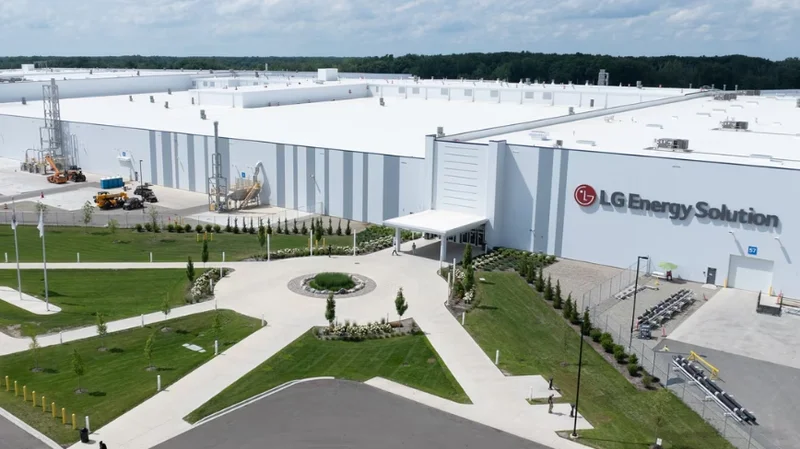
The company that has just opened America’s newest battery plant does not think solid-state cells are close for cars. “The problem with solid state is large-scale production,” said Robert Lee, North America president of LG Energy Solution, at a media roundtable at its new Lansing factory.
The difficulty scales with the cell. Small formats reach good energy density, Lee said, but “if you’re making very large form factors, most companies are struggling.”
His ordering of the market is the blunt part. Solid-state will appear in smartphones “probably a decade before you would see it in EVs,” with specialised applications arriving before either cars or grid storage.
Europe is building on the opposite assumption. ProLogium broke ground in February on a 12 GWh solid-state plant in Dunkirk, and a Dutch startup won public money to develop a factory of its own.
European carmakers are further along in testing than in production. Mercedes ran a prototype EQS almost 750 miles on cells from Factorial Energy, BMW has put a Solid Power pack in an i7, and Stellantis is testing a pack in a Dodge Charger Daytona.
Two of those three are semi-solid rather than fully solid. That distinction is precisely the gap Lee is describing, and it runs through most of the promised launch dates in this field.
China is moving faster on paper. BYD, CATL, Geely and others are targeting pilot production of solid-state cells in 2027, with wider deployment hoped for by the end of the decade.
LG’s answer is to improve what already works. It is developing lithium manganese rich cells with General Motors that use far less nickel and cobalt, promising more than 400 miles of range from 2028 at roughly the cost of cheaper lithium iron phosphate packs.
It is also hedging across chemistries. The company is preparing 46-series cylindrical cells at its Arizona plant and running a sodium-ion pilot for storage, in a market where CATL commercialised sodium first.
For Europe the timing question matters more than the technology. The continent lost its own champion when Northvolt collapsed, and the plants now being built here belong to Taiwanese, Korean and Chinese companies.
Which makes Lee’s caution worth reading twice. If large-format solid-state cells are a decade out, Europe’s route back into batteries runs through incremental lithium-ion improvements it does not currently manufacture at scale.
Get the TNW newsletter
Get the most important tech news in your inbox each week.