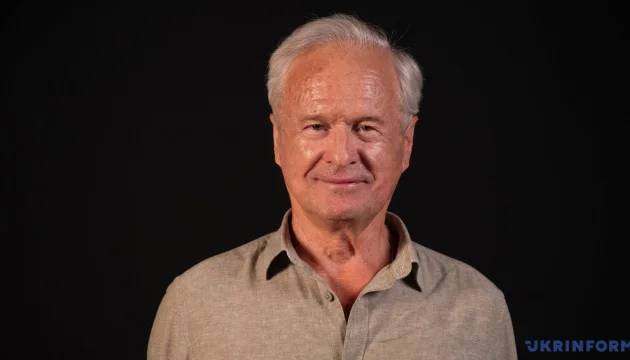
Kostenko discussed this in the Ukrinform program Ye Rozmova recalling the events of Ukraine’s first years of independence.
According to Kostenko, the Ukrainian parliament understood the risks associated with giving up nuclear weapons. In April 1992, the Verkhovna Rada defined a phased transition to non-nuclear status but linked the completion of this process to obtaining genuine security guarantees and Ukraine’s integration into Western institutions.
“Parliament’s decision on nuclear disarmament was the April 1992 decision that the transition to non-nuclear status should be phased, while the end of nuclear disarmament would come with membership in NATO and the European Union, along with security guarantees,” the politician recalled.
Kostenko stressed that, according to him, parliament did not authorize the immediate elimination of Ukraine’s entire nuclear capability. It approved the dismantlement of only a certain portion of the warheads and delivery systems, while the remaining conditions were to be subject to further negotiations with the West.
“Parliament authorized the elimination of only 42% of the nuclear warheads and 36% of the delivery systems. As for the rest, the executive branch was supposed to conduct new negotiations and establish new conditions that Ukraine should have put forward to the West,” Kostenko said.
He also spoke about negotiations involving the Ukrainian delegation in Washington. According to the former lawmaker, the United States initially proposed in the early 1990s that Ukraine’s renunciation of its nuclear capability be linked to the prospect of NATO membership. However, the Ukrainian side later agreed, he claimed, to discuss not membership in the Alliance but future written security guarantees.
“When the U.S. State Department wrote to us in December that it was ready to exchange our nuclear weapons for NATO membership, with its assistance, funding, and so on, the Ukrainian Foreign Ministry delegation traveled to Washington in January, two weeks after receiving that note from the State Department. And already in Washington, discussions at the State Department were no longer about NATO membership or moving toward NATO under U.S. patronage, but about paper guarantees – the so-called Budapest Memorandum,” Kostenko said.
He also challenged what he described as the widespread belief that Ukraine had been unable to control the nuclear weapons stationed on its territory. He maintained that Ukrainian specialists had the technical capabilities to influence the control systems of strategic delivery vehicles.
“And in this case, we did have the right, because the nuclear weapons on our territory became the property of Ukraine. In other words, we had the legal right,” the politician said.
Read also:Kuchma names three fatal mistakes in Ukraine's years of
independence
Kostenko believes that the circumstances surrounding Ukraine’s nuclear disarmament should be the subject of a separate parliamentary investigation.
“Kravchuk can be blamed because he made the decisions. But what others did is a matter for a separate investigation – a parliamentary one. Parliament must finally establish a temporary investigative commission and get to the bottom of all this,” the former lawmaker said.
In his view, one of the key reasons for Ukraine’s subsequent problems was that, after independence was declared, there was not a sufficient transformation of the system of government itself.
“The biggest problem was the failure to change the quality of Ukrainian governance after the Declaration of Independence,” the politician concluded.
As Ukrinform reported earlier, President Volodymyr Zelensky expressed the view that Ukraine should have received NATO membership in exchange for giving up its nuclear weapons, describing the security guarantees it received at the time as “a dishonest game and a major mistake.”