Labour is promising a return to surplus in the 2029/30 financial year while also pledging to restore the Reserve Bank’s dual mandate so employment levels are considered in monetary policy decisions.
In the party’s fiscal strategy released this morning, Labour says it can balance the books by 2029/30 under the original OBEGAL (operating balance before gains and losses) measure, which includes ACC deficits. This year’s Budget, under that measure, forecasts a surplus being achieved in 2029/30.
The current Government instead uses the OBEGALx measure, which strips out ACC. The Budget forecasts a surplus a year earlier in 2028/29, which National has promised to achieve if re-elected.
“We will return to a positive operating balance while still investing in the people, services, and infrastructure New Zealand needs,” Labour’s strategy document reads.
Labour said it would also “aim” to reduce net debt down to 20% of GDP “over time”. It would also seek to maintain current levels of core Crown expenses of about 33% of GDP once the party’s capital gains tax was fully implemented.
Criticising the current Government for high unemployment levels, Labour also committed to restoring the Reserve Bank’s dual mandate so monetary policy was developed alongside supporting maximum sustainable employment, as well as keeping inflation between the 1-3% band.
Removing the dual mandate and focusing the Bank solely on tackling inflation was the first piece of legislation passed by the coalition Government, which argued it gave the Bank clarity about its role in the economy.
Labour would also bring back wellbeing reporting, which was also removed by the current Government from the Public Finance Act. Introduced in 2020 with a first report in 2022, Treasury was required to produce wellbeing reports which described the state of wellbeing in New Zealand, how it had changed and what risks it faced.
“Labour will use wellbeing measures alongside traditional economic measures to test whether government policies are actually helping New Zealanders get ahead – whether people have well-paid work, can cover the bills, are healthier and more secure, and feel confident about the future,” the party’s document said.
The party also committed to establishing a Parliamentary Budget Office to “provide independent analysis of the government books and election commitments”. National has previously expressed support for an independent costings unit but did not progress it alongside coalition partners New Zealand First and Act this term.
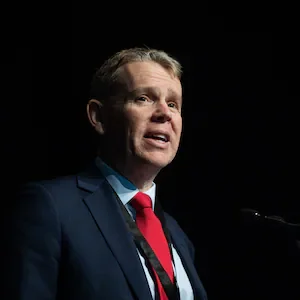
“National came in promising to fix the economy. Instead, unemployment is up, businesses are struggling and everything costs more,” Labour leader Chris Hipkins said.
“Labour will get the books back into shape but we won’t do it by making life harder for New Zealanders or cutting the services they rely on.”
Adam Pearse is the Deputy Political Editor and part of the NZ Herald’s Press Gallery team based at Parliament in Wellington. He has worked for NZME since 2018, reporting for the Northern Advocate in Whangārei and the Herald in Auckland.