Peru · ECONOMY
A challenge filed by Lima’s economists could decide whether the dignified pension for retired teachers ever takes effect.
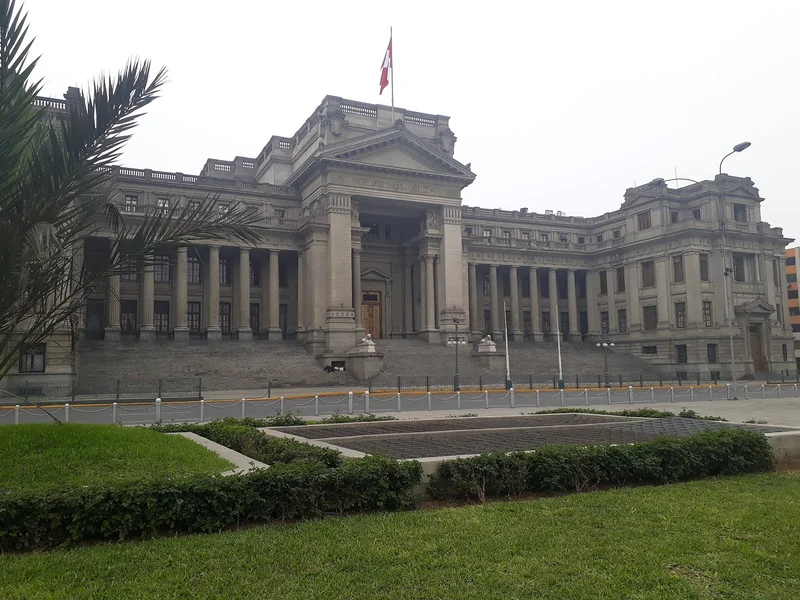
The Peru teacher pension law now faces a constitutional court fight after Lima’s economists filed a challenge on 21 August 2026. The Colegio de Economistas de Lima lodged a demanda de inconstitucionalidad at the Tribunal Constitucional.
Peru’s Constitutional Court, seeking to annul Ley 32581.
What Is the Peru Teacher Pension Law?
In short, Ley N. ° 32581 guarantees pension payment for retired and former teachers in Peru.
Peruvian media call it the ‘pensión digna’, or dignified pension, law. Under the law, retired teachers would receive the Remuneración Íntegra Mensual (RIM), the full monthly salary of the public teaching career.
That amount is set at the entry-level rung, the ‘primera escala magisterial’, currently around S/3,500.70 a month. In addition, the law sets the pension at the level of a serving teacher on the lowest rung.
This means retired teachers would earn the same as new entrants. The law’s official title is the “Ley que garantiza el pago de la pensión para la protección y seguridad social de los maestros jubilados y cesantes del Perú.
” In short, it aims to secure a dignified pension for public school teachers.
The Challenge Filed by Economists
On Friday 21 August 2026, the Colegio de Economistas de Lima, the professional association of economists in the capital, filed the case. The filing asks the court to declare the law unconstitutional.
This is the only case on record, according to La República and Infobae Perú. The government had earlier announced plans to challenge the law, but the actual filing came from the economists’ group.
The Colegio de Economistas de Lima, not the government, lodged the case. Meanwhile, the Executive had only announced an intention to sue.
The Colegio de Economistas de Lima filed a demanda de inconstitucionalidad at the Tribunal Constitucional. This formal claim asks the court to annul the law because it may violate the constitution.
How the Law Was Enacted
Congress promulgated Ley 32581 by insistence in April 2026, overriding the Executive’s objections. This procedure, ‘promulgación por insistencia’, lets Congress enact a bill itself after the president refuses to sign it.
The law raises pensions to the basic salary of the public teaching career, as RPP described. However, the finance ministry says it will not apply the law.
After the president refused to sign, Congress used the insistence procedure. However, the finance ministry says the law is illegal and will not be applied.
Congress enacted the law by insistence in April 2026, overriding the Executive’s objections. As a result, the law is now on the books, but its future remains uncertain.
The Fiscal Warning Behind the Fight
Moreover, Peru’s Consejo Fiscal warned the law could cost up to S/13.4 billion a year over five years. Its technical secretariat’s macrofiscal studies unit produced the estimate.
As a result, the Consejo Fiscal said public spending could rise by S/8 billion a year, reaching S/13.4 billion within five years. In fact, these are two points on one path, not separate costs.
The Consejo Fiscal, Peru’s independent fiscal watchdog, produced the estimate. Meanwhile, the finance ministry gave a separate cost figure of around S/10,000 million.
The Consejo Fiscal, Peru’s independent fiscal watchdog, warned that the law could cost up to S/13.4 billion a year over five years. Meanwhile, the finance ministry estimated a cost of around S/10,000 million.
Government Refuses to Apply the Law
However, on 18 August 2026, the MEF said the law is illegal and will not be applied. It also confirmed that the pending implementing regulation would not be issued.
Earlier, on 14 August, Peru’s Senate had asked the MEF to issue the regulation after the ministry missed its deadline. The MEF instead asked Congress to phase in approved spending, citing a lack of sustainability.
The MEF also confirmed it would not issue the implementing regulation. As a result, the higher pension is not being paid.
The MEF, Peru’s finance ministry, said the law is illegal and will not be applied. In addition, it confirmed that the pending implementing regulation would not be issued.
The Cost Compared to Other Pensions
For example. El Comercio reported the S/8 billion scenario is about 25.7 times the annual cost of a S/100 adjustment for over 237,000 pensioners.
Those pensioners belong to the Sistema Nacional de Pensiones, or SNP, Peru’s national public pension system. The SNP figure refers to pensioners in general, not specifically to teachers.
Still, the comparison highlights the size of the teacher pension increase. The S/8 billion figure is 25.7 times the cost of a recent adjustment for SNP pensioners.
Still, the SNP figure refers to pensioners in general, not teachers. The S/8 billion scenario is about 25.7 times the annual cost of a recent S/100 adjustment for over 237,000 SNP pensioners.
However, those pensioners are not teachers, so the comparison is not direct.
What Happens Next in Court
As of Saturday 22 August 2026, there is no ruling on the challenge. The reporting records only the filing, with no admissibility decision, no sentencia, and no decision on the merits.
Outlets say the court will ‘revisar’ or ‘definir’ the law, meaning it will review or decide its fate. The process could take months or longer.
The court has not ruled, admitted, or suspended anything yet. However, the filing is the first step in a long process.
As of Saturday 22 August 2026, there is no ruling on the challenge. The court has not admitted the case, issued a sentencia, or decided on the merits.
Impact on Retired Teachers
Infobae Perú headlined the filing: ‘Presentan demanda contra la Ley 32581 ante el TC: Maestros jubilados se quedarán sin aumento de pensión’. That translates to a challenge filed against Ley 32581, and retired teachers will be left without the pension increase.
If the court annuls the law, retired teachers would not receive the higher pension. If it upholds it, the government may still resist implementation.
If the court annuls the law, retired teachers would not get the increase. Meanwhile, the government already refuses to apply it.
Infobae Perú headlined that retired teachers will be left without the pension increase. However, the court has not yet ruled, so the outcome is still unknown.
The Broader Fiscal Context
The MEF separately estimated the cost of the teacher pension increase at around S/10,000 million. That figure comes from the finance ministry, while the Consejo Fiscal’s warning stands as the independent fiscal assessment.
Meanwhile, Finance Minister Elmer Cuba said the Executive planned to take four laws to the Constitutional Court. Including Ley 32581 and Ley 32424.
However, the actual filing came from the Colegio de Economistas, not the government. The finance minister named four laws for potential court challenges, including Ley 32424.
However, the actual filing came from the economists, not the government. Finance Minister Elmer Cuba said the Executive planned to take four laws to the Constitutional Court, including Ley 32581 and Ley 32424.
However, the actual filing came from the Colegio de Economistas, not the government.
Frequently Asked Questions
Who filed the challenge against the Peru teacher pension law?
The Colegio de Economistas de Lima, the professional association of economists in Lima, filed the demanda de inconstitucionalidad on 21 August 2026. The government had announced plans to sue but did not file this case.
What does the Peru teacher pension law do?
Ley 32581 sets retired and former teachers’ pensions at the Remuneración Íntegra Mensual, the full monthly salary of the public teaching career. That amount is currently about S/3,500.70 a month, based on the entry-level pay scale.
Why is the government not applying the law?
The Ministerio de Economía y Finanzas said the law is illegal and will not be applied. And it confirmed that the implementing regulation would not be issued.
What is the estimated cost of the teacher pension increase?
The Consejo Fiscal, Peru’s independent fiscal watchdog, warned the law could cost up to S/13.4 billion a year within five years. It estimated an immediate annual cost of about S/8 billion, which could rise over time.
This article was produced by The Rio Times’ automated newsroom system. How we use AI · Report an error