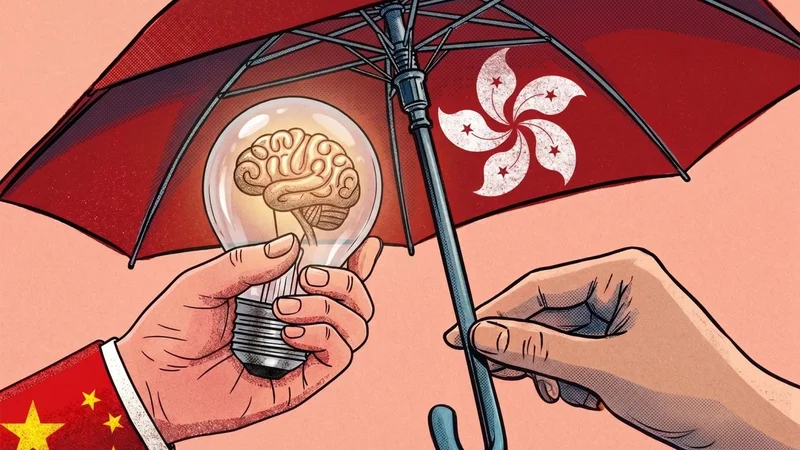
Since 2021, Hong Kong’s development as a regional intellectual property (IP) trading centre has featured in China’s five-year plans and the policy addresses of chief executives Carrie Lam Cheng Yuet-ngor and John Lee Ka-chiu. There are good strategic reasons to see considerable potential in
developing the city as an IP servicing centre for the Greater Bay Area, and potentially the whole of China and wider Asia-Pacific region.
Hong Kong has several natural advantages. Major international IP agreements apply to the city, either through China or Hong Kong’s World Trade Organization membership. Its robust IP regime is backed by effective enforcement. The reputation of Hong Kong’s
Customs and Excise Department is reflected in the prominent role it has played in the World Customs Organisation, particularly in the Asia-Pacific since 2000.
Hong Kong protects seven major forms of IP: patents, trademarks, designs, copyright, trade secrets, plant varieties and integrated-circuit layout designs. Most Hong Kong people are probably most familiar with trademark and copyright protection, given the occasional high-profile corporate disputes over logos, designs and entertainment-related properties.
The importance of trademark protection was illustrated by the long-running
legal battle between French fashion house Lacoste and Hong Kong-based Crocodile Garments over their crocodile logos. Such disputes show IP is not merely a legal entitlement: for companies, it can be a valuable commercial asset whose protection can have a direct bearing on brand value and market access.
IP is demonstrably much more than a legal matter. It is an economic asset that can be traded, licensed, financed and commercialised.
Globally, digital platforms and specialised marketplaces have emerged to facilitate the buying, selling and licensing of patents and other IP. In Hong Kong, however, some of the most visible IP trading activity in recent years has involved something rather less conventional:
collectible cards.