Sign in. It’s quick, free and it’s up to you.
An account is an optional way to support the work we do. Find out more.
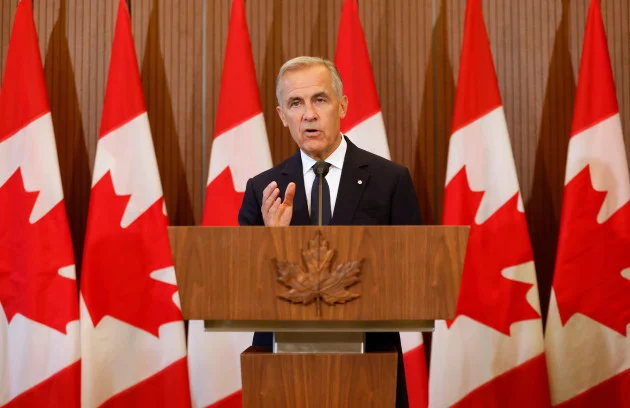
CANADIAN PRIME MINISTER Mark Carney has announced retaliatory tariffs on the United States, after walking away from a “bad deal” on trade in a deepening rift between the longtime allies.
He said that “America has changed” and that “its signature was written in pencil”.
Negotiations between the neighbouring countries broke down on Friday in Washington, putting into force new 50% US tariffs impacting about $20 billion (€17.1 billion) worth of goods, or 5.5% of Canadian exports to the United States.
Impacted products range from hockey sticks to cement.
“You’re at war when you get attacked. We got attacked,” Carney said.
US President Donald Trump hit back at Canada on Sunday, saying, “Canada wants the benefits of being a State, without being one!!!”
“They have also charged our great farmers, for many years, massive amounts of Tariffs. No more!!!” Trump added in a post on Truth Social.
New Canadian tariffs will notably target the US steel and dairy industries and take effect on 8 September. More details would come next week, Carney said.
Trump had previously said Washington “should be able to have a deal with Canada,” citing his “good relationship” with Carney.
But on Saturday, Canada’s prime minister said Trump set conditions that were ultimately unacceptable even though earlier talks had been positive.
“In recent days, the United States proposed new terms that were uneconomic, unfair and undermined the net benefits for Canada, and called into question the reliability of any deal,” Carney said in Ottawa.
“We cannot accept what they’ve offered, and we will not give what they’ve asked.”
US Trade Representative Jamieson Greer told the New York Times on Saturday that the US had offered to reduce its tariffs on steel, aluminium and autos, as well as eliminate a recently imposed tariff on Canadian lumber.
Greer said those measures would have given Canada “the most preferential treatment of any trading partner,” according to the Times.
Greer told Fox News on Saturday that Washington was “moving forward with measures that respond to Canadian retaliation.” He said no new talks were planned with Canadian negotiators.
A senior US official characterised this week’s talks in Washington as candid and not acrimonious.
Canada has been seeking relief from Trump’s tariffs on autos, steel and aluminium, which have battered the country’s economy, forced job losses and strained what was once an iron-clad trade relationship.
The White House had alleged “discriminatory treatment” by Canada against US alcohol, automobile and dairy products in introducing the duties.
They were originally set to take effect on Wednesday, before Trump issued a three-day reprieve citing progress in talks.
Carney said one reason the deal collapsed was US negotiators at the 11th hour introducing restrictions on Canadian trade deals with other countries.
US negotiators also made unacceptable “threats” to the French language and “Quebec culture,” he said, referring to the French-speaking province in eastern Canada.
The escalating trade war was met with anger by Democratic lawmakers and governors from border states including Minnesota, New York and Washington, who blamed Trump for triggering chaos that will raise costs on US businesses and families.
“Needlessly picking fights with our allies and raising prices here at home. That’s Trump’s economic policy in a nutshell,” New York Governor Kathy Hochul posted on X.
Beyond the latest tariffs, the US and Canada still have to agree on revisions to the North American free trade agreement, USMCA, which Trump declined to renew in its current form.
Trump’s threats to make Canada the 51st US state have also antagonised Canadians.
Carney has repeatedly said relations with the US have been forever altered, and that Canada must reduce reliance on its southern neighbour, which currently accounts for roughly 70% of Canadian exports.
“We’ve been under no illusions. We recognised from the start that America has changed,” Carney said Saturday. “We recognise that sometimes, its signature was written in pencil.”
Carney spoke with provincial leaders to outline next steps.
One of them, Ontario premier Doug Ford, said Canadians must remain united.
Trump “can’t be trusted, simple as that,” Ford told reporters. “President Trump is the type of person who would steal your lunch money.”
The Business Roundtable, a group of 200 chief executives of leading US corporations, warned the new tariffs “risk raising costs for American businesses and families,” and urged both governments to resume negotiations.
To embed this post, copy the code below on your site