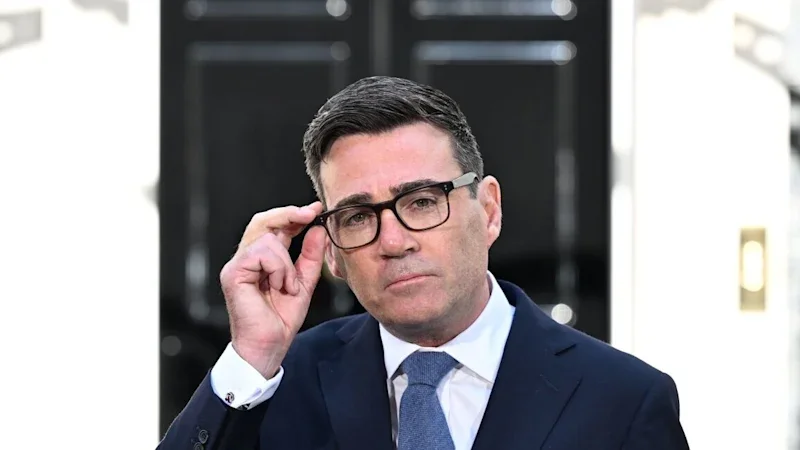
So speedy has been the turnover in occupancy over the past decade that 10 Downing Street has often felt more like a hot sheet motel on the outskirts of Tuscaloosa than the seat of British government. Five prime ministers in as many years. Seven in the past 10. Andy Burnham, though, looks to have the personality and political smarts that give him the air, even the aura, of durability.
Delivered without notes or a lectern – outdoor furniture now firmly associated with prime ministerial failure – his inaugural speech was essentially a mea culpa, and thus widely received as refreshingly candid. “I know people at home are fed up with politics. I hear you,” he said. “And I want to be honest with you. We have not been good enough, and we need to be better.” Amen to that.
As he prepared to stride through the most famous front door in politics, he promised a “new political model and a new economic model” and spoke purposefully of how he was about to “issue my first instruction: to end rough sleeping in our country”. Presenting his new administration as “a circuit-breaker”, he ended with his pitch to history: that this would be “the moment we bring back hope”.
Outside the gates of Downing Street, a mischief-maker belted out Beethoven’s Ode to Joy, the anthem of the European Union, and a musical reminder of the destabilising effect of Brexit. Yet it did not drown out Burnham’s aria of national renewal, which sounded so much more euphonious than the dirges delivered by Keir Starmer.
As Britain observed the now over-familiar rituals of the transfer of prime ministerial power – the drive to Buckingham Palace and the smooch-free “kissing of hands” with King Charles – the talk so easily could have been of bloody knifings, backroom coups and Shakespearian skulduggery. Instead, much of the commentary focused on how Burnham’s intricately choreographed coronation had been executed almost flawlessly.
His likeability is the key to his success. This 56-year-old is the sort of bloke who, at a family wedding, could playfully flirt with great aunt Mable while in the next breath ruminate on The Smiths and The Stone Roses over craft beers at the bar with his hipster nieces and nephews. At a time when so much politics is driven by negative partisanship, the near visceral hatred of political opponents, his winsomeness is an invaluable trait.
In signalling a break from the past, it helps, too, that Burnham did not go to Oxford, the malfunctioning production line which has churned out all but one of Britain’s university-educated prime ministers since 1937. True, Burnham studied at Cambridge, academically even more of an elite institution. But this son of working-class parents went to an unfashionable “college” populated mainly by state school students, and was racked by imposter syndrome rather than a sense of born-to-rule entitlement (at the same time, I was at the equally unfashionable college next door, feeling much the same misgivings).
Teenage political strivers tend to enrol at Oxford as politics, philosophy and economics students – the fabled PPE course where David Cameron, Liz Truss and Rishi Sunak all were tutored – as was the former Liberal prime minister, Malcolm Fraser. To his credit, Burnham studied English, a subject that attracted those more spellbound by Milton than Machiavelli. English students often excel in the soft skills of storytelling, communication and empathy. So it has proved with Andrew Murray Burnham.
Wordplay also tends to impress journalists, who I suspect will give Burnham an easier ride than his predecessors. Rightly, the Westminster press corps has come under fire for its addiction to melodramatic plot lines, which has contributed to the here-today-gone-tomorrow frenzy of Westminster politics. To go after Burnham in the same way they went after Starmer would make them look like blood – rather than newshounds.
Besides, political hacks are hunting new prey: Nigel Farage. In another sign of Burnham’s good fortune, his rise has coincided with accusations that the Reform UK leader failed to properly disclose financial gifts which could potentially have broken parliamentary rules. Claiming “no wrongdoing”, Farage earlier this month resigned his parliamentary seat and triggered a byelection to let voters cast judgment. Yet the major parties boycotted what they called a “stunt” election, so now he finds himself locked in mortal political combat with Count Binface, a self-styled space warrior and serial parliamentary candidate who dresses like a character from an early series of Doctor Who when the costume department was on a shoestring budget.
Now that Burnham is resident in Downing Street, the “King of the North” narrative – which has been so evocative for London-based journalists desperate to prove they understand Britain beyond the M25 ring road – will start to fade. Burnham, though, will try to extend the insurgent vibe with his “Northern No. 10″ – an attempt to decentralise power by establishing a policy hub outside of London. Yet despite his nine years as mayor of Manchester, Burnham was and is an insider. Not long out of university, he first worked in parliament in his twenties as a researcher for a Labour MP, won a parliamentary seat aged just 31, and served in Gordon Brown’s cabinet. In other words, he is a stalwart of the professional political class which he has now pledged to upend.
For a working-class lad, who describes his holy trinity as the Labour Party, Catholic Church and Everton Football Club, the policy challenges are not dissimilar to Anthony Albanese’s Labor government. The UK’s annual sickness and disability bill, which already stands at £58 billion, is forecast to rise by a third over the next four years. He will come under pressure to raise defence spending to 3 per cent of GDP not just from the Trump administration but also his new chancellor, John Healey, who resigned as defence secretary last month after accusing Starmer of imperilling national security by not properly funding the armed services. Presently, the Labour government is falling about 100,000 homes short of its promise to build on average 300,000 new dwellings a year. As for Burnham’s “first instruction” to end rough sleeping, he was only partially successful as Manchester mayor in fulfilling a municipal version of that promise.
Post-Brexit British prime ministers have usually ended up sipping from a poisoned chalice. Burnham, though, might be forgiven for ending his first week in charge with a celebratory flute of bubbles, if only because he appears to have ushered in that rare thing in Westminster: a period of governing stability.
Nick Bryant is a journalist and author.