The Odyssey has called it: Guilt is good
Save
You have reached your maximum number of saved items.
Remove items from your saved list to add more.
AAA
It’s not every day that a 2,700-year-old Greek poem causes people to lose their ever-loving minds.
But the release of Christopher Nolan’s blockbuster The Odyssey - a retelling of Homer’s epic poem - has unleashed all sorts of anger. Elon Musk called Nolan – for his decision to cast the award-winning Kenyan actress, Lupita Nyong’o, as Helen of Troy, an “anti-white racist” guilty of “pissing on Homer’s grave”.
Christopher Nolan, who wrote, directed and produced The Odyssey, on set.Melinda Sue Gordon
Others have taken the famed director to task for minimising the role of the goddesses in the original story. (“You have adapted one of the strangest, wildest, most sexually complicated, most glorious irrational poems ever written into a support group for emotionally unavailable men,” read one take on social media.)
You know who’s not bothered?
Lupita Nyong’o as Helen of Troy in The Odyssey.Universal Pictures
One of the United States’ most revered classicists is Daniel Mendelsohn, a professor at Bard College. He recently spent six years translating The Odyssey, line for line. (It was published last year.) And, as he wrote on X two days ago, he thinks lovers of literature, Homer, and The Odyssey should be “rejoicing” at the release of this film.
“If you’d told me five years ago that the entire planet would be talking about this 2,700-year-old Greek text, I’d have laughed,” he wrote. “So let’s be grateful.”
For one thing, he says artists over time have refashioned Odysseus to suit their own purpose. So, what did he think of Nolan’s celluloid refashioning? And what might it have to teach us?
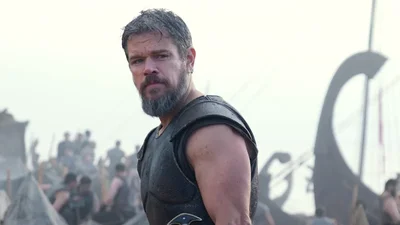
Matt Damon as Odysseus and Zendaya as Athena in The Odyssey.
To find out, I interviewed him on The Morning Edition.
In today’s episode of The Morning Edition podcast, host Samantha Selinger-Morris talks to The New York Review of Books editor-at-large Daniel Mendelsohn. The classics scholar discusses what Nolan is trying to tell us, and why it has provoked such a visceral reaction.
Samantha Selinger-Morris: You have written that over many years, other poets have taken Odysseus and sort of refashioned him for their own purposes. In Dante’s Inferno, Odysseus, who’s called Ulysses, is damned for deceitfulness and madly sails over the edge of the world. And then you’ve written that in the 19th century, Odysseus’s perpetual restlessness made him a romantic hero. So, what do you think of how Christopher Nolan has refashioned his hero? And what does it tell us about the time that we’re living in, perhaps something that Christopher Nolan thinks we need to hear or be reminded of?
Daniel Mendelsohn: Well, certainly. I mean, The Odyssey has made this character available to subsequent generations. And so, Nolan – I’m a big Nolan fan – I have admired a lot of his movies. And what he has done is he has taken the hero of the Odyssey, who is a trickster, there’s something very charming and almost, dare I say, James Bond-ish about Odysseus. Well, he’s a seducer, he’s a warrior, he’s a trickster, you know, and that’s sort of why we like him... And what Nolan has done in this film is to turn our charming, clever, seductive, amusing, James Bond-ish Odysseus into a guilt-ridden hero. So, the sort of operative theme of the movie is that he’s tormented by guilt, about having won the Trojan War and the terrible destruction of Troy that followed the Greek victory.
Selinger-Morris: Do you think that message is particularly resonant, perhaps, in this geopolitical climate?
*Mendelsohn*: Well, remember, guilt is a modern notion. The Greeks didn’t experience guilt; they experienced what anthropologists – they were what anthropologists call a shame culture. So, you acted in a certain way because you didn’t want to be shamed by other people in your group, not because you felt an internal sense of guilt, but because this shame was being imposed from outside. So, it’s not a very Greek notion.
But I do think your point is very well taken. Certainly, this kind of guilt-ridden character is a kind of character we’re familiar with... This is about one guy trying to make his [way] home through a kind of post-apocalyptic landscape where he doesn’t know the rules anymore... And for that reason, I feel it’s very modern.
Selinger-Morris: Is that particularly resonant in the Donald Trump era, do you think?
*Mendelsohn: Yeah... there is... I always say there’s something kind of “post” about the Odyssey, if that makes sense. We’re in... we’re in new territory, and we haven’t yet figured it out. And in that sense, I do think it speaks to modern times. We’re post... God knows, we’re post everything. The old order, certainly the global geopolitical order, is falling apart. And so I do think we identify with this sense that you get in the Odyssey* of this guy who doesn’t know what the rules are, he’s just making it up as he goes along, and that feels very modern, I think.
Listen to the full podcast episode in the player above or click here.
Hear the story behind the headlines on The Morning Edition podcast, every weekday from 5am on Apple, Spotify or your favourite podcast platform.
Save
You have reached your maximum number of saved items.
Remove items from your saved list to add more.