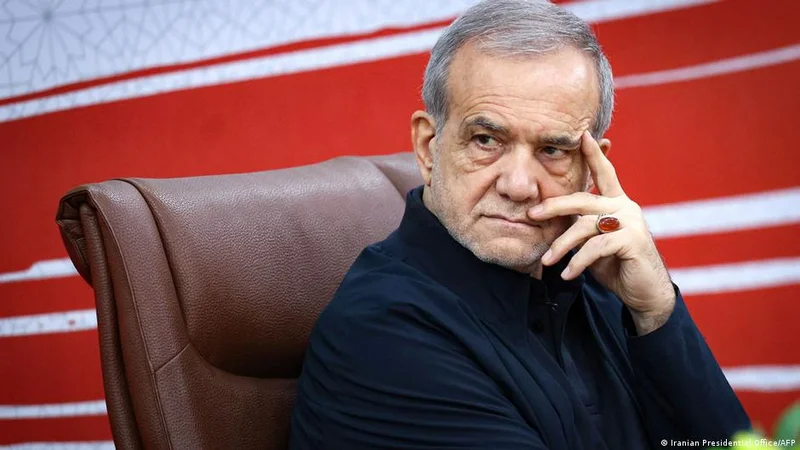
Iranian President Masoud Pezeshkian on Sunday defended Tehran's expired Memorandum of Understanding (MoU) with the United States as the best option for ending hostilities between the two nations, which Pezeshkian described as being "neither war nor peace."
Pezeshkian said members of Iran's Supreme National Security Council (SNSC) agreed with the assessment on the basis of, "dignity, wisdom and national interest."
"There is not a single provision in this agreement that amounts to capitulation," Pezeshkian said in remarks published by state-run news agency IRNA. "The supreme leader sets the policies, and we will follow that path."
The MoU, signed by US President Donald Trump in June, laid out a 60-day timeline for ending the US-Israeli-led conflict as well as ensuring that Iran give up its nuclear ambitions.
The deadline passed last week with no signs of compromise by either side, and the situation in the Strait of Hormuz — which Iran closed in response to US-Israeli attacks, putting the global economy in a chokehold for the past six months — still unresolved.
On Sunday, Pezeshkian called it imperative that Iran exit this stalled phase of the conflict to unlock foreign investment to the country.
"Capital and money are extremely sensitive to risk," he said. "We have to remove this risk from the country."
Pakistani mediator expected in Tehran as hardliner warns neighbors not to help US
Iran's Foreign Ministry on Sunday announced that Pakistan's top military leader, Asim Munir, will travel to Iran on Monday.
The visit is part of "Pakistan's ongoing efforts to help consolidate peace and security in the region," Tehran said.
Pakistan was instrumental in getting the MoU between Washington and Tehran signed.
Earlier this month, Islamabad signed its own regional security cooperation agreement with Saudi Arabia and Turkey, which observers read as an attempt to counter Iranian influence in the region.
Still, despite news of Munir's travels and Pezeshkian's announcement that the SNSC backs the MoU, that body's new hardline leader, Mohsen Rezaei, warned neighboring countries against aiding the US war effort, saying, "If [Trump] wants to do something, we will retaliate in a seismic manner."
Rezaei said Iran would target oil-shipping routes out of the Persian Gulf — alternatives to the Strait of Hormuz — if neighbors join the US economic war against Iran.
If you rely on our team for trusted reporting, please take a moment to select us as your Preferred Source on Google, so you'll always see our verified news first.
Edited by: Sean Sinico