Mudo Dining & Bar
Korean$$
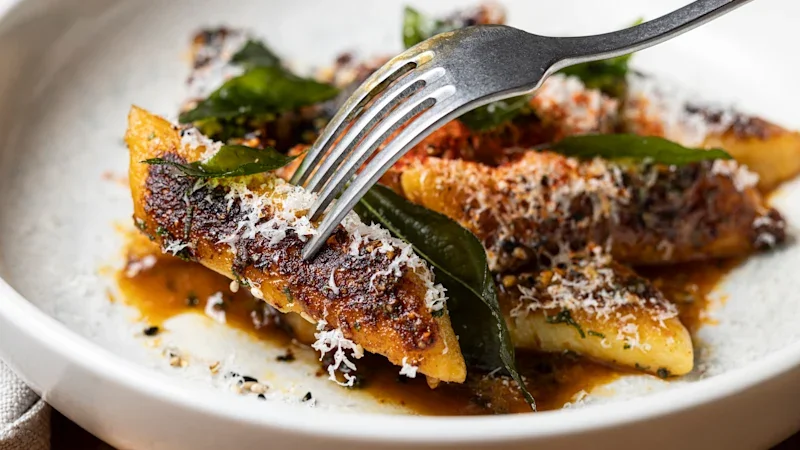
Potato gnocchi in a red sauce is placed on the table. Golden from the pan, soft enough to cut with a spoon, the long rectangles of pasta are sprinkled with parmesan. But this isn’t an Italian restaurant. The sauce is stained by gochujang, the earthy Korean chilli paste known for its firepower, except here it’s tamed by browned butter.
Mudo chef Happy Cho created this dish with one eye trained on Korea’s chewy oblong-shaped rice cakes – tteokbokki – and the other on his typical customer, more likely to know their gnocchi from their rigatoni. Like a Harry Potter novel, the dish says different things to different groups. The main thing, though, is that it tastes phenomenal.
Cho opened Mudo quietly before Christmas with front-of-house manager Whale Kim and a motto: Aussie vibes, Korean edge. The long dining room is tastefully dressed in creams and caramels. The food, though, is anything but beige.
Cornerstone Korean ingredients – gochujang, buckwheat, soju, sesame – are woven into the types of dishes diners would recognise from any inner-city restaurant menu of the past three years.
The Korean-born Cho has cooked everywhere from sushi restaurants to the finest of fine diners over two decades. Interning at San Francisco’s Benu in 2019, he saw Korean-American chef Corey Lee weave his culture into menus that scooped up awards. Could Cho also draw on his different experiences as a chef and create something unique?
His steak tartare walks the line between wine-bar favourite and yukhoe, Korea’s dish of raw beef. Wagyu seasoned with shallots, chives, soy sauce and sesame oil is mixed with diced nashi pear, a favourite tenderising ingredient for Korean chefs.
Rich, bronze-skinned duck shares the plate with pumpkin and beetroot, but also lozenges of kohlrabi turned into electrifying kimchi. Take one and consult your doctor if symptoms persist.
Buckwheat, grown in Korea far longer than wheat, is as important to the cuisine as butter is to France or masalas are to India. It’s used here in noodles that play counterweight to Mudo’s bigger flavours, and in a sponge cake, torn over salted caramel with sesame ice-cream and a tuile wafer that’s sweet, salty and spicy.
Some tables are trying their first ssam, the lettuce wraps that add crunch and contrast to Korean barbecued meat. Others need no introduction to jangajji, the pickles that brighten a barramundi fish burger, or baekseju, the herbal rice wine that replaces Campari in the house negroni.
You can ask about unfamiliar ingredients and staff will help, but there were so few waitstaff across my visits that you’re unlikely to get a spiel when you first open your menu. Some people will love that, but in this case, there’s lots to say.
That sponge cake dish? It incorporates all three of Korea’s “mother sauces”, I later find out. Doenjang, a soybean paste similar to miso, deepens the caramel. Gochujang brings the heat in the wafer. And ganjang, Korean soy sauce, adds brittle crunch to toasted nuts and seeds.
Other dishes are there simply because they’re delicious. A neat golden brick of prawn toast is never a bad idea. Potato rosti topped with torched mackerel is two godly bites of fish-and-potato, a timeless combo.
Dishes are priced at what can only be called a steal in 2026. A main course of duck for less than $55. A proper, entree-sized plate of gnocchi for $18. Half a chicken with carrot and pickled fennel: $29. People are rightly sensitive about prices, but I wonder if charging a few extra dollars across the menu would pay for another waiter on the floor, and result in a better experience all round.
On the way home, I see a billboard advertising Subway’s latest special. It’s a steak sandwich with Korean barbecue sauce. Aussie vibes, Korean edge?
The low-down
Atmosphere: Softly lit room adds a backdrop to thrills on the plate
Go-to dishes: Wagyu tartare ($24); gnocchi with gochujang ($18); duck breast ($42); nori makguksu noodles ($12); me-mil buckwheat cake ($14)
Drinks: Cocktails starring Korean rice wine (soju); considered non-alcoholics; affordable Australian, Italian and French wines
Cost: About $140 for two, excluding drinks
This review was originally published in Good Weekend magazine.
Good Food reviews are booked anonymously and paid independently. A restaurant can’t pay for a review or inclusion in the Good Food Guide.
More: