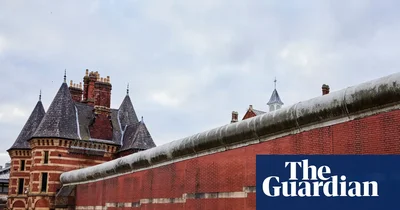
The Prison Service has made “very little progress” in enforcing a formal demand to stop drones from delivering drugs into one of its worst performing jails, a watchdog has concluded.
Charlie Taylor, the chief inspector of prisons for England and Wales, said HMP Manchester remained in a “precarious state” after a failure to fix broken windows and install security to stop contraband being delivered to gangs.
Taylor issued an urgent notification in October 2024 demanding that the Ministry of Justice intervene within 28 days to stop escalating drug use and violence at the high-security prison.
The disclosures, in a report released on Tuesday, have provoked concern among penal reformers that ministers are failing to stop drugs being delivered into the 123 prisons across England and Wales.
The government has dedicated £10m across the entire estate to anti-drone measures.
Andrea Coomber, the chief executive of the Howard League, said: “It is a sign of the intense pressure the prison system is under when a jail that was effectively put in special measures 15 months ago is still unable to protect people living and working there from harm.”
Enver Solomon, the chief executive of the social justice charity Nacro, said: “How can rehabilitation happen when drug use and violence are rife, and chronic staff shortages leave people in prison with little meaningful activity?
“When nearly half of prisoners are using drugs and many are locked in cells for up to 22 hours a day, rehabilitation doesn’t stand a chance.”
Taylor said inspectors invoked the urgent notification protocol in 2024 after finding that the category A and B jail, which houses about 550 men, was “in an appalling state”.
“The combination of drugs, violence, an inexperienced and demotivated staff team, and a very poor regime, meant the prison was failing in many of its most basic functions,” he said.
After inspecting earlier this year, he found some improvements but still scored the prison, formerly known as Strangeways, as “poor” for safety and purposeful activity.
Progress was “fragile” and undermined by delays in installing secure windows and grilles to stop drones from delivering drugs to inmates.
“Drones continued to bring large quantities of drugs into the jail, which was leading to high levels of violence and instability,” Taylor said.
“A failure by leaders in the Prison Service and absurdly bureaucratic planning processes meant just a handful of windows had been replaced, with the consequence that organised crime gangs continued to operate with impunity in the prison and the safety of prisoners and staff was compromised.”
The number of prisoners testing positive in random drug tests remained the same, while rates of self-harm continued to rise, he said.
“Four men had taken their own lives since our last visit and the rate of self-harm remained extremely high compared to similar jails,” he said.
The jail was failing to fulfil its function as a training prison, Taylor concluded, with staffing shortages forcing cancelled activities, and 44% of inmates unemployed.
“Drastic” education budget cuts of more than 50% meant that the number of teachers had reduced dramatically, he said. Ofsted rated the provision as “inadequate”.
A Ministry of Justice spokesperson said: “This is a prison operating under immense pressure after this government inherited a prison system at the peak of its crisis.
“We took immediate action to bring the system back from the point of collapse and while we welcome inspectors recognising the strong leadership now in place at HMP Manchester, we are taking urgent action to stop drones, upgrade security and tackle the flow of drugs which fuels violence behind bars.”