The Nigerian Bar Association (NBA), the Nigeria Internet Registration Association (NIRA) and several other organisations have expressed concerns over a bill seeking to compel social media platforms and bloggers operating in Nigeria to establish physical offices with verifiable addresses in the country.
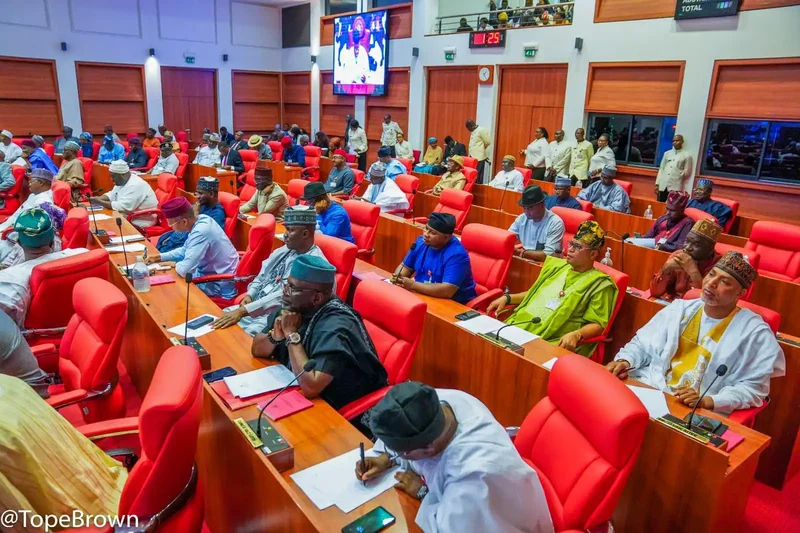
The organisations voiced their concerns during a public hearing organised by the Senate Committee on ICT and Cyber Security on Thursday.
The bill, sponsored by Ned Nwoko (APC, Delta North), passed second reading in the Senate in March 2025 before being referred to the committee for a public hearing.
While some stakeholders said that requiring social media platforms to establish physical offices in Nigeria could lead to the withdrawal or shutdown of some platforms, others supported the proposal, saying it would create employment opportunities, promote technology transfer and strengthen corporate social responsibility.
| | |
|---|
Those opposed to the bill also said that the 30-day compliance period prescribed in the proposed legislation is too short and should be extended.
The President-elect of the NBA, Oyinkansola Badejo-Okusanya, advised the committee to amend the bill to require social media platforms to appoint local representatives instead of mandating them to establish physical offices.
Mrs Badejo-Okusanya, whom Mercy Agada represented, also recommended extending the proposed 30-day compliance timeline to at least 180 days.
She further urged lawmakers to subject the bill to additional technical drafting to avoid creating an overly burdensome regulatory framework for social media platforms and their users.
While supporting provisions of the bill aimed at strengthening data protection compliance, the NBA recommended that the legislation be withdrawn for further review.
Similarly, NIRA’s Chief Operating Officer, Seyi Onasanya, said requiring physical offices alone would not be sufficient to hold social media platforms accountable.
Instead, she said the government should require platforms to host their data on Nigeria’s domain or within the country’s jurisdiction.
Mrs Onasanya suggested that the requirement for physical offices should, at the very least, be complemented by provisions on local data hosting.
On the other hand, the Chairman of the Practitioners of Content Creating, Influencers and Skit Makers Guild of Nigeria, Obinna Nwanfo, expressed strong support for the bill.
He said that the policies of many social media platforms are often unfavourable to content creators, making it difficult for them to resolve complaints, particularly those relating to the loss of followers and account restrictions.
Other organisations that participated in the public hearing included Paradigm Initiative, the Nigerian Youths of Social Media Analysts, Digital Civic, the Middle Belt Youth Congress and the Nigerian Female Youth Organisation.
Senator’s remarks
Defending the bill, its sponsor, Mr Nwoko, said the proposed legislation is not intended to punish or discourage social media companies from operating in Nigeria. Rather, he said it seeks to encourage them to deepen their presence in the country by becoming corporate entities with a stronger local footprint.
Mr Nwoko argued that requiring technology companies to maintain physical offices is a common practice in many countries, including several with smaller populations and digital markets than Nigeria.
He referenced countries such as the United Kingdom, Ireland, Singapore, India, the United Arab Emirates, South Africa, Brazil, Australia and Japan, where major global technology firms have established regional headquarters, engineering centres and operational offices.
According to him, those countries have leveraged the presence of global technology companies to create jobs, boost tax revenues, improve regulatory engagement, promote innovation and facilitate technology transfer.
He noted that Ireland, in particular, has emerged as a major technology hub because companies such as Meta, Google, LinkedIn, TikTok and X maintain significant operations there, employing thousands of people and contributing to the country’s economy.
He questioned why Nigeria, which has Africa’s largest digital market and a much larger population than many of those countries, should not pursue similar investments and economic benefits by requiring social media platforms to establish a physical presence in the country.