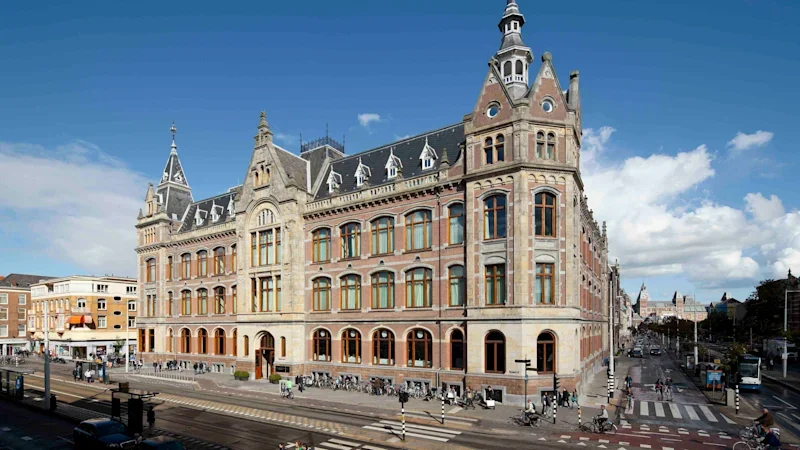
Amsterdam is often slotted into Europe itineraries for canals, cycling and world-class art. Now, there’s another compelling reason to build the Dutch capital into your long-haul itinerary: Yotam Ottolenghi has opened a restaurant there.
The London-based chef, restaurateur and bestselling author has launched his first restaurant in the Netherlands, Ottolenghi Amsterdam, inside the newly rebranded Mandarin Oriental Conservatorium, Amsterdam.
Ottolenghi’s name has become shorthand for a style of cooking that has influenced home kitchens and restaurant menus around the world. His cookbooks have sold in the millions, and his restaurants in London and Geneva draw devoted diners.
The latest travel news, tips and inspiration delivered to your inbox. Sign up now.
Amsterdam, however, is something of a homecoming. Ottolenghi lived in the city in 1995 while completing a master’s degree, before moving to London and training at Le Cordon Bleu. Nearly 30 years later, he returns as one of the most recognisable culinary figures in Europe.
The new restaurant sits beneath the glass atrium of the Mandarin Oriental Conservatorium in the Museum Quarter, walking distance from the Rijksmuseum and the Van Gogh Museum.
Inspired by his London restaurant ROVI, the menu is vegetable-led and built around vibrant sharing plates, bold flavours, ferments and pickles. It serves breakfast, lunch and dinner – an important detail for travellers navigating jet lag and museum timetables.
It’s also a hugely important move for Mandarin Oriental, which coincides with the Conservatorium Hotel’s official rebranding as Mandarin Oriental Conservatorium, Amsterdam, the group’s first property in the Netherlands. Rooms, of course, remain the primary profit centre in hotels, but a high-profile restaurant helps fill them.
Industry research from global real estate adviser JLL shows that luxury hotels with “prestige restaurants” – defined as those featuring celebrity chefs, Michelin stars or James Beard recognition – significantly outperform comparable hotels without them. They charge higher average room rates and enjoy stronger occupancy.
The reason is simple: travellers care deeply about food. According to the JLL research report, half of global travellers book restaurant reservations before they even board their flights. Nearly one in five people travel specifically to seek out new culinary experiences.
It’s a shift being felt throughout the hospitality industry. Adam Woodfield, executive chef at Foundry Kitchen & Bar at the new Mercure Melbourne LaTrobe Street, says travellers have become far more discerning about where they eat than they were a decade ago.
“Especially in Melbourne, there’s just so much choice around. People don’t eat in the hotel restaurant simply because they’re staying there any more.”
According to Woodfield, food has become a much bigger part of the overall travel experience, with guests researching restaurants before they arrive and often securing bookings well in advance.
“The hotel restaurants that do well now are the ones people would happily visit whether they were staying there or not,” he says. “Travellers expect good food wherever they stay these days. It’s not something people only look for in luxury hotels anymore.”
Woodfield believes successful hotel restaurants share the same qualities as successful standalone venues: a strong identity, consistency and a sense of authenticity. Drawing on time spent working in New York, he says the city’s dining scene taught him that people will travel across town for restaurants that know exactly what they are.
“The restaurants I loved weren’t relying on location or convenience,” he says. “They had a clear identity, great energy and people genuinely wanted to be there.”
It’s a philosophy that appears to sit at the heart of Ottolenghi Amsterdam. Hotel management has emphasised that the restaurant will be community-focused, designed to attract Amsterdam residents as much as hotel guests. After all, the Conservatorium has long been described as “Amsterdam’s Living Room”. Mandarin Oriental is taking stewardship of a landmark that locals already regard as their own.