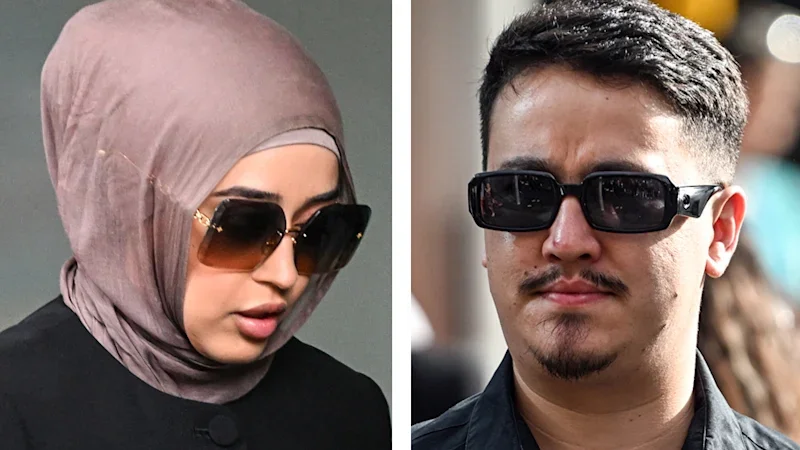
Prosecutors are pushing for a viral video of a chat between an Israeli content creator and two Sydney nurses who allegedly threatened Israeli people to be allowed as evidence for their upcoming trials after a judge previously struck it out.
Ahmad Rashad Nadir, 28, and Sarah Abu Lebdeh, 27, were charged following the February 2025 interaction with Max Veifer (also known as Max Ilinsky) on online video chat service Chatruletka while the nurses worked at Bankstown Hospital in Sydney’s west.
Last month, District Court Judge Michael McHugh ruled the video recording of the chat inadmissable, finding it was recorded improperly or illegally. The Crown has applied to the NSW Court of Criminal Appeal to overturn the ruling.
In a written judgment partially released to the media, McHugh said improperly or illegally obtained evidence cannot be admitted “unless the desirability of its admission outweighs the undesirability of admitting evidence that has been obtained in such a way or ways”.
The defence must prove improper obtainment, McHugh said. If that is established, the onus of proof of whether it should still be admitted shifted to the Crown.
Ultimately, the judge formed the “firm view” all video evidence must be excluded and said a jury must decide whether the criminal offences could be proven.
At an appeal hearing on Friday, prosecutors addressed many of the grounds McHugh cited for his decision, which cannot be detailed due to a non-publication order.
Crown barrister Paul Holdenson, KC, argued the desirability of admitting the evidence outweighs the undesirability. He said the video evidence had high probative value and is most important to the proceedings.
“Thirdly, the nature of the relevant offences, serious or grave, each of the three offences specified on the indictment have a prescribed maximum penalty of five years’ imprisonment,” he said.
“And in any event, the court would need to keep in mind that what Mr Ilinsky did was not unlawful in Israel,” he added.
Nadir’s barrister Greg James, KC, argued his client had a right to privacy during the conversation.
“This case, a conversation at 6am or something, between three people, supposedly in a chat room to which other people didn’t have access, has seemingly … already attracted an enormous degree of publicity,” he said.
James said that while there was no question that Ilinksy knew his actions were lawful in Israel, he seemed to be aware of the possibility they were illegal elsewhere.
Nadir and Abu Lebdeh are charged with making statements that reasonable people would regard as menacing or offensive. Abu Lebdeh is also charged with threatening to use force or violence against Israeli people, causing them fear.
Both defendants have pleaded not guilty and are scheduled fight the charges at a five-day trial at the end of August.
Outside court following the judge’s decision to throw out the evidence in June, Nadir’s lawyer Zemarai Khatiz described the ruling as a “major victory for my client” which would collapse the prosecution’s case.
Justine Anthony Payne, Justice Natalie Adams and Justice James Emmett reserved their decision for a later date.