How the Houthi Red Sea blockade will impact the world
The United States has continued to attack Iran for a 13th consecutive night on Thursday and explosions were reported in multiple Iranian cities on Friday morning.
In addition to the ongoing attacks, shipping disruptions continue to intensify. Ship tracking data revealed that just one tanker successfully crossed the Strait of Hormuz on Thursday, marking the lowest level since May 7.
However, shipping data from London Stock Exchange Group shows that two Chinese supertankers carrying crude oil from Saudi Arabia successfully exited the Bab al-Mandeb strait on Friday. This is despite the naval blockade Yemen’s Houthis announced against Saudi Arabia on Monday.
Here is a recap of what happened on Thursday night and Friday.
Where did the US attack Iran?
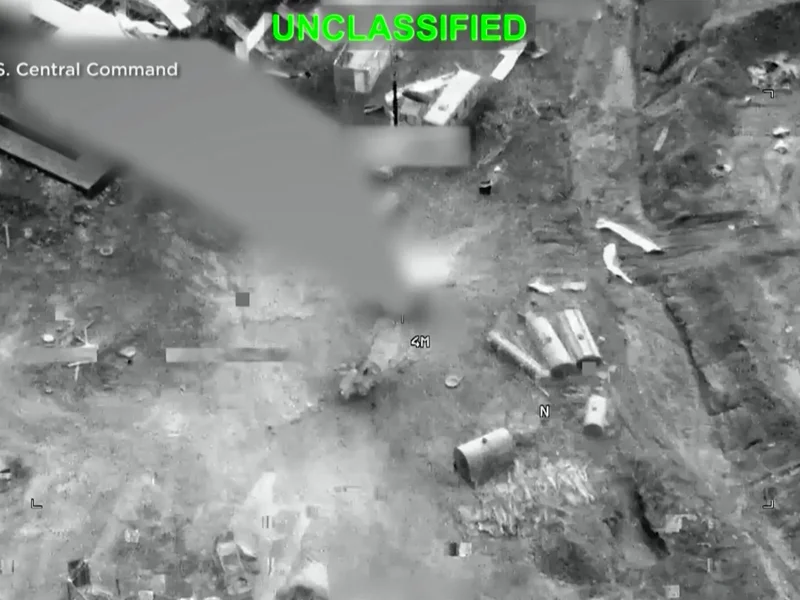
The US Central Command (CENTCOM) said that at 01:00 GMT on Friday, it concluded its latest round of strikes against Iran.
CENTCOM said it targeted Iranian military command centres, drone storage facilities, communication networks, coastal surveillance sites and maritime capabilities.
On Friday, Iranian media reported explosions or attacks across multiple Iranian cities. State broadcaster IRIB reported that explosions were reported in Khondab, Khorramabad, Konarak and Jask. Iran’s semi-official Fars news agency reported that two people have been injured following an early morning drone attack on Khorramabad, citing the deputy governor of the western Lorestan province.
Iran’s Mehr news agency reported on Friday that US missile strikes hit the cities of Andimeshk and Omidiyeh in the Khuzestan province. There were no casualties or injuries.
Al Jazeera’s Tohid Assidi reported from the Iranian capital, Tehran, that explosions were heard on Qeshm island, located in the Strait of Hormuz, on Friday.
Attacks on the Iranian port city of Bandar Abbas have injured two people, Iranian media reported on Friday.
Iran’s semi-official Tasnim news agency reported on Friday that four people were killed and five others were injured in a US missile attack near the southwestern city of Ahvaz.
Where did Iran strike in the Gulf?
Bahrain: In a statement carried by Iran’s Mehr news agency, the Iranian army said it used drones to target fuel storage tanks, equipment warehouses and troop living quarters at Sheikh Isa Air Base in Bahrain.
Jordan: The military added that aircraft hangars, maintenance facilities and accommodation sites at the Muwaffaq Salti/Al-Azraq base in Jordan were also hit, warning that any actions against Iran’s interests would undermine regional security and economic stability.
What have leaders on either side said?
On Thursday, US President Donald Trump stepped up his rhetoric against Tehran. He told the US news website Axios that he may launch the largest strikes on Iran yet, after Tehran carried out another wave of retaliatory attacks on US allies in the Gulf, including hitting a telecommunications tower in Kuwait.
Trump said he was “considering a massive attack” that would be “bigger than ever before”.
“I am close to making a decision. We are all set for it,” Trump said.
Separately, Trump threatened, on his Truth Social platform, that if Iran attacked ships, the US would use Tehran’s frozen assets to pay for repairs.
Iranian Foreign Minister Abbas Araghchi warned on Friday that using frozen state assets to pay for future claims sets a dangerous global precedent.
“Seizing another nation’s assets to pay for unrelated future claims is an incendiary precedent,” Araghchi wrote on X.
He cautioned that “those who celebrate or profit from such funds should remember: once governments normalise confiscation, no one’s assets are safe. Ensuing chaos will not be pretty or peaceful”.