Costa Rica Interest Rate Cut to 3.00%, First Since 2025
Central America · Economy
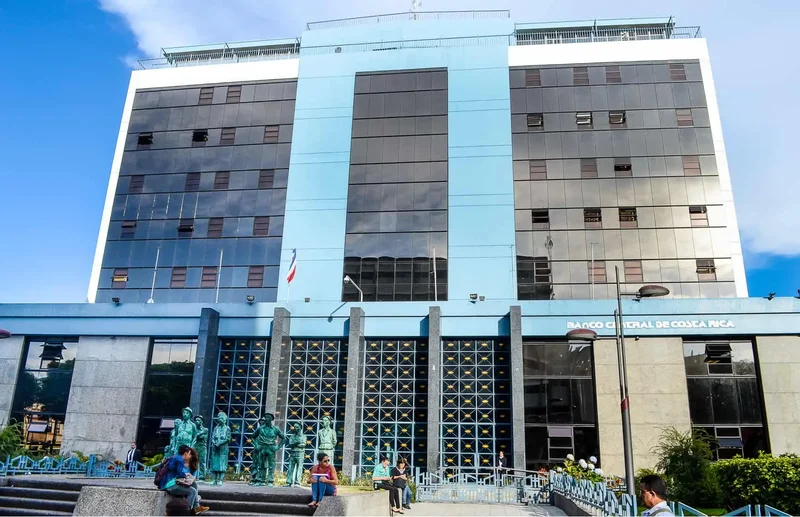
The Central Bank of Costa Rica (BCCR) reduced its benchmark Costa Rica interest rate by 25 basis points to 3.00% on July 18, 2026, the first cut in seven months, responding to negative inflation and a stable colón.
The Decision and the Vote
The BCCR’s Board of Directors voted unanimously to lower the monetary policy rate (TPM) from 3.25% to 3.00%. The move ended a seven-month pause that had held the rate steady since late 2025.
In its official statement, the Board said the cut was based on the recent behavior of inflation and its macroeconomic determinants. The bank noted that a rate range of 3.25% to 4.0% had been consistent with a neutral policy stance, creating room to ease while remaining cautious amid high global uncertainty.
What is the BCCR and the TPM?
For foreign investors and expats, the Banco Central de Costa Rica (BCCR) is the country’s independent central bank, responsible for monetary stability and currency issuance. Its main tool is the Tasa de Política Monetaria (TPM), the benchmark interest rate that guides short-term borrowing costs across the financial system.
When the BCCR adjusts the TPM, it directly influences the rates commercial banks charge on loans and pay on deposits. A lower rate typically makes credit cheaper in colones, the local currency, and can reduce returns on colon-denominated savings instruments.
Inflation Turns Negative
The most compelling factor behind the cut is inflation. Data from the National Institute of Statistics and Census (INEC) showed the year-on-year inflation rate fell to -0.22% at the end of the first half of 2026. This means consumer prices were slightly lower than a year earlier.
The BCCR’s explicit inflation target is 3.0%, with a tolerance band of plus or minus one percentage point. With actual inflation running more than three percentage points below the target floor, the central bank had ample justification to ease policy without risking price stability.
The negative reading marks a sharp contrast with the post-pandemic inflation surge that many Latin American economies experienced. Costa Rica has successfully brought price growth down, and the central bank is now guarding against the opposite risk: that inflation stays too low for too long.
Growth and the Colón
The BCCR’s own economic projections point to steady growth. The bank forecasts GDP expansion of 3.6% for 2025 and 3.8% for 2026, rates that suggest a resilient economy without signs of overheating.
The colón has also remained relatively stable. On July 5, 2026, the BCCR reference exchange rate stood at ₡450.38 buy and ₡456.42 sell per US dollar. For a US dollar holder, this means one dollar buys roughly 450 colones, a level that has not seen dramatic swings in recent months.
A stable exchange rate is a key variable for the BCCR. Sharp depreciation can fuel inflation by making imports more expensive. The colón’s steadiness gave the Board confidence that a rate cut would not trigger unwanted currency weakness.
Policy Guidance and Global Risks
Despite the cut, the BCCR struck a cautious tone. The Board emphasized that it would continue to assess inflation, inflation expectations, and both external and internal risks in future meetings. It stressed that caution remains necessary in policy moves.
The reference to high global uncertainty likely points to ongoing trade tensions, volatile commodity prices, and divergent monetary policies among major central banks. For a small, open economy like Costa Rica, external shocks can quickly alter the inflation and growth outlook.
At its previous meeting on May 21, 2026, the BCCR had kept the rate at 3.25%, noting that inflation was still below the tolerance band. The Board said it would keep evaluating the path of inflation and risks before acting again. The July cut signals that the data since May convinced all Board members that easing was appropriate.
What the Cut Signals for Foreigners
For expats and foreign investors, the rate cut sends several signals. First, colon-denominated bank deposits and government bonds may see slightly lower yields going forward. This could shift some local investor appetite toward US dollar instruments or real assets.
Second, cheaper colon borrowing costs could stimulate domestic demand for housing and consumer goods, sectors where many foreign entrepreneurs operate. A lower TPM may also ease financing conditions for businesses with local-currency revenue streams.
Third, the BCCR’s willingness to cut while the US Federal Reserve holds steady could narrow the interest-rate differential between colones and dollars. In theory, this might reduce the colón’s carry-trade appeal, though the currency has so far remained stable.
The central bank’s cautious guidance suggests it is not on a rapid easing cycle. Future cuts will depend on whether inflation stays below target and whether external conditions remain manageable. For now, the BCCR has opened the door to a slightly more accommodative stance without signaling alarm.
Frequently Asked Questions
Why did Costa Rica’s central bank cut its interest rate?
The BCCR cut its monetary policy rate to 3.00% because annual inflation turned negative at -0.22%, well below the 3% target. The stable colón and moderate growth projections also supported the decision.
How does the Costa Rica interest rate cut affect the colón exchange rate?
A rate cut can theoretically reduce demand for colones by narrowing the yield advantage over US dollars. However, the colón has remained stable near ₡450 per dollar, and the BCCR cited this stability as a factor that allowed the cut.
What is the BCCR’s inflation target for Costa Rica?
The BCCR targets an annual inflation rate of 3.0%, with a tolerance band of plus or minus one percentage point. Inflation at -0.22% is significantly below the lower bound of the 2% to 4% tolerance range.
Sources & Further Reading
Banco Central de Costa Rica · Bloomberg Linea