I enter my bedroom at 7am to find my husband looking dolefully at his phone. ‘What’s wrong?’ I ask, concerned. ‘It’s my Eight Sleep,’ he replies. ‘It says I’ve had a really bad night.’ At which point my eyes roll so far back I nearly clock a full REM score myself.
The Eight Sleep is our super-swanky mattress, which brilliantly adjusts its temperature according to body heat. It also tracks sleep stages, but I never, ever bother checking the app because, guess what? I know – purely by existing within my own body – if I’ve had a terrible kip.
Whenever I hear someone freaking out about a negative fitness-tracker score, whether it’s a low respiratory rate or notification warning of illness, I have the same thought: get a grip. The nation responded similarly when podcaster Steven Bartlett listed the catalogue of disasters highlighted by his Whoop tracker after a couple of alcoholic drinks: he slept less, ate poorly, skipped the gym and even ‘podcasted worse’. That example of self-optimisation (or lack of) led to widespread jeering, but it remains the case that 35 per cent of the UK population wears some kind of tracking device, according to YouGov. Even I do.
For the best part of a decade, I’ve worn various gadgets – a Fitbit, an Oura Ring etc – largely to track my steps, ensuring I achieve 10,000 a day. What I’ve never done before is use five fitness trackers at the same time – and for four days – but that’s what I decide to do, curious to discover if the ‘worried well’ are basing their data obsession on stable foundations.
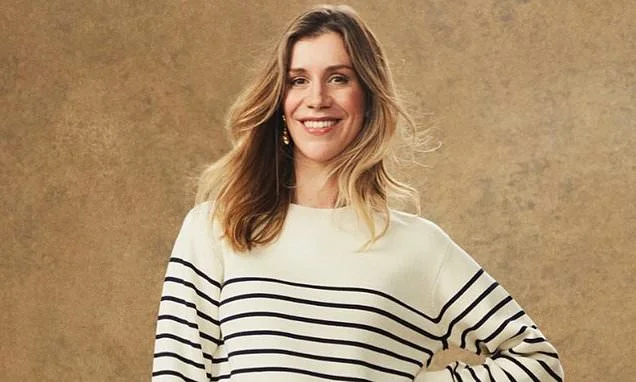
Whenever I hear someone freaking out about a negative fitness-tracker score, I have the same thought: get a grip, writes Sophie Hines
In addition to using the Eight Sleep mattress, on one wrist I have a Garmin watch, on the other a Whoop band. There’s an Oura Ring on my right hand and in my pocket my iPhone, which uses its Apple Health app to track steps, calories and distance moved. The first thing I notice is how uncomfortable, let alone embarrassing, all the tech I’m carrying around is. Worried people will think I’m some kind of Steven-Bartlett-on-steroids, I spend the entire experiment wearing long sleeves, which is not easy during a heatwave. Self-optimisation is mortifying.
My physical shackles also give way to a sort of mental torture in the form of continuous buzzing – both at my wrists and from the endless notifications on my phone: ‘Nice walk!’ ‘Get up and move!’ ‘I need charging!’ ‘Stop being stressed!’
While some of the notifications are encouraging – for example, being told I just need to do one more short walk to reach my daily exercise goal – others are annoying. One evening, after I’ve finally got my two kids to bed and walk downstairs to commence the long shift of washing up/tidying/laundry folding, my Oura Ring pipes up. ‘8.15pm: Bedtime is approaching. If you want to prepare yourself for a good quality sleep, now’s the time to start winding down your mind and body.’ I won’t repeat my response, but it certainly wasn’t ‘Thanks for this valuable insight, Oura.’
I’m startled by how wildly variable the data is. My sleep stats are all over the place – there’s up to an hour’s difference in how much ‘deep sleep’ I’ve had, across devices. They don’t even agree on how long I’ve been asleep in total. (One day Eight Sleep recorded 6hr 57m while Oura had 6hr 17m, a 40-minute difference. Surely it should be straightforward to track?)
The same goes for calories. On the first day, Oura says I’ve burnt 2,580, while Whoop says 1,436 – a 1,144 calorie difference. This could have a significant affect on weight loss or gain if I were to take it as gospel.
Interestingly, step count causes the least drama. The devices land within 1,000 to 2,000 of each other every day, even Apple Health, which I’m surprised about because I don’t have my iPhone glued to me for every single step I take. Or maybe I do? Eek.
Michael Sawh, a journalist specialising in wearable tech, explains the reason for all this variability. ‘While fitness trackers all rely mostly on the same sensors to track things like daily step counts or determine when you’ve finally fallen asleep, the algorithms that crunch that data aren’t entirely the same,’ he says.
While I’ll happily accept the devices’ general opinion that I’m a fit and active person, I totally ignore the fact that they aren’t thrilled with my sleep. Others find it less easy to be so blasé. Paulina Bondaronek, a senior research fellow from University College London, has studied how fitness tracking and calorie-counting apps affected mood.
She says: ‘Users expressed shame about not meeting their calorie targets, irritation with app notifications, guilt, disappointment with themselves, stress, anxiety and demotivation (especially due to the all-or-nothing approach of some apps, such as lost streaks).’
While apps focus on tracking, says Bondaronek, they largely ignore the importance of self-belief. Simply knowing you walked 13,000 steps doesn’t mean you identify as an active person and research shows that people who integrate a behaviour into their identity are far more likely to sustain it.
The Eight Sleep is a super-swanky mattress, which brilliantly adjusts its temperature according to body heat and tracks sleep stages
Someone who thinks ‘I am a runner’ behaves differently to someone who thinks ‘I’m trying to run more.’ The first person runs even if they don’t feel like it, because it’s part of who they are. Person two stops when motivation dips.
Reflecting on this helps me realise, to my surprise, that the reason I’m never freaked out by fitness trackers is that I genuinely believe I am an active, healthy person. I’ve made exercise a priority for over 20 years – for me, the gadget functions as a useful tool, rather than a judge.
For others, the situation is trickier: when the device says something negative, it feels like a verdict on who they are, not just a data point to consider or ignore.
At the end of the experiment, I unmanacle myself and the devices all sit angrily buzzing on my dressing table. My phone pops up with notifications demanding ‘continuous wear for most effective feedback’. No thank you, I think. I’m the one in charge here.