President Trump’s tariffs are changing yet again.
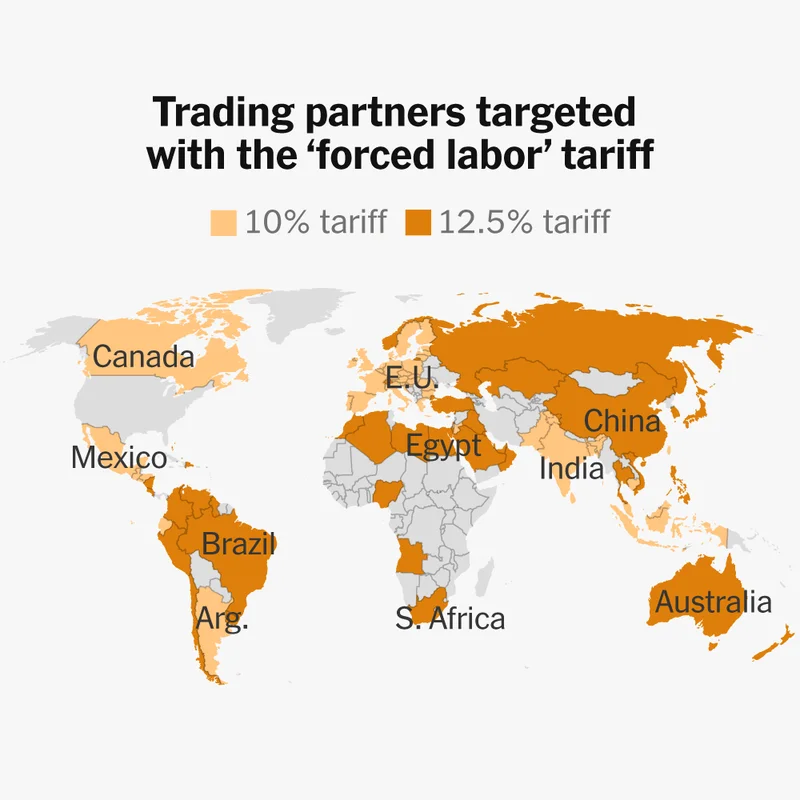
On Friday, the Trump administration imposed new duties on imports from more than 80 countries, including Canada, Mexico and the members of the European Union. Now, many goods arriving from these countries will face tariffs between 10 percent and 12.5 percent.
The new taxes are meant to replace a 10 percent duty that Mr. Trump imposed globally shortly after the Supreme Court invalidated a previous wave of sweeping levies. By law, that replacement tariff could be in place for only 150 days absent congressional approval, and the clock ran out on the president at midnight.
The new tariffs are different from those that Mr. Trump has applied to cars, steel and a variety of other products on national security grounds. The president has also singled out Canada, which will soon face a 50 percent tax on a wide range of products it sends to the United States, as the White House negotiates the future of its trade pact with Canada and Mexico.
Despite the ever-shifting policies, the stakes of Mr. Trump’s tariffs remain unchanged. The president sees high duties as a way to encourage more domestic manufacturing and protect U.S. industries, but taxes on imports tend to fall hardest on American families and businesses. Mr. Trump’s policies may also face a familiar set of legal challenges that could send the administration back to court, where it has lost repeatedly.
The latest: Tariffs targeting unfair trade practices
Mr. Trump’s newest tariffs apply to some of the country’s largest trading partners. To impose the duties, he invoked Section 301 of the Trade Act of 1974.