Many people may know Alan Turing as the British mathematician who helped crack the supposedly impenetrable Nazi Enigma code during World War II. Others may recognize him as the father of modern computing who foresaw the rise of A.I. And modern audiences may imagine Turing as Benedict Cumberbatch, who portrayed him in the 2014 film “The Imitation Game.”
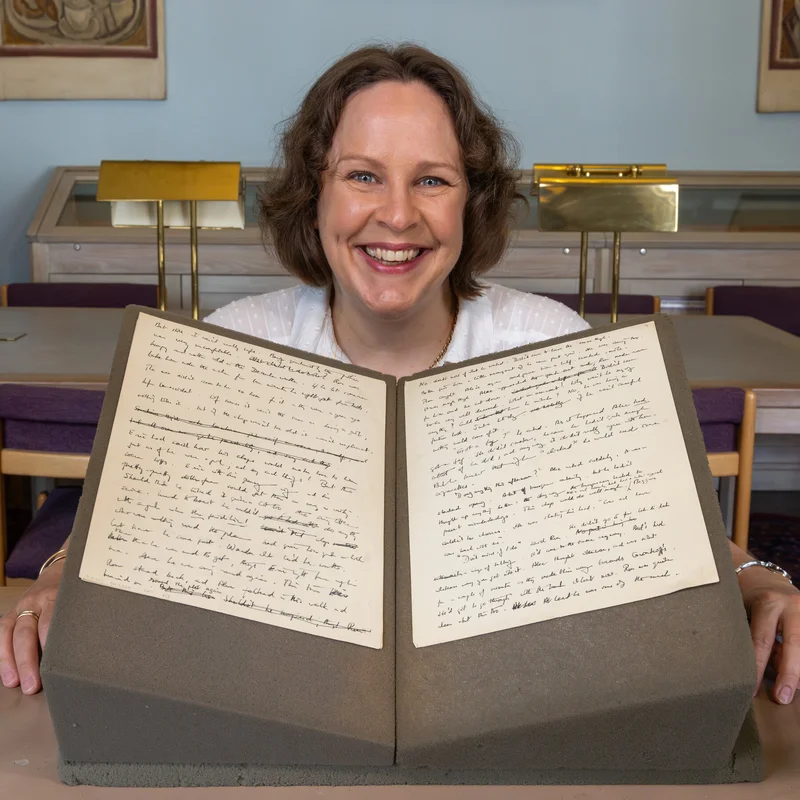
But what many people may not have known is that Turing was also a talented creative writer with a playful side, according to Sarah Dillon, a professor of English literature at Cambridge University who has transcribed a short story that he wrote toward the end of his life.
Until now, Dr. Dillon said, it was “mainly quite geeky academics that knew about” Turing’s literary work. Snippets of his handwritten story had been transcribed for different books and biographies, but the entire work was essentially illegible. With her transcription, the roughly 1,000-word, unfinished piece of fiction can now be read by the wider public.
The story, “Pryce’s Buoy,” is preserved at an archive at Cambridge University. After about 1,000 words and six pages, the work abruptly ends with the words “Ron wouldn’t.”
Any remaining pages have been lost to history, Dr. Dillon said.
She added that Turing’s public image, partly influenced by “The Imitation Game,” was not fully understood. “Working on the story has been part of reclaiming a different narrative about Turing,” she said.