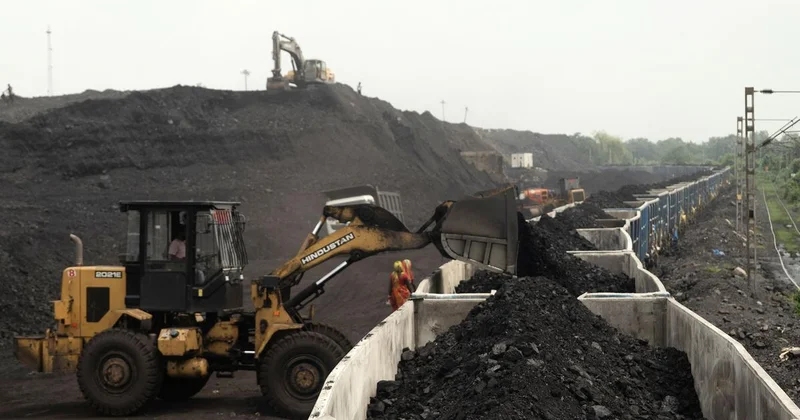
Amidst a rise in electricity demand driven by warmer conditions in June, hydropower generation has declined, increasing India’s reliance on coal-fired power. The trend could intensify if El Niño conditions strengthen during the southwest monsoon.
An analysis published by S&P Global, an energy market intelligence firm, on July 3 said that India’s average hydropower generation in June declined by 6.3 aGW (average gigawatt) from a year earlier, even as average electricity demand increased by 24.3 aGW. The shortfall was largely offset by a 20.7 aGW increase in coal-fired generation, while solar and wind generation rose by a combined 9.4 aGW.
The trend is not confined to India.
According to the S&P Global analysis, Japan, South Korea, Bangladesh, the Philippines and Malaysia have also witnessed lower hydropower generation. However, India and Vietnam together accounted for nearly 80% of the regional decline in hydropower generation, making them the most affected countries in Asia.
“The June decline (in hydropower generation) is consistent with the expected impact of El Niño on rainfall patterns and reservoir inflows across Asia,” the analysis said and added that hydropower generation could remain below normal if El Niño conditions persist through the summer months.
The India Meteorological Department and several international weather agencies have projected the development of El Niño conditions during the southwest monsoon season.
During a meeting chaired by the Prime Minister’s Office on July 6, meterological officials said weak to moderate El Niño conditions are expected in July and August. Meanwhile, prolonged heatwave conditions across several parts of the country in recent months have already pushed electricity demand to record levels.
The decline in hydropower generation is significant because hydropower is among the most flexible sources of power generation. Unlike solar and wind, hydroelectric plants can rapidly adjust output to meet fluctuations in demand and variable renewable generation, helping maintain grid stability during peak demand periods, the analysis has said.
Another analysis by the Centre for Research on Energy and Clean Air, an independent research organisation, said that El Niño will pose a double challenge. It will increase electricity demand due to warmer temperatures and reduce renewable power generation, particularly from hydropower and wind.
It estimated that India could face a generation gap of nearly 18 terawatt-hours due to reduced renewable output and higher electricity demand. It projects that the gap would largely be met by coal-fired generation, leading to an additional 17 million tonnes of carbon dioxide emissions.
This article was first published on Mongabay.
We welcome your comments at letters@scroll.in.