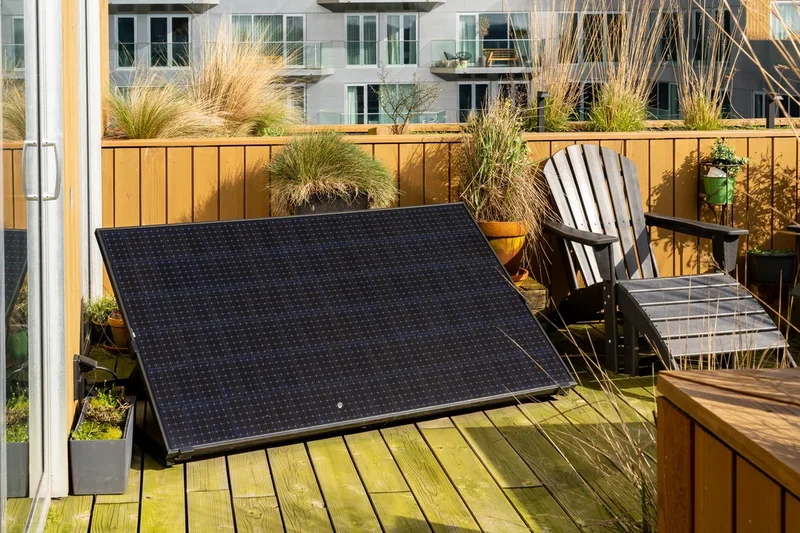
Plug-in solar panels that allow households to generate electricity through an ordinary mains socket will become legal in Great Britain from 27 August.
The government has now approved changes to existing plug and electricity safety regulations, clearing one of the main barriers preventing plug-in solar kits from being sold by mainstream British retailers.
The technology, which is already widely used in parts of Europe, typically consists of one or two small solar panels connected to a microinverter. This converts the electricity generated by the panels into a form that can be fed into a home through a standard three-pin socket.
In March, the government said plug-in panels would arrive in shops “within months”, with retailers including Lidl and Iceland involved in discussions about bringing the products to Britain. The Independent previously reported that Lidl was expected to sell a system for around £400.
However, the new rules do not mean that every balcony solar kit currently available online will automatically be legal to use.
Only products that comply with the government’s new Plug-in Solar Device Interim Product Specification will be allowed to take advantage of the exemption. The specification sets minimum electrical and safety requirements for the panels, inverter, cable and plug.
Compliant plug-in solar devices will have a maximum rated output of 800W, with only one device permitted per electrical circuit. The exemption applies only to solar generation and does not cover plug-in batteries or other products that draw electricity from the home, store it and feed it back later.
Government analysis suggests a compliant 800W system could cut a household’s electricity bill by around £70 to £110 a year. Although savings will depend heavily on where the panels are placed and how the household uses energy.
Its final impact assessment estimates annual savings of around £110 for panels facing south and mounted at a 30-degree angle. A vertical system facing east or west could save closer to £70.
Shading, location, electricity prices and the angle and direction of the panels could all affect the result. For example, the government estimates one might save around £110 a year with plug-in solar panels mounted at a 30-degree tilt and facing south. You might save approximately £70 a year with vertically mounted panels facing east or west.
The figures also assume someone is generally at home during the day and able to use much of the electricity as it is generated.
Read more: Best solar charges, tested
Plug-in panels are smaller and less powerful than a full rooftop installation, but they may offer renters, flat owners and households without a suitable roof a cheaper way to generate some of their own electricity and help reduce their energy bills. Our guide explains whether plug-in solar panels are likely to be worth buying.
“The Government's announcement is a really important step towards making solar energy available to far more people across the UK. Until now, generating your own electricity has largely been limited to homeowners with the right roof and the budget for a full solar installation,” says Aaron James Darvill, strategic sales director at Anker SOLIX. “Plug-in solar changes that. It gives renters, people living in flats and households without suitable roofs a simpler and more affordable way to get started.”
Consumers may still need to consider planning rules, seek permission from their landlord or freeholder and check that their home’s electrical system is suitable. The government said it would publish consumer guidance once the regulations come into force.
The regulatory change applies in Great Britain. According to the impact assessment, Northern Ireland would need to make separate changes to its electricity safety regulations before plug-in solar systems could legally be connected there. The government’s final impact assessment states:
“In practice plug-in solar would only be legally permitted for use in Northern Ireland if the Electricity Safety, Quality and Continuity Regulations (Northern Ireland) 2012 are also reformed, and this is a matter for the Northern Ireland Executive.”
Read more: **Best solar panels, compared **