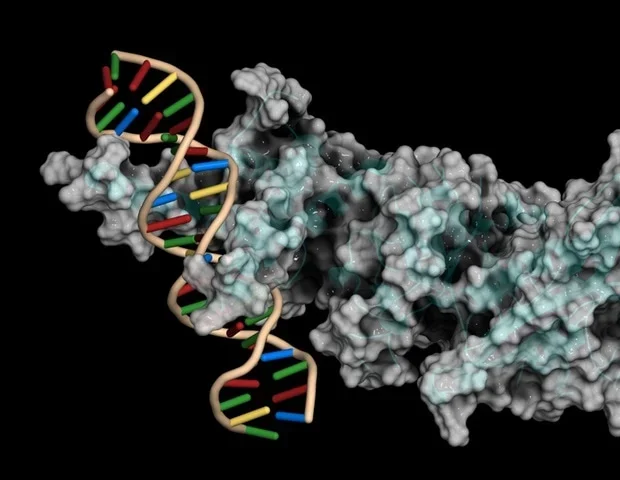
Sanchi ginseng (Panax notoginseng) is a cornerstone of traditional Chinese medicine, prized for its saponins-bioactive compounds with anti-inflammatory, cardiovascular, and anticancer properties. Yet the molecular machinery controlling saponin production has remained largely unknown. Now, researchers have identified a master regulator, the transcription factor PnMYB38, that acts as a molecular switch linking plant hormone signals to saponin biosynthesis. This discovery opens the door to precision breeding and metabolic engineering strategies that could boost the medicinal quality of this valuable herb.
For decades, scientists have known that methyl jasmonate (MeJA)-a plant hormone involved in stress responses-can significantly enhance saponin accumulation in P. notoginseng. However, the specific transcription factors (TFs) that translate this hormonal signal into increased saponin production remained unidentified. Transcription factors are proteins that bind to DNA and control which genes are turned on or off. Among them, the MYB family is one of the largest and most important in plants, regulating everything from growth to stress responses to the production of medicinal compounds. Due to these challenges, there is an urgent need for systematic research into how MeJA signaling is connected to saponin biosynthesis through MYB transcription factors.
A team of researchers from Kunming University of Science and Technology, in collaboration with the Wenshan Academy of Agricultural Sciences, published (DOI: 10.1093/hr/uhag052) their findings in Horticulture Research (Volume 13, Issue 6, 2026). The study combined genome-wide screening, multi-omics profiling, and molecular experiments to identify and characterize the MYB transcription factor family in P. notoginseng and pinpoint the key regulator responsible for MeJA-induced saponin production.
The research team identified 110 MYB genes in the P. notoginseng genome and found that MeJA treatment significantly altered the expression of 84 of them. By integrating transcriptomic and metabolomic data, they pinpointed PnMYB38 as a central hub in the regulatory network. Functional experiments confirmed that PnMYB38 directly binds to and activates the promoters of two critical saponin biosynthesis genes: PnSE (squalene epoxidase) and PnDS (dammarenediol-II synthase). This activation triggers a cascade that boosts the production of dammarane-type saponins, including notoginsenoside R₁-one of the most pharmacologically active compounds in Sanchi ginseng. The study also revealed that PnMYB38 is localized in the cell nucleus, consistent with its role as a transcriptional regulator. Through yeast one-hybrid (Y1H) assays, electrophoretic mobility shift assays (EMSA), and dual-luciferase (LUC) reporter assays, the researchers provided multiple lines of evidence confirming the direct and specific interaction between PnMYB38 and the target gene promoters.
"We've essentially found the missing link between the plant hormone signal and the production of these valuable medicinal compounds," the authors said. "PnMYB38 is the master switch that translates the methyl jasmonate cue into a blueprint for saponin biosynthesis. Understanding this mechanism not only solves a long-standing puzzle in plant biology but also gives us a precise molecular tool to improve the quality of Sanchi ginseng through breeding and genetic engineering."
This discovery has immediate and far-reaching implications for the cultivation and improvement of P. notoginseng. By targeting PnMYB38, breeders could develop varieties with consistently higher saponin content, reducing the variability that currently plagues commercial production. The findings also establish a clear regulatory model-the "MeJA–PnMYB38–saponin biosynthesis" pathway-that could guide metabolic engineering efforts in other medicinal plants. Furthermore, the study provides a foundation for using CRISPR/Cas9 gene-editing technology to precisely modulate saponin production. As demand for plant-based medicines continues to grow worldwide, this research offers a pathway to more sustainable, reliable, and high-quality production of one of traditional medicine's most treasured resources. The RNA-seq data generated in this study are publicly available through the China National GeneBank (CNGBdb) under project number PRJCA048040.
Source:
Journal reference:
Zhi, Y., et al. (2026). The transcription factor PnMYB38 orchestrates methyl jasmonate-induced saponin biosynthesis in Panax notoginseng. Horticulture Research. DOI: 10.1093/hr/uhag052. https://academic.oup.com/hr/article/13/6/uhag052/8489120