A Quebec doctor says health-care professionals would be “optimistically naive” to believe cases of cyclosporiasis won’t keep increasing, but he said there is no reason for the general public to be alarmed.
“This is a real and substantial increase that deserves our attention, but it deserves our attention at the medical and public health level. It does not require an alarm at the general public level,” Dr. Donald Vinh, a professor of medicine in the division of infectious diseases at McGill University, told Global News.
There have been 140 cases of cyclosporiasis reported in Quebec between May 1 and July 21, according to the latest data from the Ministry of Health and Social Services. This compares to 40 cases in the same time period last year.
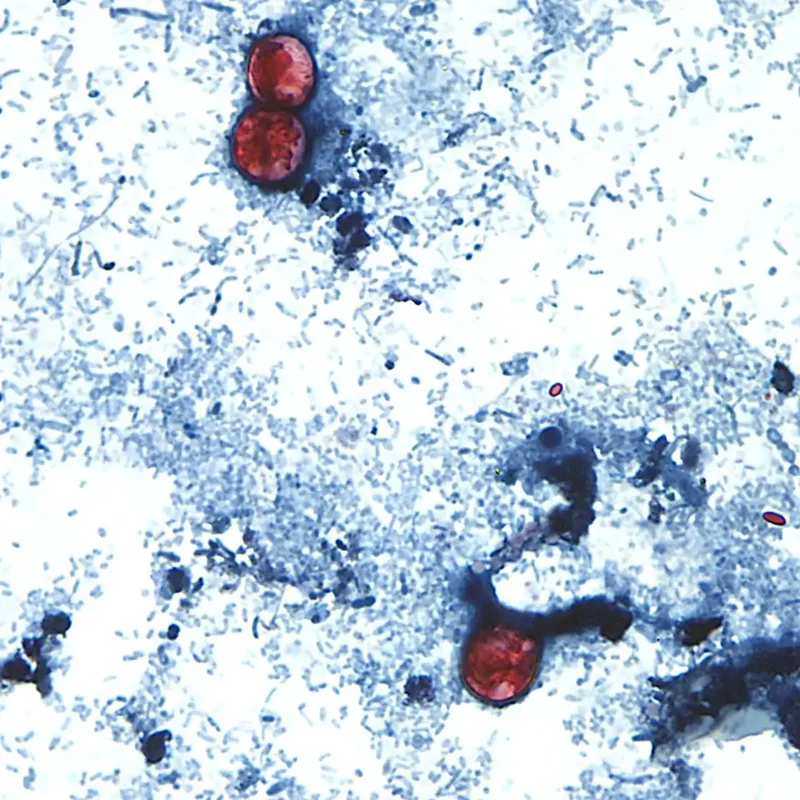
Cyclosporiasis is an illness of the intestines caused by a parasite called cyclospora. The parasite is spread through eating food or drinking water that has been contaminated.
The symptoms of cyclosporiasis include watery diarrhea, abdominal bloating, gas and loss of appetite.
Cases of cyclosporiasis show up every year in the summertime and are typically associated with travel.
Get weekly health news
“In countries where this parasite is frequently found, an increase in cases is documented during the same period because of the rainy season,” a spokesperson for the provincial health ministry said in an email statement.
This year, the majority of cases in Quebec have been linked to travel in Mexico, the spokesperson said.
The Public Health Agency of Canada (PHAC) confirmed to Global News there are currently no outbreaks of the cyclospora parasite being investigated in Canada.
But Vinh said an increase in cases raises concerns around food safety and climate change.
“Cyclosporiasis is not a typical gastrointestinal infection that is spread person to person. When you see cyclosporiasis, that tells you that there’s a food safety issue,” he said.
“Food safety is something that isn’t actually random. It actually is based on science and it’s actually based on government agencies that fund surveillance systems. And so these are the things that we have to be cognizant of, which is that the scale of these outbreaks that we’re dealing with right now probably reflect weaknesses in those infrastructures.”
Between May 1 and July 24, the U.S. Centers for Disease Control (CDC) confirmed 4,173 domestic cases of cyclosporiasis. It said it has identified a link between iceberg lettuce and outbreaks in nine states.
On July 17, 2026, Taylor Farms initiated a recall of all iceberg lettuce sourced from Central Mexico.
A spokesperson for the PHAC said this outbreak is not affecting Canada.
The cyclospora parasite requires time to mature within the environment, which Vinh said means climate change could play a role in the number of cases seen in the health-care system. As the globe warms, rainy seasons could become longer, which he said could “favour the propagation of this parasite.”
Vinh said there appears to have been a more gradual upward tick in cases in previous years before cases exploded in 2026.
But Vinh said there is no need for the general population to fear.
“The goal here by providing public health advice is to help people make informed decisions based on evidence, and not fear,” he said.
People should still eat produce, Vinh said, as it has many overall health benefits. But he said if people are concerned, they can do their due diligence by scrubbing produce carefully under running water.
“If there’s something that’s being recalled, don’t test your luck, just get rid of it,” he said. “But if it’s not being recalled, we’re not living in hermetically sealed bubbles either, go ahead and consume your fruits and vegetables that are not under recall.”