- See more Daily Mail on Google - save us as a Preferred Source
Water firm bosses have received in total multi-million-pound pay hikes over the last year amid public outrage over pollution and bills, as well as government bonus bans.
Among the top water bosses who received the biggest wage hike was Louise Beardmore, the chief executive of United Utilities, who earned £2.5million this year - over a million-pound increase on her salary the year before.
The FTSE 100 firm, which does not anticipate being under the bonus ban, gave Beardmore a £435,000 'annual allowance' as well as a fixed pay increase to £971,000.
The water firm said the money was sourced from shareholders and was needed to keep leaders. The 'annual allowance' boost had no performance requirements.
It also added that Beardmore did receive a bonus in the most recent financial year, as the firm maintains it did not breach any Ofwat rules.
Mark Thurston, the chief executive of Anglian Water, was paid an eye-watering £1.9million - which included a 'retention payment' of £500,000 despite the bonus ban.
It comes as water regulator Ofwat gains the ability to ban bonuses for bosses at companies that break pollution rules, with eight companies expecting to be impacted by the new rules in the year 2025-26.
Firms responsible for the most serious incidents of pollution or financial failings can also be hit with bonus bans retrospectively.
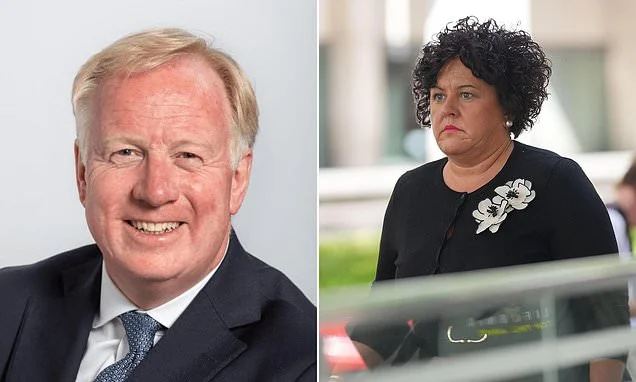
Anglian Water is also paying its chief executive Mark Thurston, the former boss of HS2, £1.3million in awards
Louise Beardmore, the chief executive of United Utilities, who earned £2.5million this year - over a million-pound increase on her salary the year before
But despite the ban, the pay for top water firm bosses, reported by water companies, was £25.3million in the financial year ending this March, an increase from £24.9million the year before, The Guardian reported.
It is the second consecutive year where water company bosses' pay has gone up despite the government's ban on bonuses.
In recent years, water company wages have come under scrutiny due to increased pollution in the country's rivers and seas as well as sharp bill hikes by firms for late investments into shoddy pipes, new reservoirs and ageing treatment works.
And a recent hosepipe ban issued by several water firms amid Britain's scorching summer weather has only added to the fury.
In some instances, firm bosses have been given additional accolades which companies allege are not 'performance-related payments' or bonuses, and as such do not come under the Ofwat ban.
While Anglian Water confirmed it would fall under the ban, it continued to award its boss, Thurston, who was once Britain's best-paid public servant, most of his pay through the water firm's parent company.
The former HS2 boss was also given a £500,000 'retention payment' via this route.
The water company said it did not count the half a million pound 'retention payment' as a bonus as it was not connected to the firm's performance.
They added that the sum was funded by shareholders for work outside of the firm. It also said it required 'targeted, time-limited retention arrangements to maintain leadership continuity'.
Meanwhile, even though Yorkshire Water believed it was likely to fall under the bonus ban, its parent company paid Nicola Shaw, its chief executive, £600,000 on top of her annual pay of £732,000.
And Ruth Jefferson, the chief executive of Wessex Water, was given a 14 per cent salary hike despite the firm being banned from dishing out bonuses. The water company said the increase indicated the role's responsibilities.
Thames Water paid senior staff who did not come under the ban £4.1million in bonuses.
Previous suggestions indicated Thames Water and Dŵr Cymru Welsh Water would come under the ban on bonuses for bosses.
Some firms that are under the ban saw pay for bosses drop, including Southern Water, Severn Trent and Northumbrian Water.
However, Heidi Mottram, the firm's chief executive, received a £300,000 'retention payment'.
Andrew Speke, the High Pay Centre's interim director, said recent figures indicate 'the government’s current measures have not gone far enough'.
Meanwhile, Gary Carter, a national officer for the GMB union, which represents many water firm staff, said: 'Finding ways round the bonus ban further tarnishes the reputations of private water companies.
'It makes them look like money-grabbing asset strippers who care more about lining their own pockets than providing fresh, clean water for the UK public.
'Senior executive pay is out of control, and the government needs to fundamentally overhaul the water companies – with more public control – to fix it.'
Water regulator, Ofwat, is set to reveal which water firms fall under the bonus ban this autumn.
But bans can be given to any company who are accountable for serious incidents of pollution or firms that are faltering financially.
A spokesperson for the Department for Environment, Food and Rural Affairs said: 'We have banned undeserved bonuses for water company bosses. Any attempt to circumvent the rules is completely unacceptable.
Yorkshire Water's parent company paid Nicola Shaw, its chief executive, £600,000 on top of her annual pay of £732,000
Heidi Mottram, chief executive of Northumbrian Water, received a £300,000 'retention payment'
'We will leave no stone unturned in ensuring bonuses can only be paid where companies deliver environmental and customer outcomes and Ofwat's review of the bonus rule will carefully consider if any requirements need to be tightened.'
An Ofwat spokesperson said: 'Rebuilding public trust in the water sector is vital and central to our rules on executive pay - last year alone, companies were prohibited from paying approximately £4m in potential bonuses.
'We require full transparency on all remuneration, performance-related or otherwise, and companies must clearly explain their decisions.
'Water companies must make remuneration decisions in compliance with our rules, and we hold them accountable for these decisions.
'We are currently reviewing companies' remuneration decisions and will not hesitate to take action where we find breaches of our rules.'
A United Utilities spokesperson said: 'None of the remuneration paid to our executive directors is paid for by customers.
'It is vital that we have leaders with the right capabilities to run the largest FTSE 100 company in the North West as we invest over £13 billion in infrastructure by 2030, supporting 30,000 jobs.
'That's why our new policy includes timebound and targeted retention payments to ensure we have the right people to deliver for customers and the environment.'
The Daily Mail has approached Water UK, Northumbrian Water, Anglian Water, Thames Water, Wessex Water, and Yorkshire Water for comment.