The United Nations Children’s Fund (UNICEF) has raised concerns over the state of child protection in Nigeria, revealing that six in 10 children experience some form of abuse, while only two in five children under the age of five have their births registered.
The agency also disclosed that two in five young women in Nigeria were married before the age of 18, a situation it said continues to expose millions of children to abuse, exploitation and exclusion from essential services.
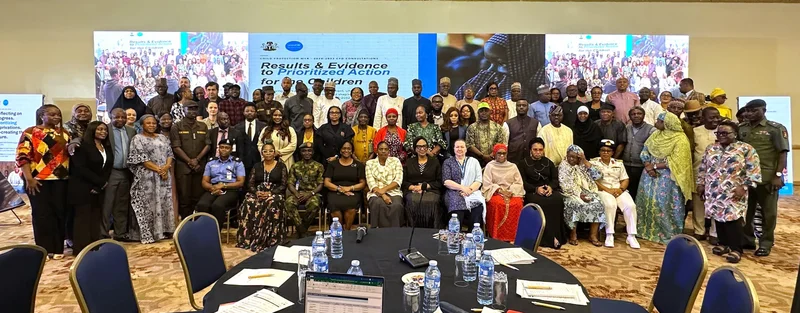
UNICEF Nigeria’s Chief of Child Protection, Natalie McCauley, disclosed this in Abuja on Friday during the Child Protection Mid-Year Review and consultations for the development of UNICEF Nigeria’s 2028–2032 Country Programme.
Ms McCauley said the figures represent children whose safety, identity, education, health and future opportunities remain at risk, stressing that child protection efforts should be judged by their impact on children’s lives rather than the number of activities delivered.
| | |
|---|
The meeting brought together government officials, United Nations agencies, development partners, civil society organisations and private sector representatives to assess progress and identify priorities for strengthening child protection systems across the country.
Progress and persistent gaps
Ms McCauley acknowledged progress made through government-led and UNICEF-supported interventions in 2025, including strengthening the frontline child protection workforce, expanding community-based protection structures, accelerating birth registration and providing protection services to nearly 120,000 children.
She added that more than 1,000 children had been diverted from detention through non-custodial measures aimed at improving child justice outcomes.
Despite these gains, she warned that national progress often conceals significant disparities across states and communities.
“A national result can conceal deep subnational disparities,” she said, noting that children in remote communities, conflict affected areas, children with disabilities, children on the move and adolescent girls facing multiple risks remain underserved.
She added that UNICEF’s Strategic Plan for 2026 to 2029, which targets protecting 350 million children from violence globally by 2029, calls for greater focus, scale and approaches tailored to local realities.
Next programme priorities
Ms McCauley said the next Country Programme must focus on children facing the greatest deprivation, strengthen government systems, mobilise domestic financing and scale interventions with proven impact.
“We cannot attempt to do everything, everywhere, in the same way,” she said.
She stressed that child protection should be seen as the foundation for children’s wellbeing and development.
“A child who is afraid at home cannot thrive. A girl married too early is less likely to remain in school. A child without a legal identity may be excluded from health, education and social protection,” she said.
She added that child protection is not an add-on to development but one of the conditions that makes development possible.
Call for stronger collaboration
Ms McCauley said the consultations were intended to shape, rather than endorse, UNICEF’s next Country Programme.
“This consultation is not intended to seek endorsement of a plan that has already been written. It is an invitation to shape the next programme together,” she said.
She noted that while Nigeria has strengthened social welfare and justice services, expanded community protection structures, advanced digital birth registration and developed national plans to end child marriage and violence against children, greater efforts are needed to ensure these translate into quality services across all communities.
She called for stronger collaboration across sectors, noting that children do not experience life in separate sectors.
According to her, health, education and social protection systems must work together through integrated services, effective referral pathways, interoperable data systems and coordinated interventions to identify and support children at risk.
She also urged stakeholders to address persistent implementation challenges, including shortages of trained social workers, weak referral systems, inadequate child-friendly justice services, limited use of data and insufficient investment in prevention.
As part of the activities during the event, participants were asked to identify children being left behind, key system bottlenecks, interventions that are working, scalable solutions and priority actions for government, UNICEF and partners.
Ms McCauley said the recommendations would inform UNICEF Nigeria’s 2028 to 2032 Country Programme and immediate acceleration actions.
“The measure of our success will not be the number of plans we produce or meetings we hold,” she said. “It will be whether every child is protected, counted at birth and able to live safely, recover from harm and realise their full potential.”