The Centers for Disease Control and Prevention updated its official guidance regarding autism and vaccines, replacing long-standing assurances that immunizations do not cause autism with claims that scientific research has not definitively ruled out a connection.
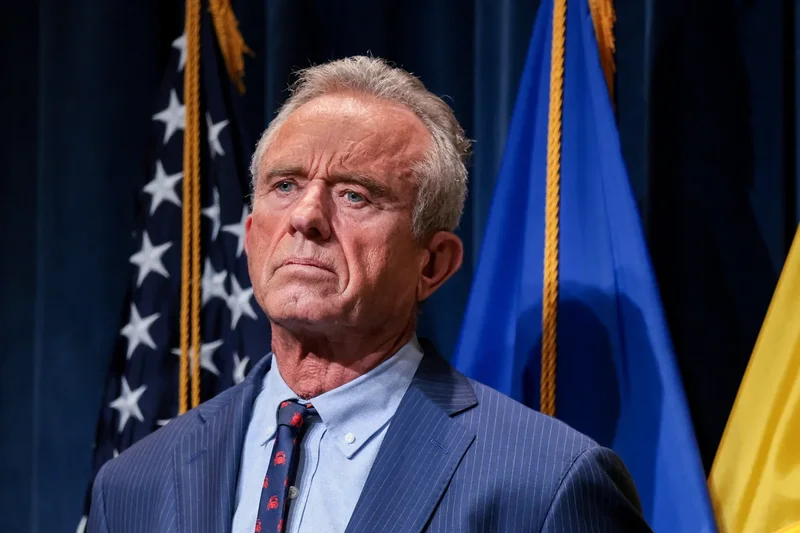
But the website still suggests a link between vaccines and autism, after President Donald Trump’s Health Secretary Robert F. Kennedy Jr. directed the agency to revise the website’s language last year to dispute long-held conclusions from large-scale medical studies.
The new changes appear to have been made to secure a crucial confirmation vote for Dr. Erica Schwartz, Trump’s nominee to lead the CDC.
Republican Senator Bill Cassidy, whose support is vital for moving health nominees through the Senate Health Committee, previously signaled that he needed assurances that the agency would uphold scientific integrity before advancing her nomination.
In a revision to its public guidance published July 22, the federal agency said previous statements denying a link between childhood immunizations and autism were not “evidence-based.” The site now notes that the Department of Health and Human Services is launching a comprehensive assessment to evaluate potential root causes of autism, including biological mechanisms and potential causal links.
According to the updated CDC website, the revision was made pursuant to the Data Quality Act, a federal statute requiring government agencies to ensure the objectivity and integrity of information provided to the public.
The agency stated on the page that previous claims denying a link “have historically been disseminated by the CDC and other federal health agencies within HHS to prevent vaccine hesitancy.”
Sean Kaufman, Trump’s nominee to lead the Administration for Strategic Preparedness and Response, also appears to be facing hurdles from the Senate committee before a confirmation vote. “There are ongoing conversations with the administration on the path forward for Mr. Kaufman’s nomination,” according to a committee spokesperson.
Kaufman faced sharp questioning during confirmation hearings regarding his past anti-vaccine statements, including comments questioning the routine hepatitis B birth dose and opposing COVID-19 vaccines for healthy children. The agency oversees the nation’s readiness and response to pandemics, bioterrorism and other major public health emergencies.
The revised CDC language places particular emphasis on routine shots administered during a child’s first year of life, including immunizations for diphtheria, tetanus and acellular pertussis, Hepatitis B, Haemophilus influenzae type B, inactivated poliovirus and pneumococcal conjugate.
Federal reviews conducted over the last three decades by the Institute of Medicine and the Agency for Healthcare Research and Quality found the available data was inconclusive, according to the CDC, which determined that evidence was “inadequate to accept or reject a causal relationship” between vaccines and autism.
The site also raises questions regarding aluminum adjuvants — additives used to boost immune response in several infant vaccines — citing cumulative exposure levels in early childhood to argue that potential links to chronic conditions warrant further scientific study.
Regarding the Measles, Mumps, and Rubella vaccine, the CDC acknowledges that prior reviews maintain a high strength of observational evidence showing no association with autism. The updated site claims most existing MMR studies are flawed because they rely on past population data, ignore potentially vulnerable children and fail to reflect the U.S. vaccination schedule.
HHS noted on the platform that its upcoming research initiatives would evaluate biological mechanisms such as neuroinflammation, aluminum exposure and potential risks for children with mitochondrial disorders.
The agency stated that the website will be updated as new evidence from its comprehensive autism assessment becomes available.
The Independent has contacted the CDC for comment.