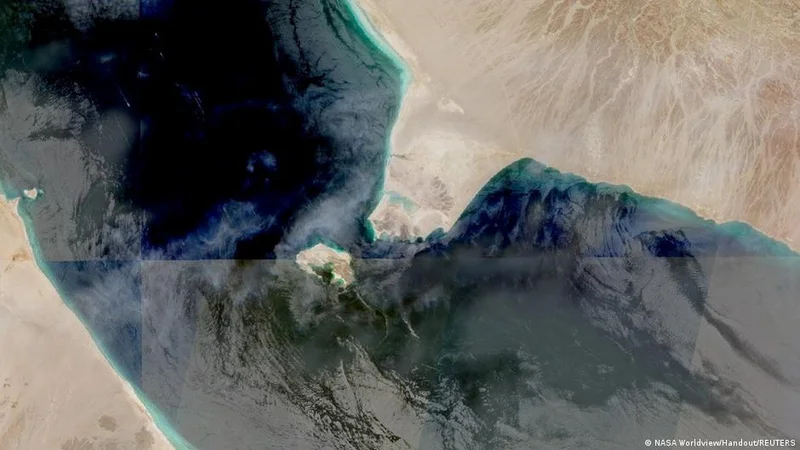
What you need to know
- Houthi rebels in Yemen say Friday's Saudi strikes on the port city of Hodeida hit civilian infrastructure, injuring two people
- Saudi Arabia says it will do everything necessary to protect its shipping amid a Houthi-enforced maritime blockade in the Red Sea
- A flare-up between Iran-backed Houthis and Saudi Arabia, and the consequent disruption of shipping in the Red Sea, could worsen the global economic fallout from the war
Here are the latest developments from the Iran war and the wider Middle East on Saturday, July 25:
Yemen's Houthis vow retaliation for Saudi strikes
The Iran-backed Houthi rebels in Yemen have accused Saudi Arabia of targeting civilian infrastructure, amid an escalating flare-up with Riyadh.
Saudi Arabia on Friday hit the Houthi-held port city of Hodeida with strikes, the Saudi-led coalition in Yemen said, in response to the rebel group attacking Saudi oil tankers in the Red Sea as part of a maritime blockade.
"The Saudi enemy's targeting of civilian facilities in Hodeida and Kamaran island constitutes a dangerous escalation," the Houthis' Ansarollah media posted on Telegram.
"We affirm that these recent crimes will not go unanswered."
Houthi-run Al Masirah television said on Saturday that Saudi strikes had targeted facilities belonging to the state telecommunications corporation and Kamaran island, off Yemen's western coast.
The broadcaster reported that one worker was wounded in Hodeida while a woman was also injured on Kamaran Island.
The Saudi-led coalition, meanwhile, claimed that it hit "Houthi military sites" and destroyed targets that were posing a threat to commercial vessels in the Red Sea.
Riyadh said it would do everything necessary to protect its ships, warning the Houthis that if they continued "hostile acts then there will be no hesitation in responding."
For Saudi Arabia, a top oil producer, the Red Sea had emerged a critical shipping alternative to the war-blockaded Strait of Hormuz.
Welcome to our coverage
After the Strait of Hormuz, the conflict has now embroiled another one of the world's vital energy shipping corridors — the Red Sea.
Earlier this week, Yemen's Iran-backed Houthi rebels announced a blockade of Saudi vessels in the Red Sea, and then claimed strikes on two Saudi oil tankers for violating it.
The Saudi-led coalition in Yemen responded on Friday by attacking the Houthi-held Yemeni port city of Hodeida. The coalition said it had only targeted "military" sites linked to threats against commercial shipping in the Red Sea.
But the Houthis accused the coalition of targeting civilian infrastructure and have now said they would retaliate against Saudi Arabia.
Before we dive in further on the deepening crisis in the Middle East, here is a round-up of developments in the region on Friday:
- The US launched strikes on Iran for the 13th consecutive night. Iranian state media reported explosions across the country
- US President Donald Trump said Iran will pay the financial cost of any damage to ships or cargo amid the dispute over the Strait of Hormuz
- Trump also claimed that Tehran is getting "very serious" in its discussions with the US
- On the other hand, Iran's Foreign Minister Abbas Araghchi said Tehran would hold any country assisting the US in an attack on the Islamic republic, accountable
- The Houthi rebel group in Yemen denied that it was completely closing the Bab al-Mandeb Strait, which links the Red Sea to the Gulf of Aden and the Indian Ocean
Stay tuned as we bring you the latest on the US-Iran war and the Middle East.