Maharashtra government, on July 16, announced to waive off ₹48,000 crore of pending electricity dues owed by farmers, marking the State’s second major waiver after June’s farm loan write-off — aiming to bring relief to both cash-strapped farmers and the debt-laden Maharashtra State Electricity Distribution Company Limited (MSEDCL).
Chief Minister Devendra Fadnavis stated that every year the budgetary allocation of ₹25,000 crore is made to pay power companies through MSEDCL, giving free electricity to farmers up to 7.5 HP under ongoing Mukhyamantri Baliraja Mofat Veej Yojana. He said that every farmer has old pending bills in their name, which can be recovered anytime or the pending bills become obstacle for a new connection. “So, for that not happen, I announce a electricity waiver of ₹48,000 crore,” said Mr. Fadnavis.
How does the waiver help?
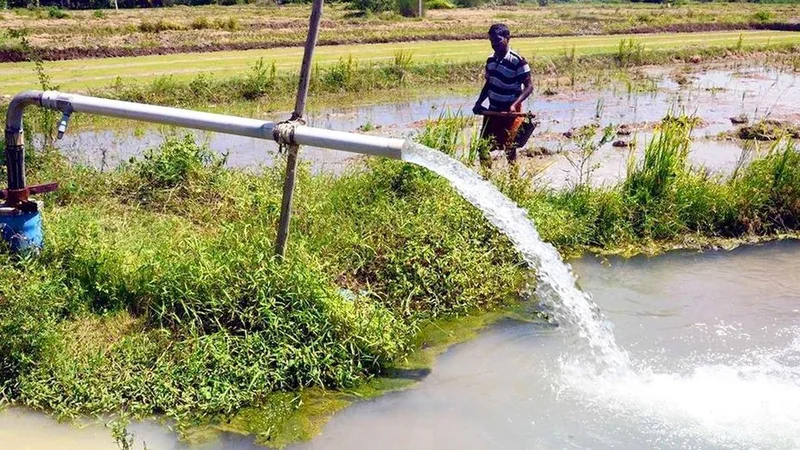
Under Baliraja Yojana, the state pays around ₹12, 000 crore, catering to 45 lakh farmers as per MSEDCL. It provides free electricity up to 7.5 HP during daytime for irrigation, reduce transmission losses, and increase the use of solar. However, the scheme clears the current and future bills, while the debt before 2024 remains untouched. The latest decision aims to clear the backlog of unpaid electricity dues accumulated over the years till 2024, while continuing the State’s existing policy of providing free electricity to farmers through an annual subsidy.
How will it benefit the farmers?
For farmers, it is a relief as they will get easy access to new or upgraded connections, which were barred if they have pending dues. It has also been a relief for farmers receiving regular reminders of the pending dues.
Farmers believe that for free power under government scheme is useful only when electricity meter is available. However, several farmers believe it won’t change much as many have refused to pay the bills, and there has been no power cut. Ashok Pawar, a farmer and an activist from Marathwada’s Dharashiv district, says, “Farmers don’t have that kind of money to pay pending bills. So, many did not pay and used light through the existing meters only.”
MSEDCL’s proposed IPO
Power and Energy expert based in Mumbai, Ashok Pendse, said, “The wavier is a vote catcher because MSEDCL did not cut the connections even when farmers failed to pay their dues. Despite attempts, recovery has not been possible. The moment balance sheet cleans, they can get the fresh loans or float the bonds, equities in the market to pick up the money.”
The announcement also comes at a time when MSEDCL has plans to get listed on stock exchanges in December this year. The State cabinet approved MSEDCL’s restructuring at a meeting on April 7, chaired by Mr. Fadnavis. The restructuring and the farm electricity bills waiver announcement point to MSEDCL’s pursuit of an Initial Public Offering (IPO) of its non-agricultural wing. This would make Maharashtra the first State to list a state-owned distribution company on stock exchanges.
The Maharashtra government has proposed restructuring the MSEDCL by separating its agricultural and non-agricultural electricity distribution businesses, with plans to eventually launch an IPO for the non-agricultural arm. The government says the move is aimed at improving operational efficiency, attracting investment and strengthening the utility’s finances. Critics, however, argue that the restructuring is a precursor to privatisation, warning that it could lead to higher tariffs. MSEDCL has rejected these concerns, maintaining that the utility will remain under government ownership.
MSEDCL Bharat Pawar spokesperson, “With or without waiver of pending bills, the company have been good for IPO listing. This is also to improve the financial situation for the board, which will remain under government even if listed.”
How will MSEDCL be restructured?
Restructuring of MSEDCL means it was split into two entities— MSEDCL serving residential, commercial, and industrial, and MSEB Solar Agro Power Ltd (MSAPL) serving agricultural consumers, with allotment of ₹2,500 crore as initial capital. The restriction was aimed at isolating the agricultural wing and improving the viability of the remaining business. The government’s announcement of the arrears also makes the case stronger for IPO.
MSEDC is a subsidiary of its parent company, Maharashtra State Electricity Board (MSEB) Holding Company Limited, established in 2005. The other three subsidiaries are Mahanirmiti (Maharashtra State Power Generation Company Limited, MSPGCL), facilitating power generation from transmission and distribution, Mahatransco (Maharashtra State Electricity Transmission Company Limited, MSETCL), carrying electricity from generation plants (Mahagenco’s and others’) over the high-voltage grid to substations, where it’s handed off to MSEDCL for final distribution to consumers, and MSAPL— newly demerged, 2026.
How does it impact MSEDCL?
Arrears that are years old are tied to disputed land ownership, inherited connections, or the inability to pay bills, or overcharging of the bills will be waived off. According to the MSEDCL authority, carrying them on the books makes no practical sense and inflates receivables. So, writing them off will provide MSEDCL a balance-sheet cleanup, which is essential for IPO. MSEDCL Bharat Pawar spokesperson, “It is a good move and helps the board improve financial health. However, how it will be paid off or adjusted is yet to be worked out. Chief Minister himself, being the State Energy Minister, will work it out.”
He pointed out that most likely the book adjustment will be done. It means the MSEDCL will simply remove the Rs 48,000 crore entry from its books as a loss, with no compensation from anywhere. He also said, “With or without waiver of bills, the company would have been good for IPO listing.”
Burden on the State government
The legacy waiver of ₹48,000 crores, along with the recent announcement of Punyashlok Ahilyadevi Holkar Farm Loan Waiver Scheme, which aims to benefit 56 lakh farmers at an estimated cost of ₹36,585 crore, and Baliraja Yojana with an annual allocation of ₹25,000 crore, have added to the financial burden of the state. According to Mr Fadnavis, the waiver cost won’t be passed to the public, meaning the state treasury will absorb it, further burdening the treasury.
Published - July 25, 2026 12:21 pm IST